This will be a lengthy ‘diary -type’ entry rather than typical parrygraph. I want to capture the main route and images of a recent trip.
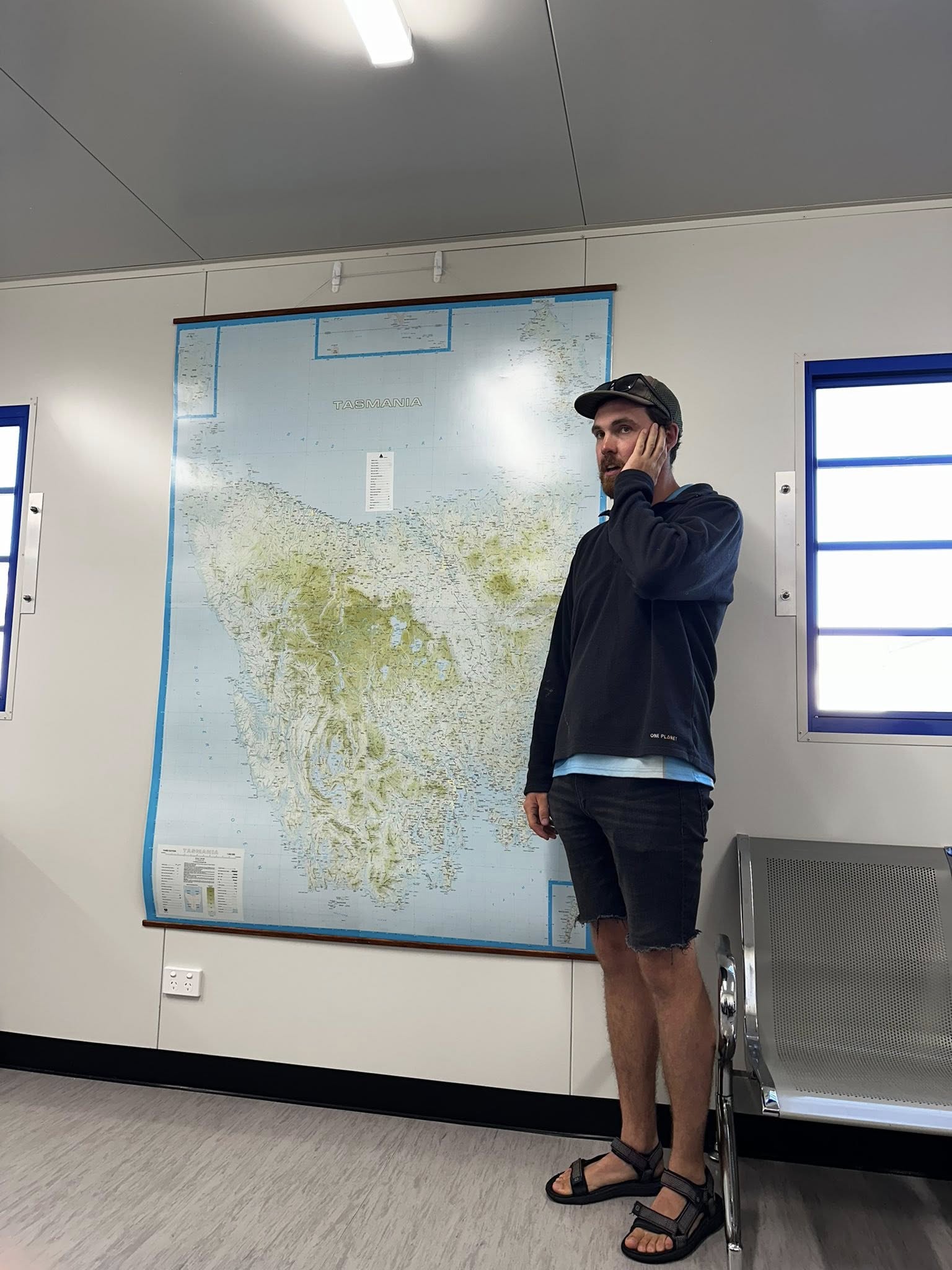
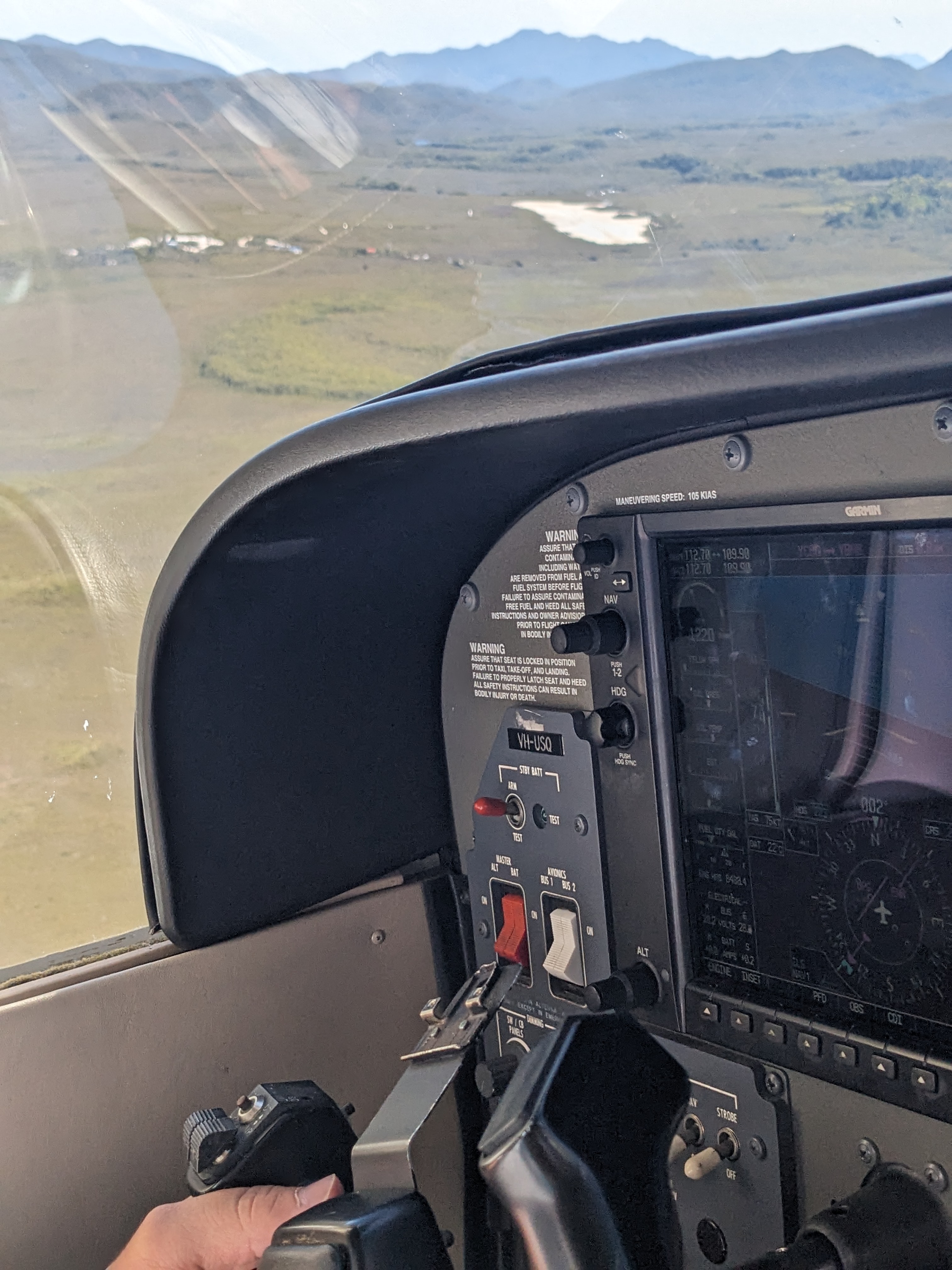
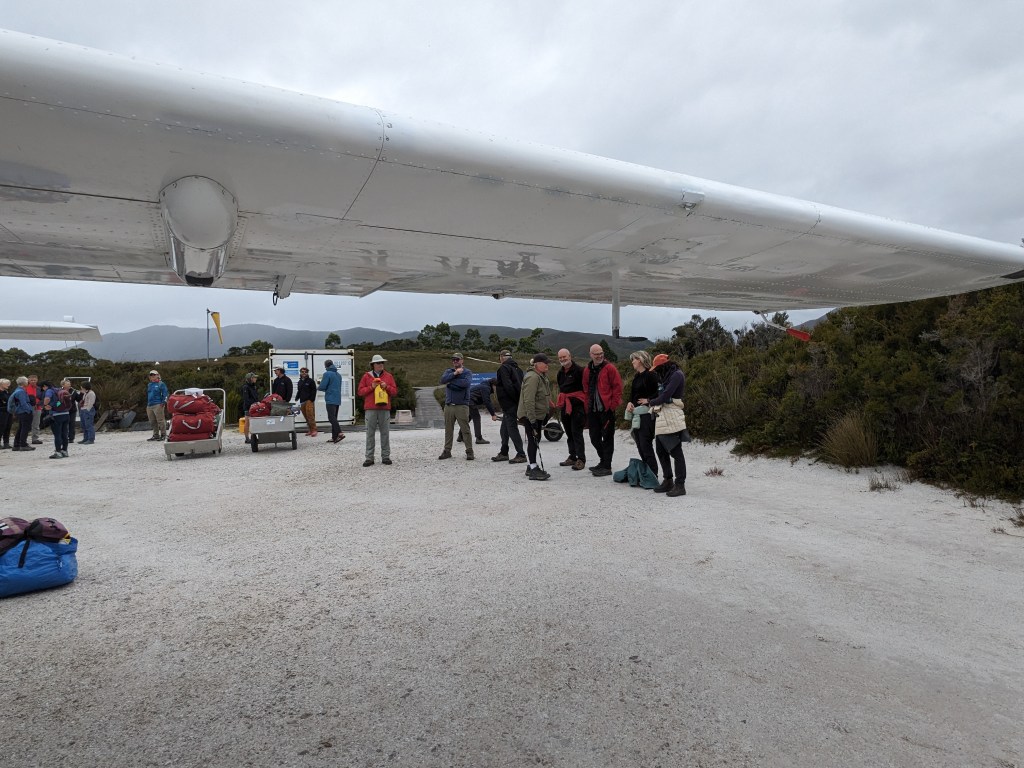
On 28 February I flew from Cambridge Airport, Hobart, to Melaleuca as part of a group of 12 on a Roaring 40s 8-day kayaking trip (10 of us plus 2 guides). Crossing paths with a person returning from the previous trip, I was encouraged that the trip’s eight days would stretch out and feel longer than its advertised length. We first received a briefing from our esteemed guide, Tristan, who introduced us to where we would be paddling and some route options. Then it was time to load our gear and selves into the planes. The flight, in a 4-person Cessna, over the peaks of the SW was spectacular, with me placed in the front seat (yipee!), craning to see over the barrage of instruments and fearful in my excitement of touching a lever or button that would induce an unhelpful aerial manouevre.
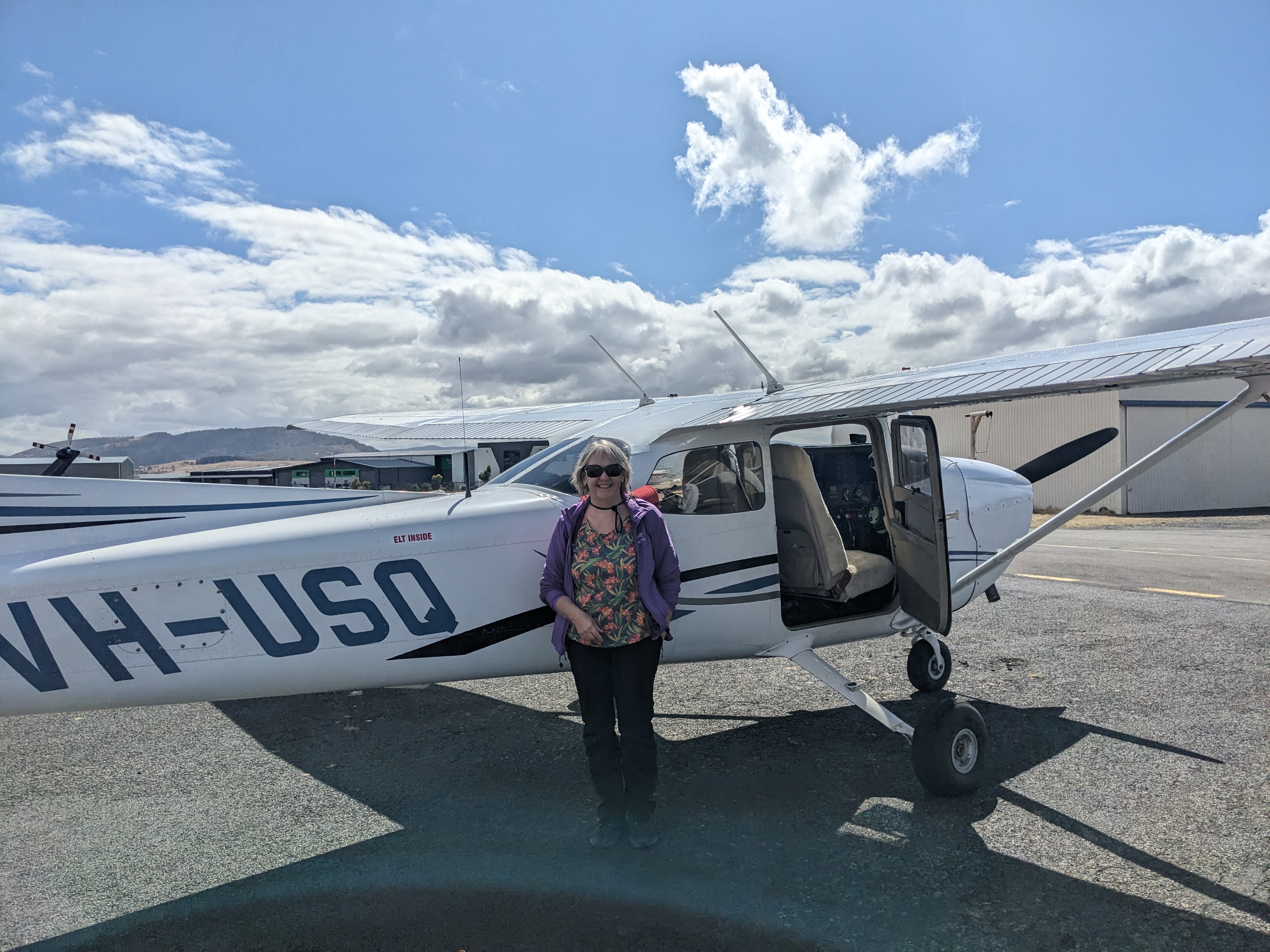
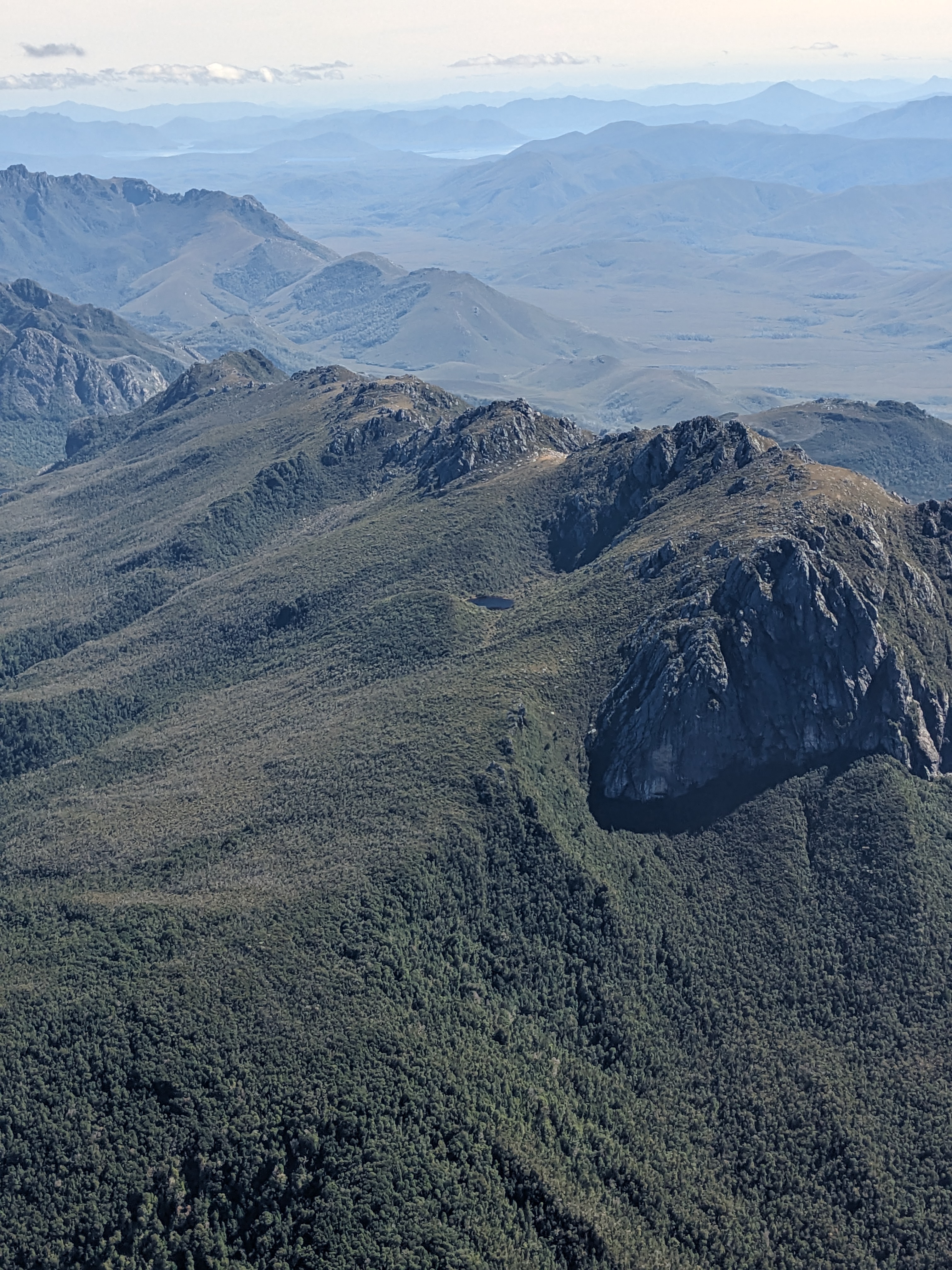
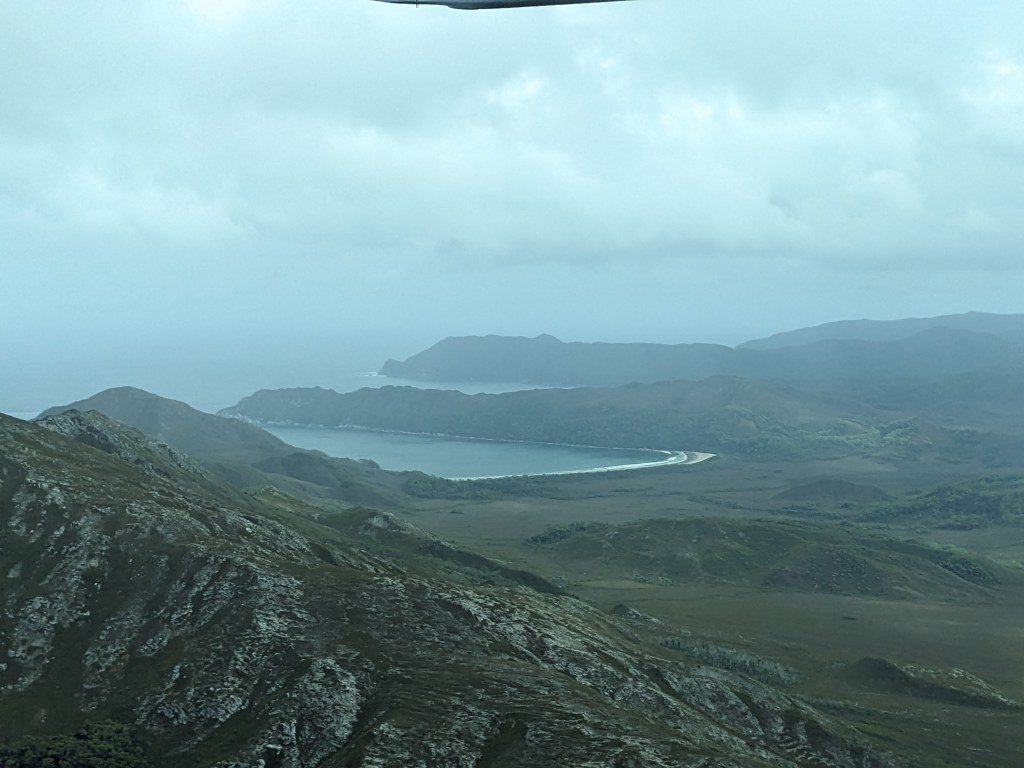
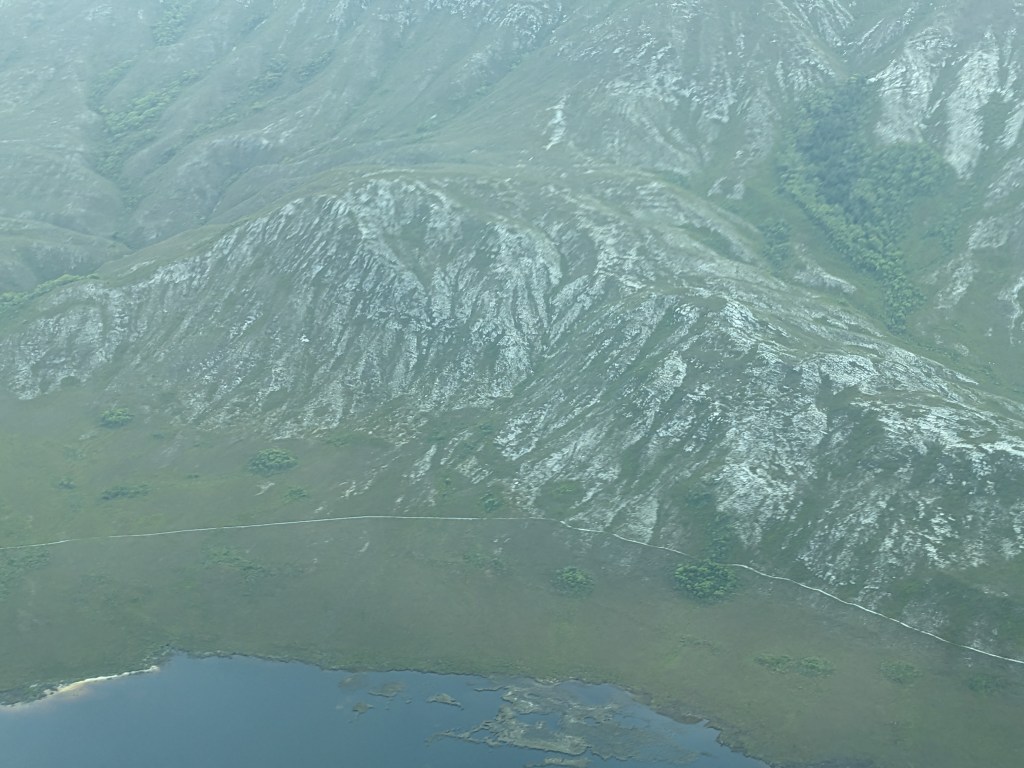
I’m always delightfully entranced by the views of the landscape afforded by flights in small planes, and this flight did not disappoint as we skimmed over craggy mountains before approaching Melaleuca.
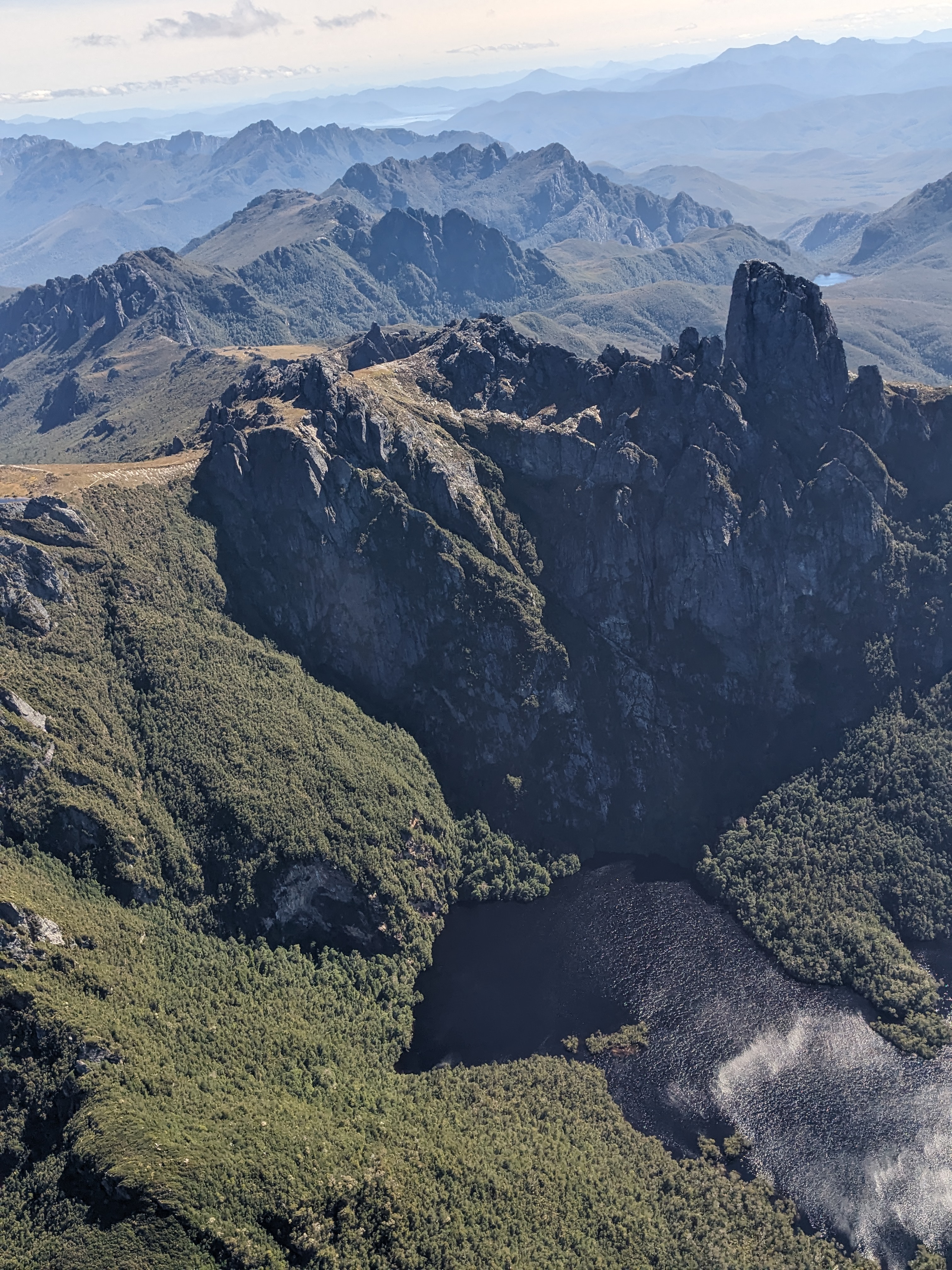
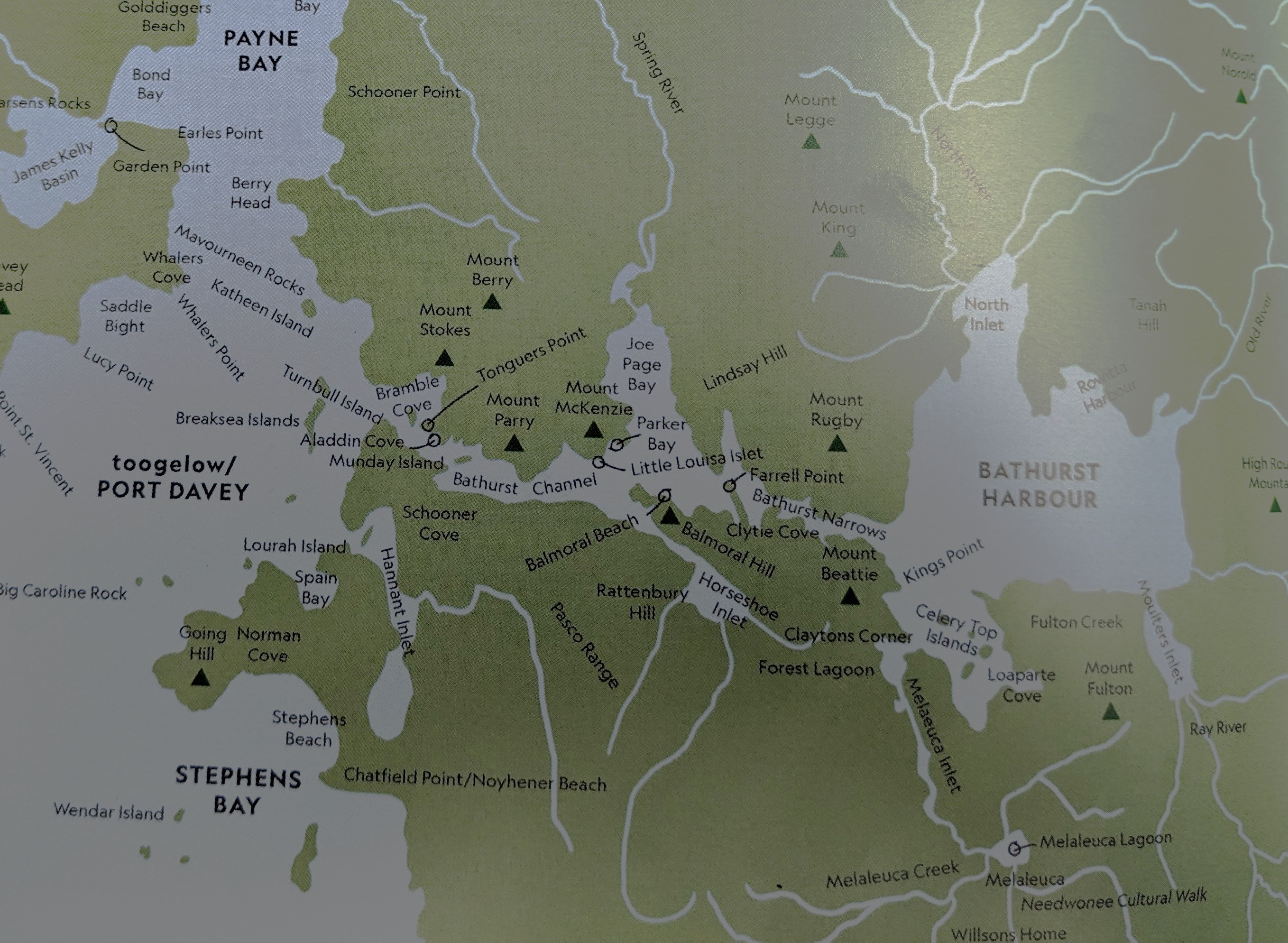
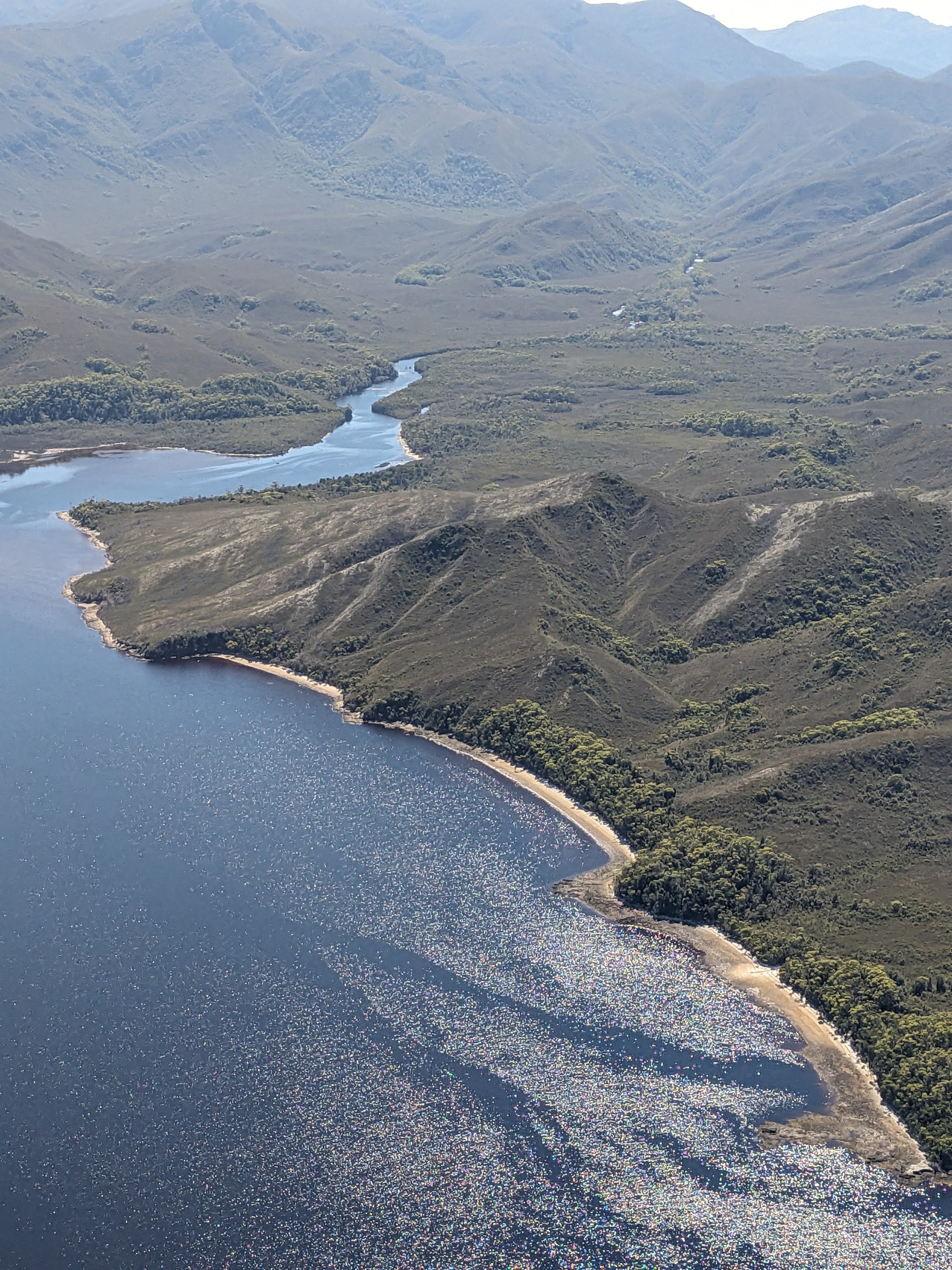
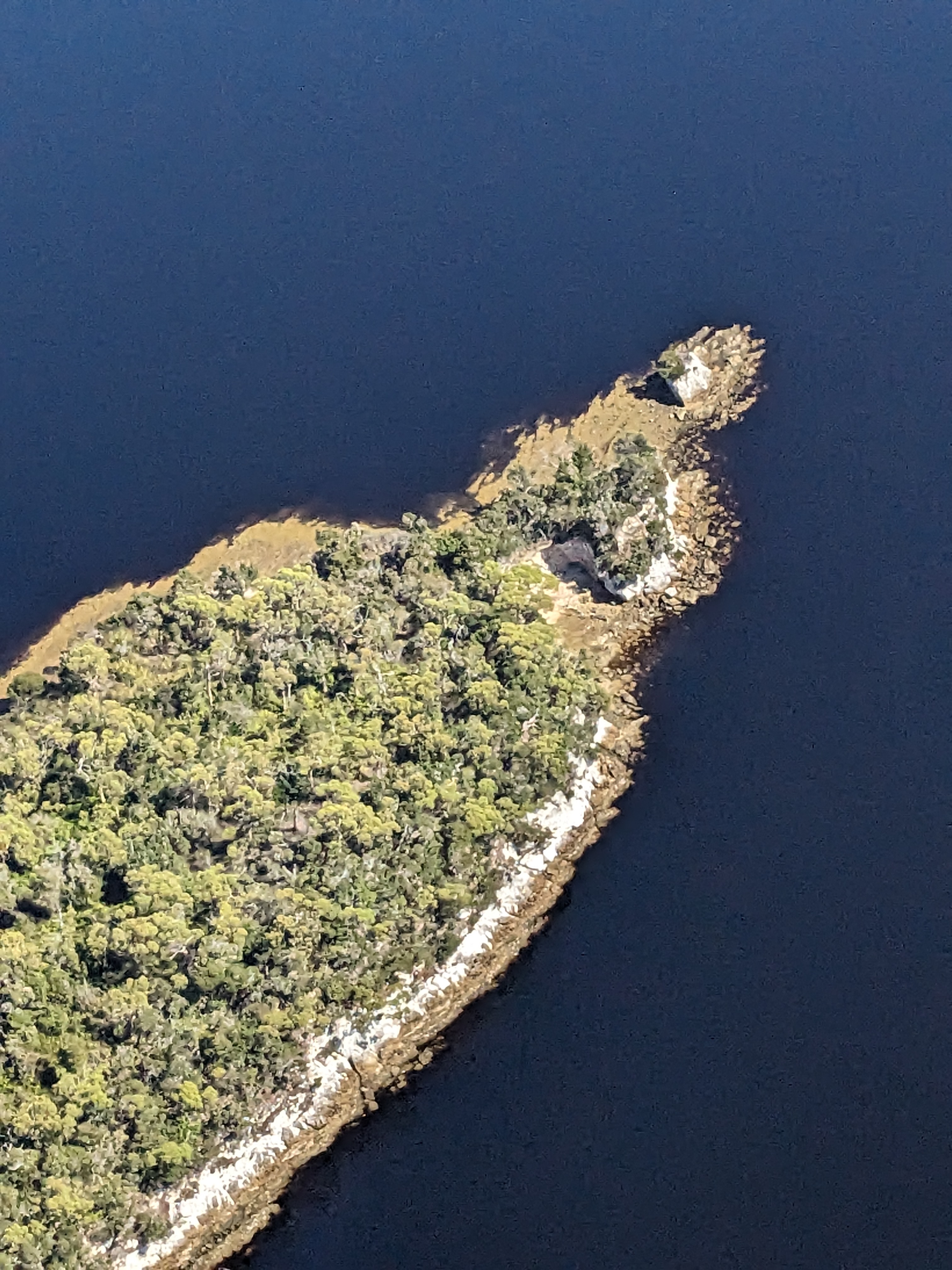
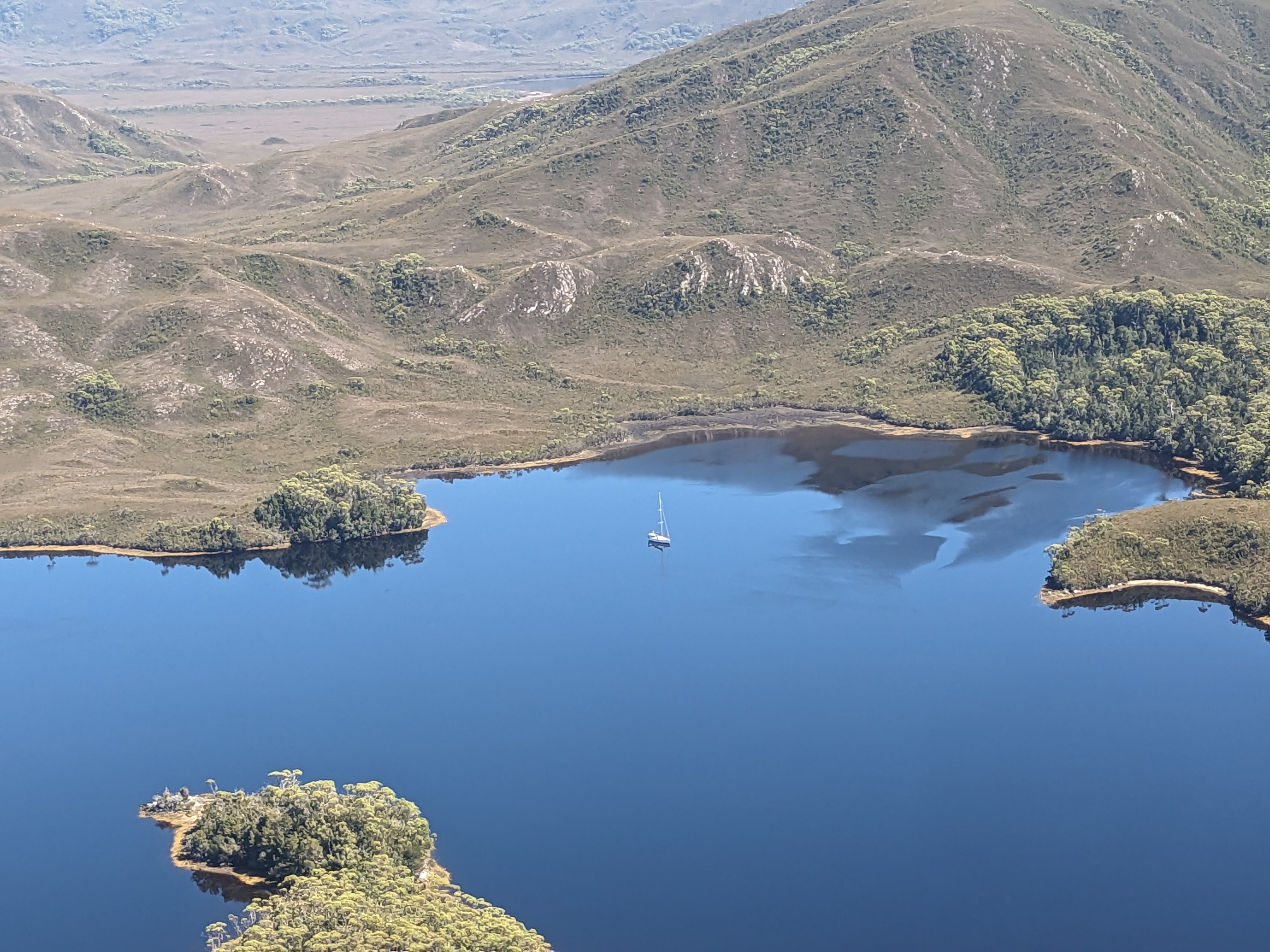
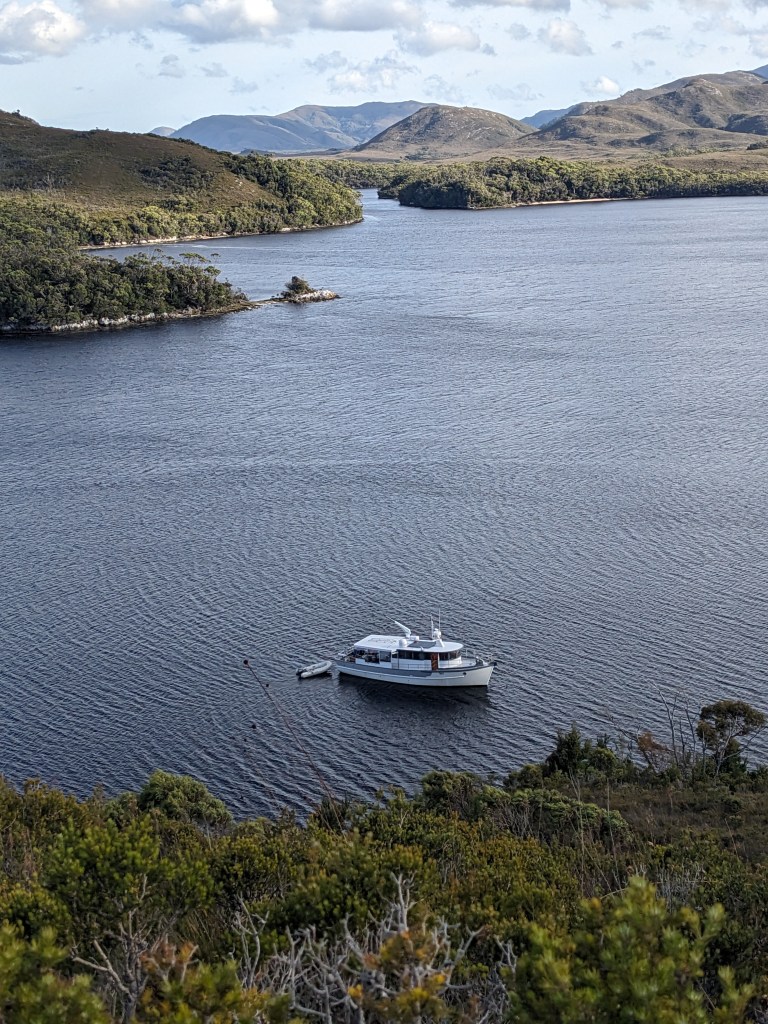
After about 45 minutes we circled to land at Melaleuca airstrip, which had been built by local legend Deny King. A mammoth effort over a 3-year period. Yes, it does look fairly short (white smudge in last photo), but it’s been successfully navigated by pilots for several decades. I drank in the detail of the location that we were about to spend 8 days kayaking through, trying to pick out the places that would be part of our route and noticing the play of wind on the water and the density of vegetation on islands fringed by white and tannin-shaded rocky edges. Boats moored in Bathurst Harbour provide some scale in the landscape.
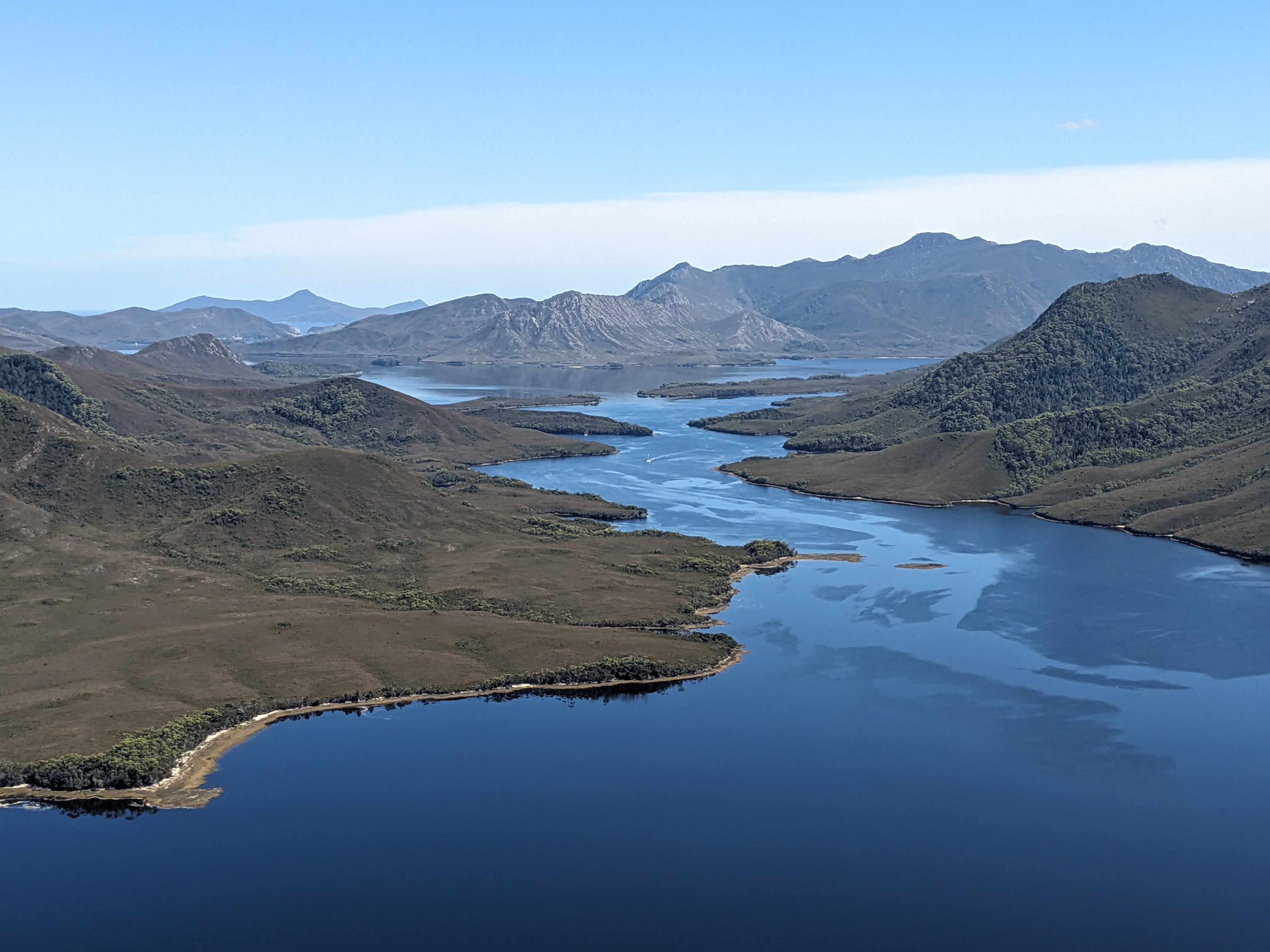
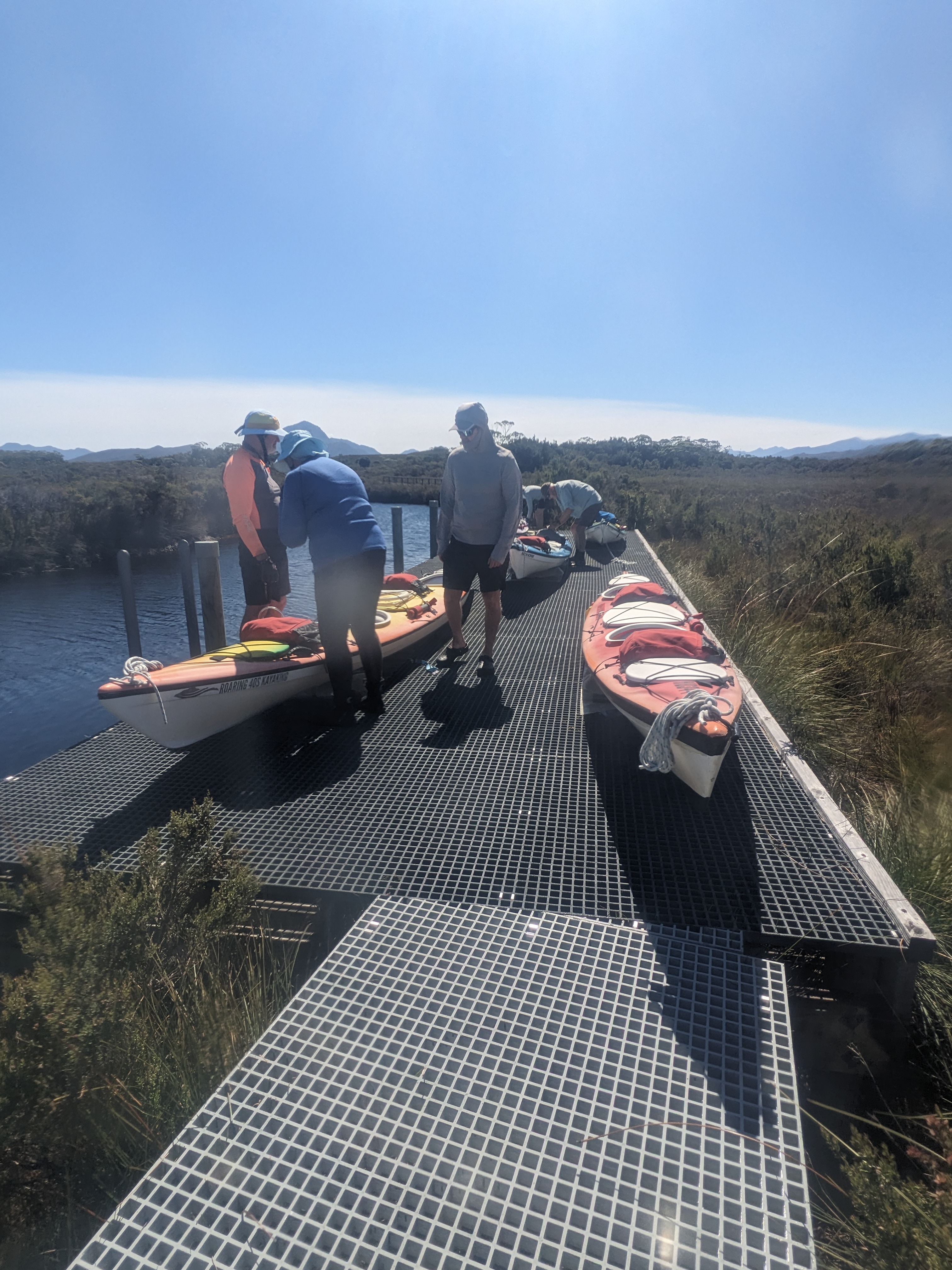
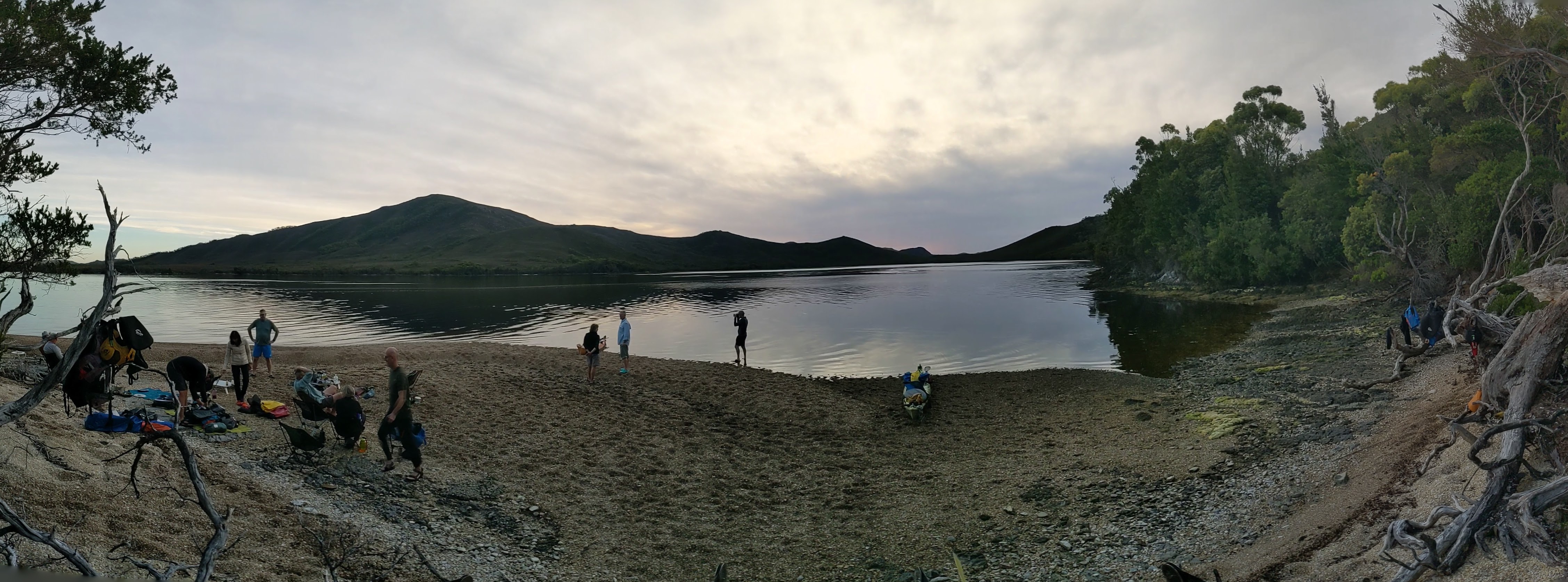
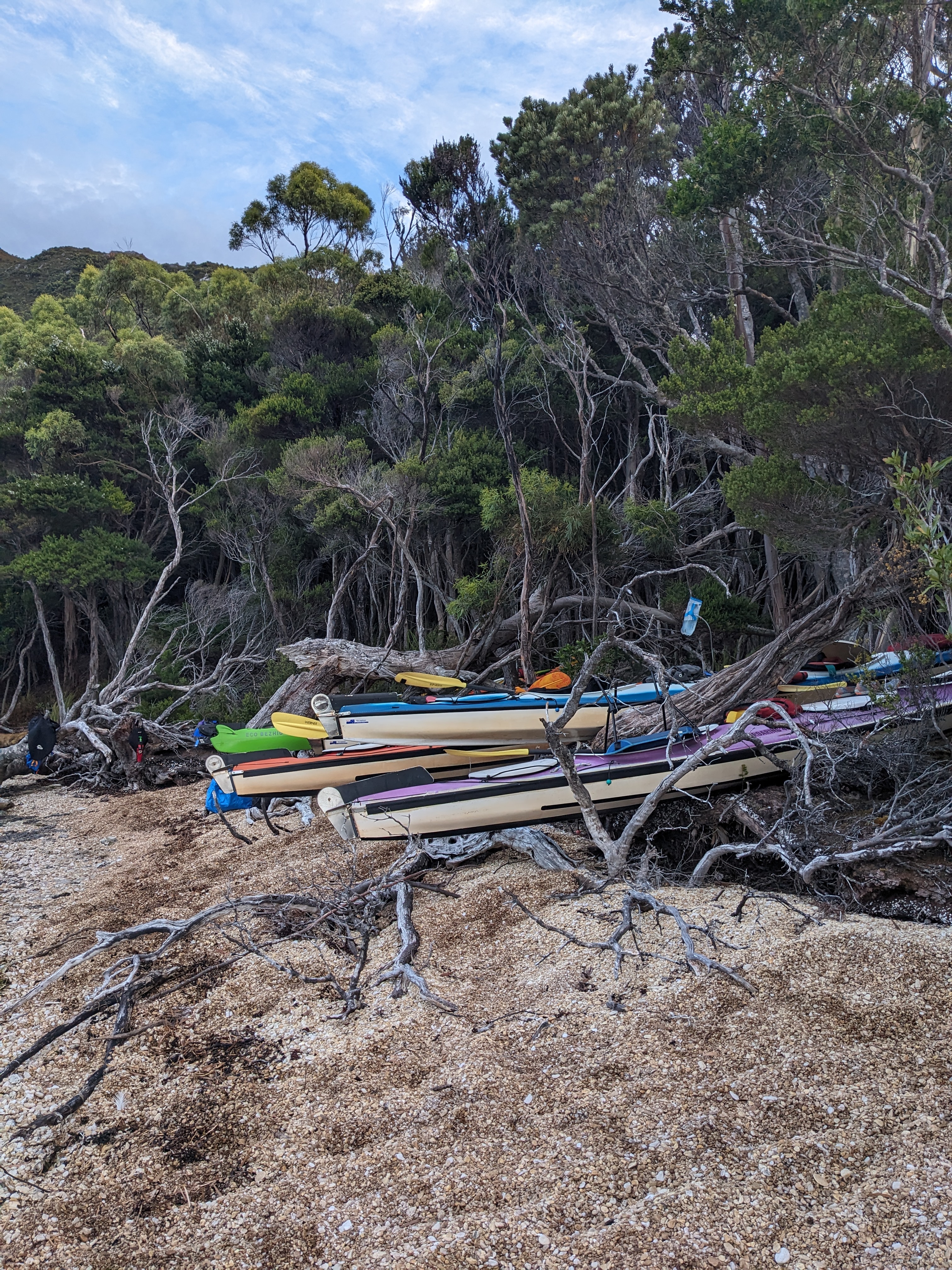
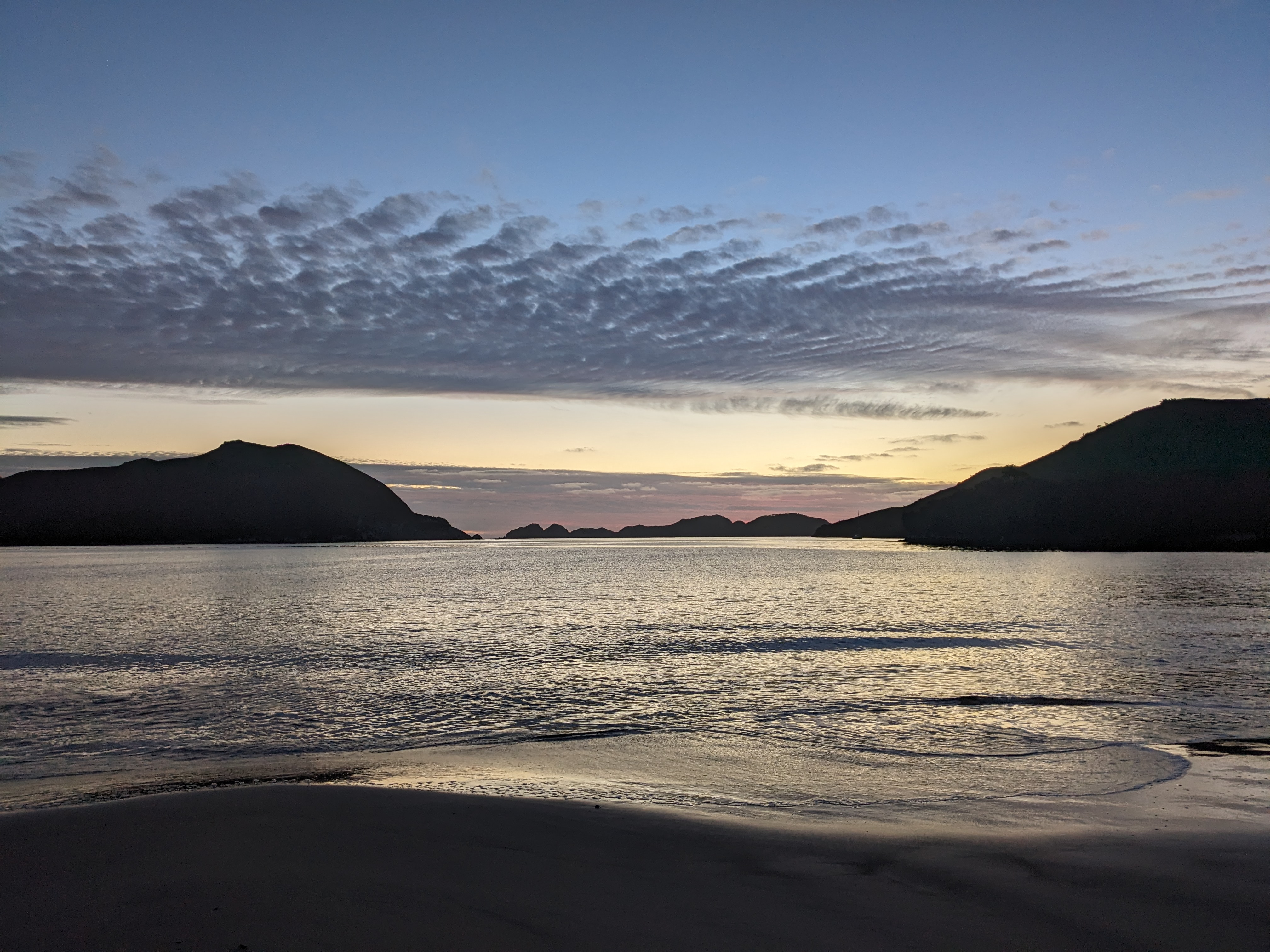
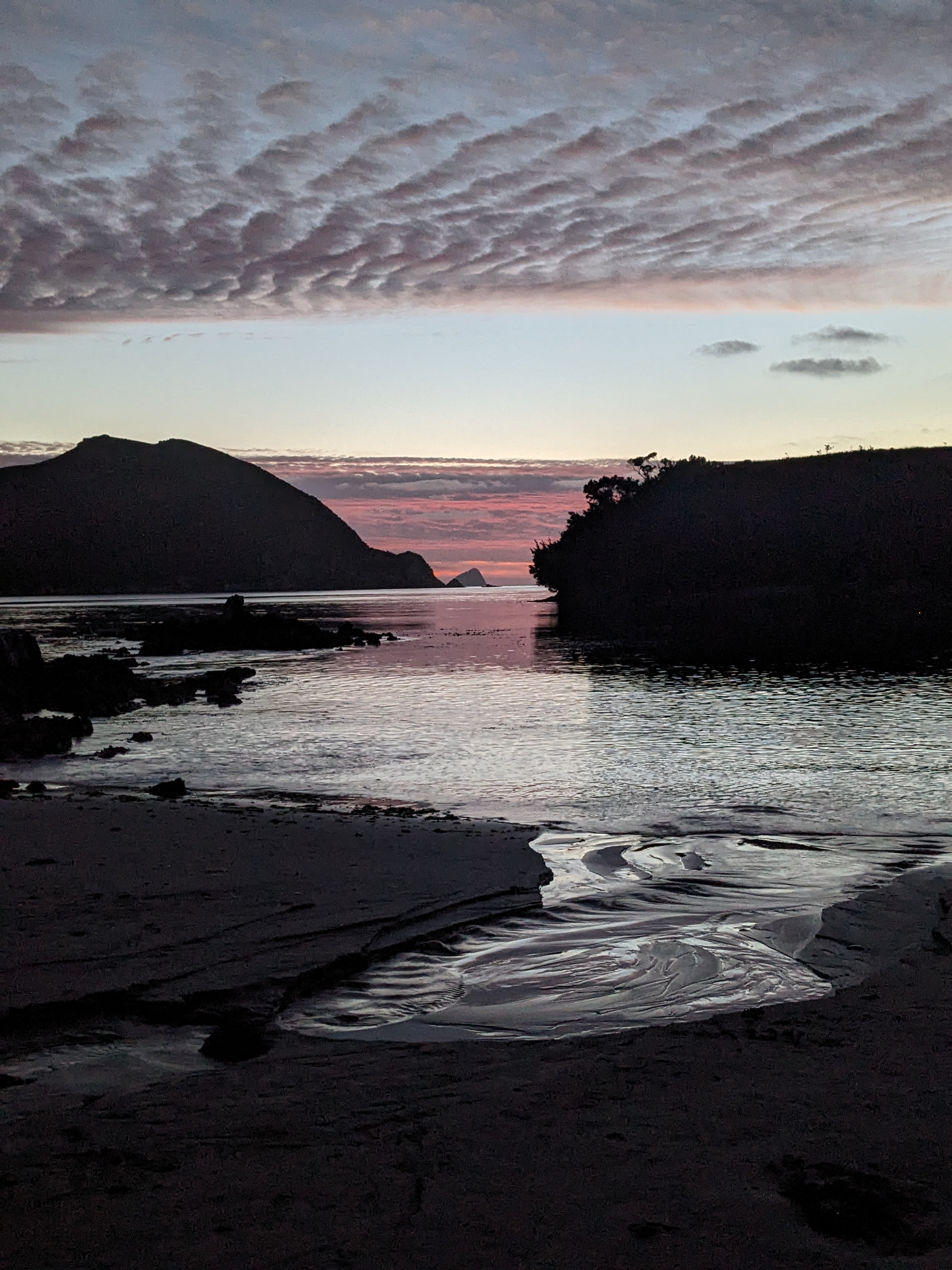
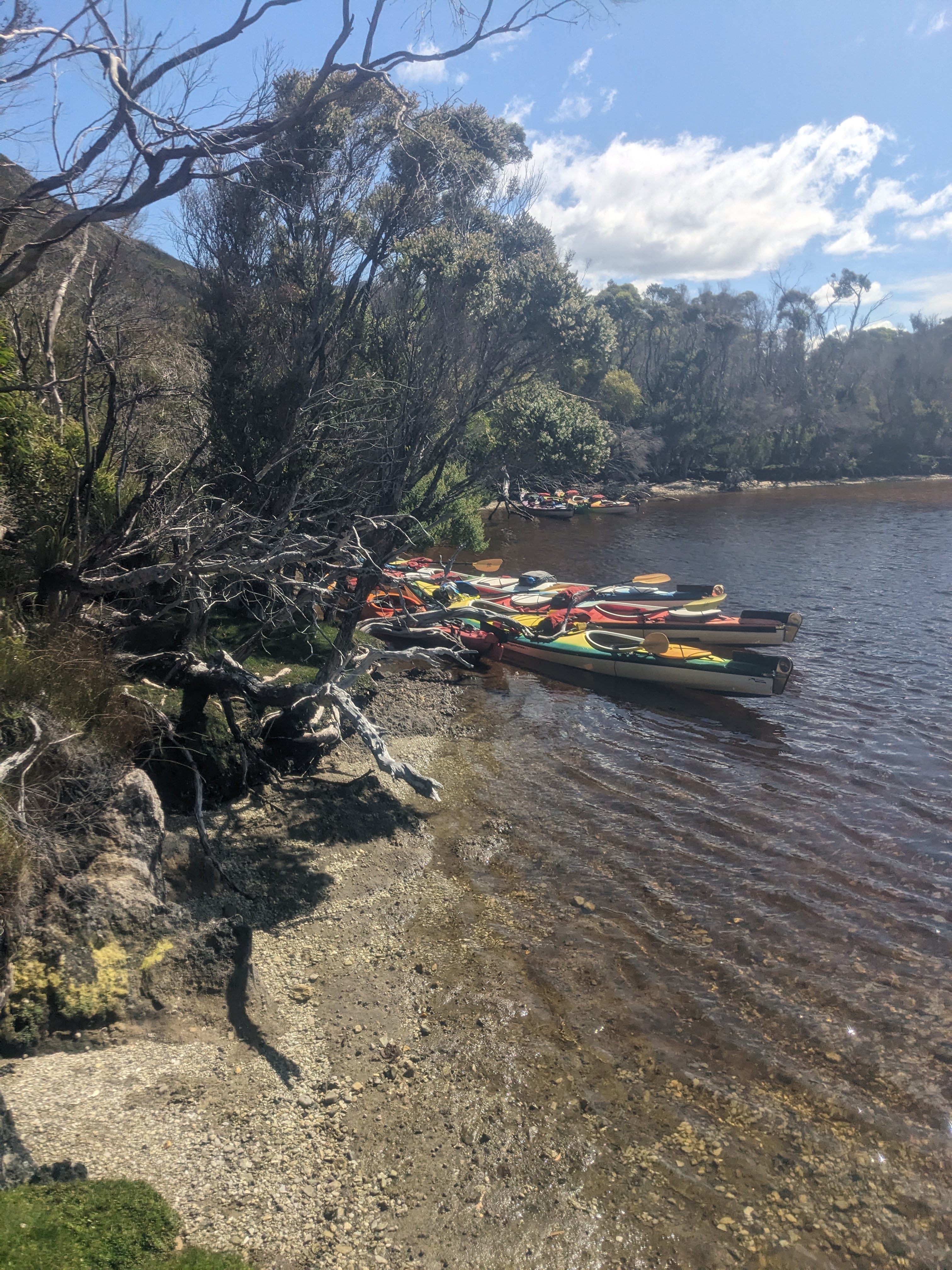
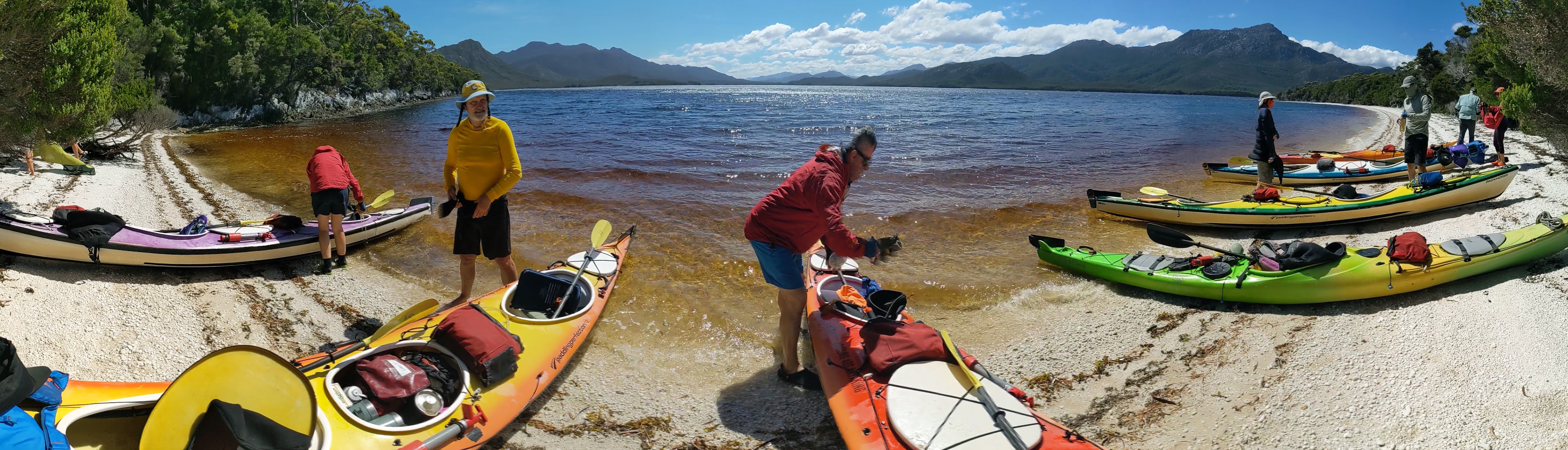
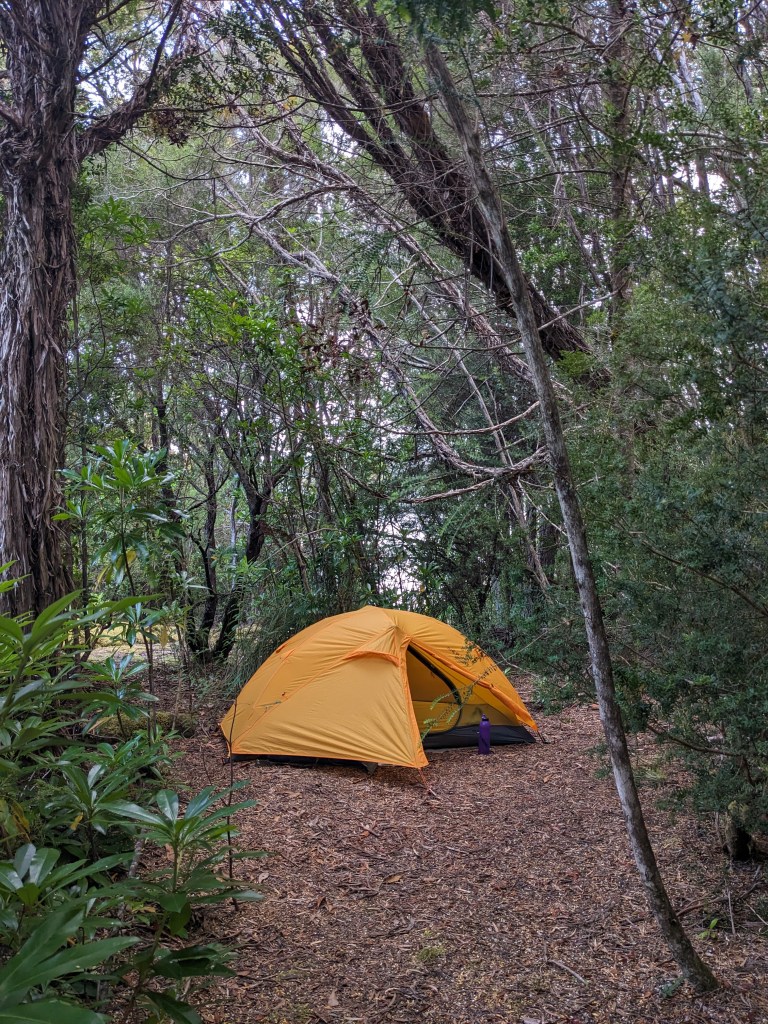
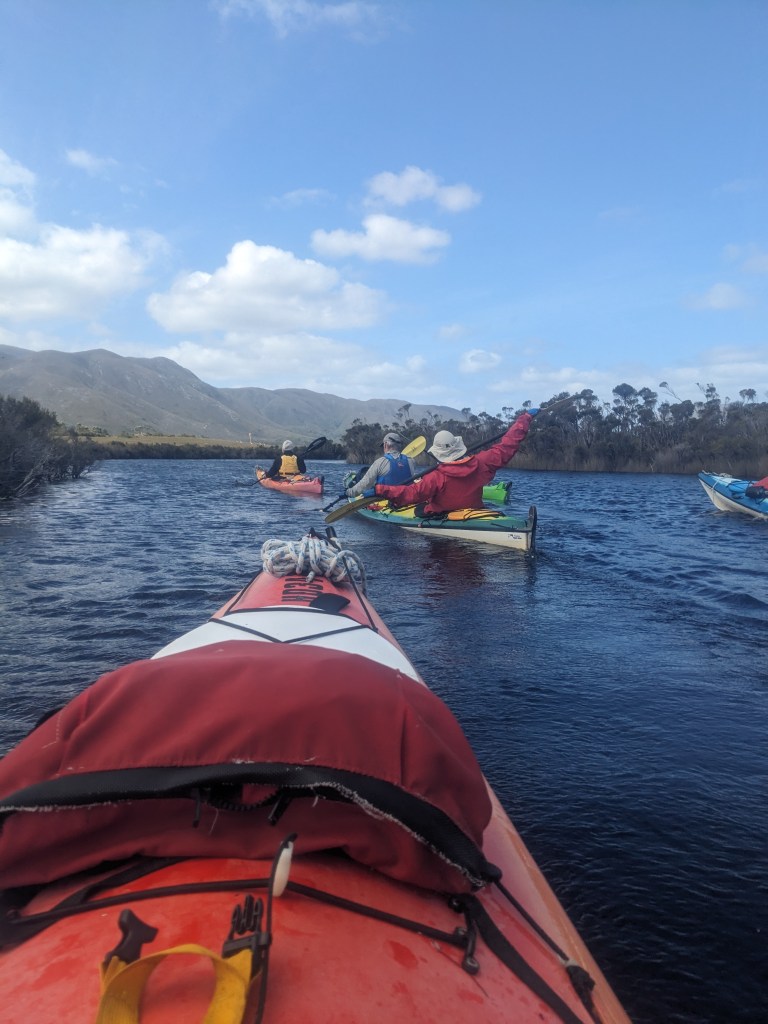
After loading our Packhorse double kayaks and manouevering them into the creek (no mean feat), we set off around mid-day for Platypus Point. Despite their weight and width, the Packhorses moved reasonably well through the water and the low wind enabled an easy paddle to the stony beach at Platypus Point (below Mt Rugby on map above). The panorama shot below is slightly deceptive as the vegetation comes close to the beach, and the kayaks needed to be tucked into the trees to ensure they were above high tide. You can just make out my orange tent in the tangle of vegetation: ankle breaking if you needed to relieve yourself during the night. After a refreshing dip and the first of many great meals made by our guides, the SW put on the first of its magic skies: intense colours and, of course, a perfectly positioned kayak to add interest.
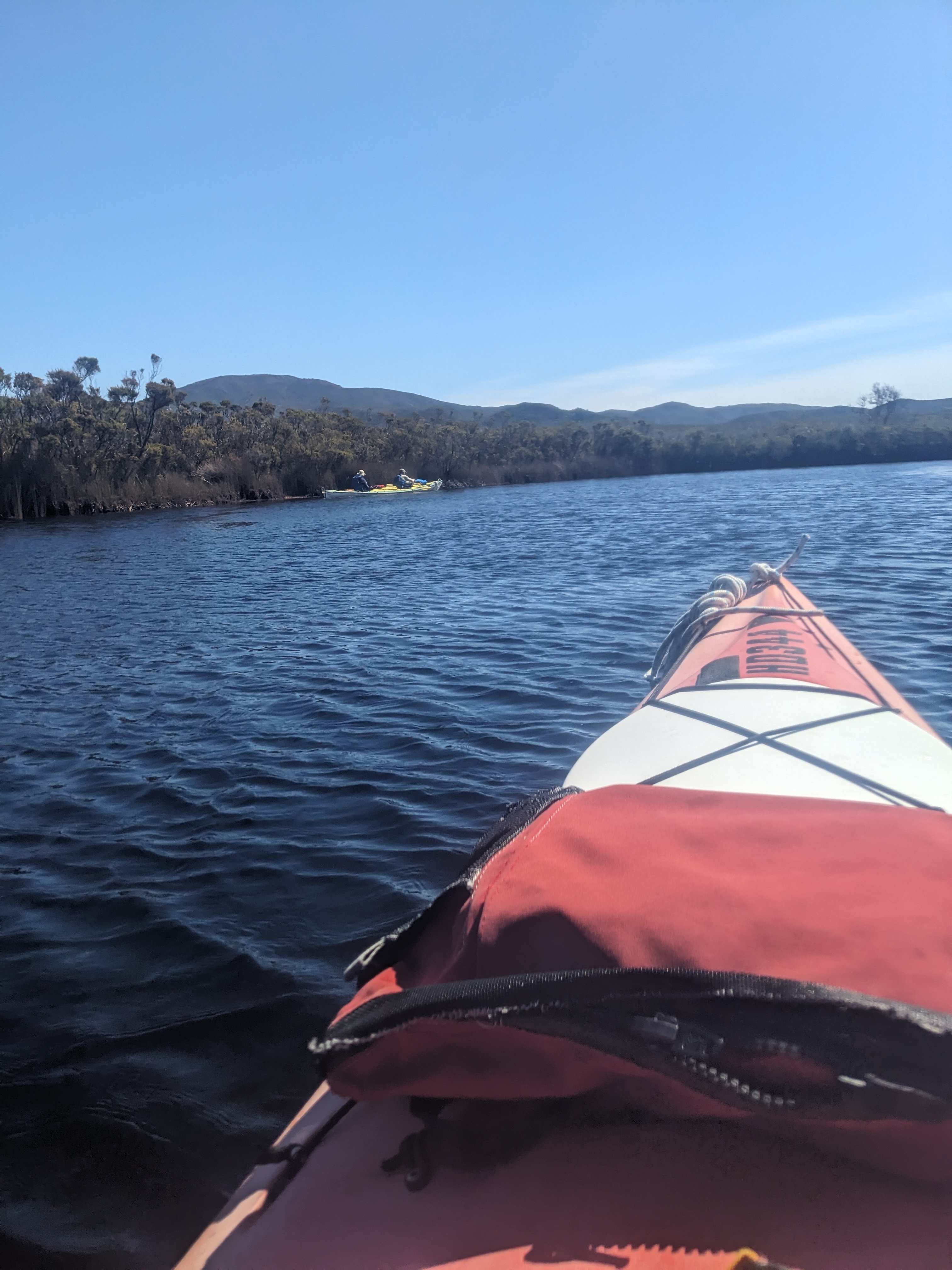
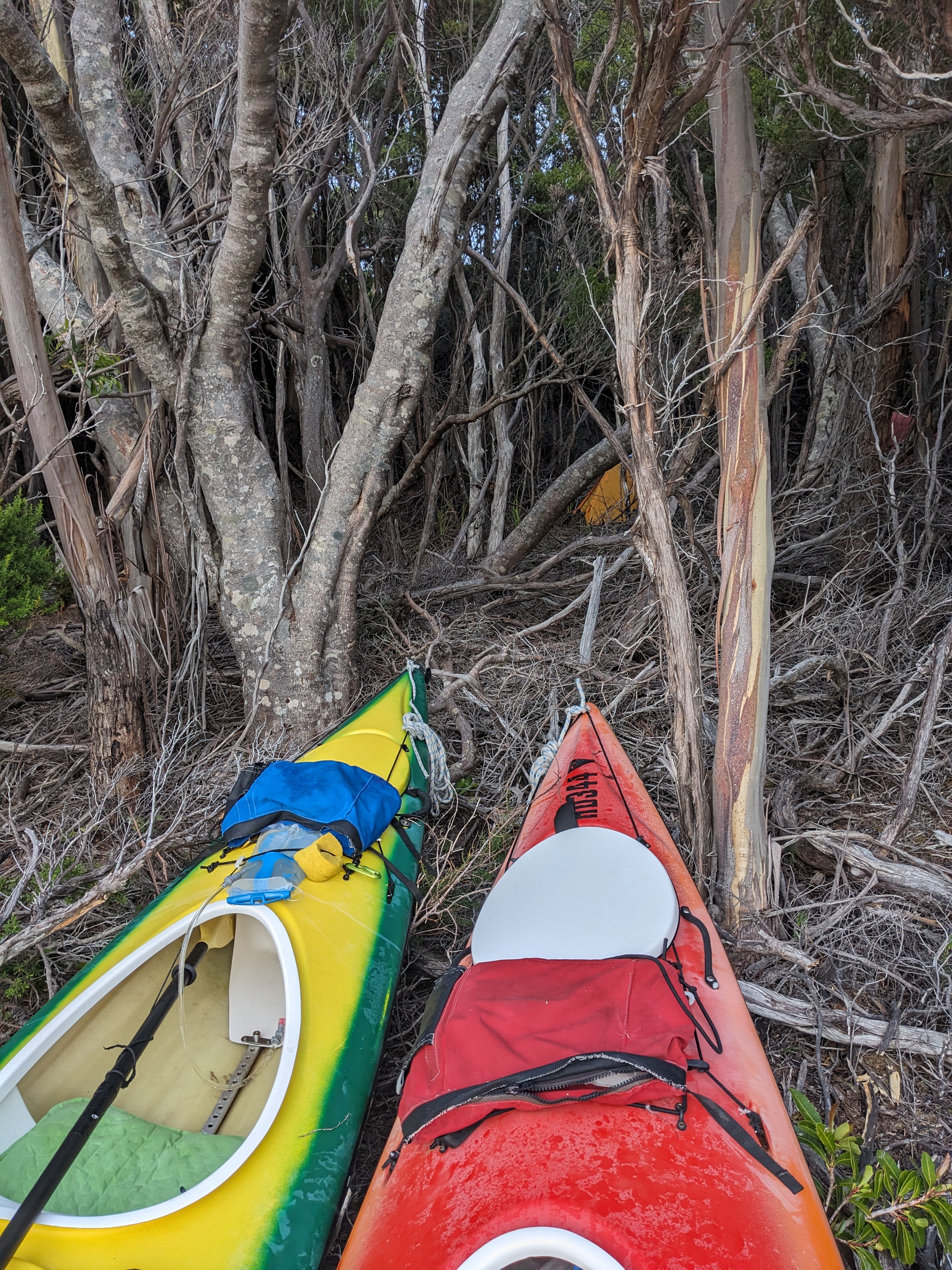
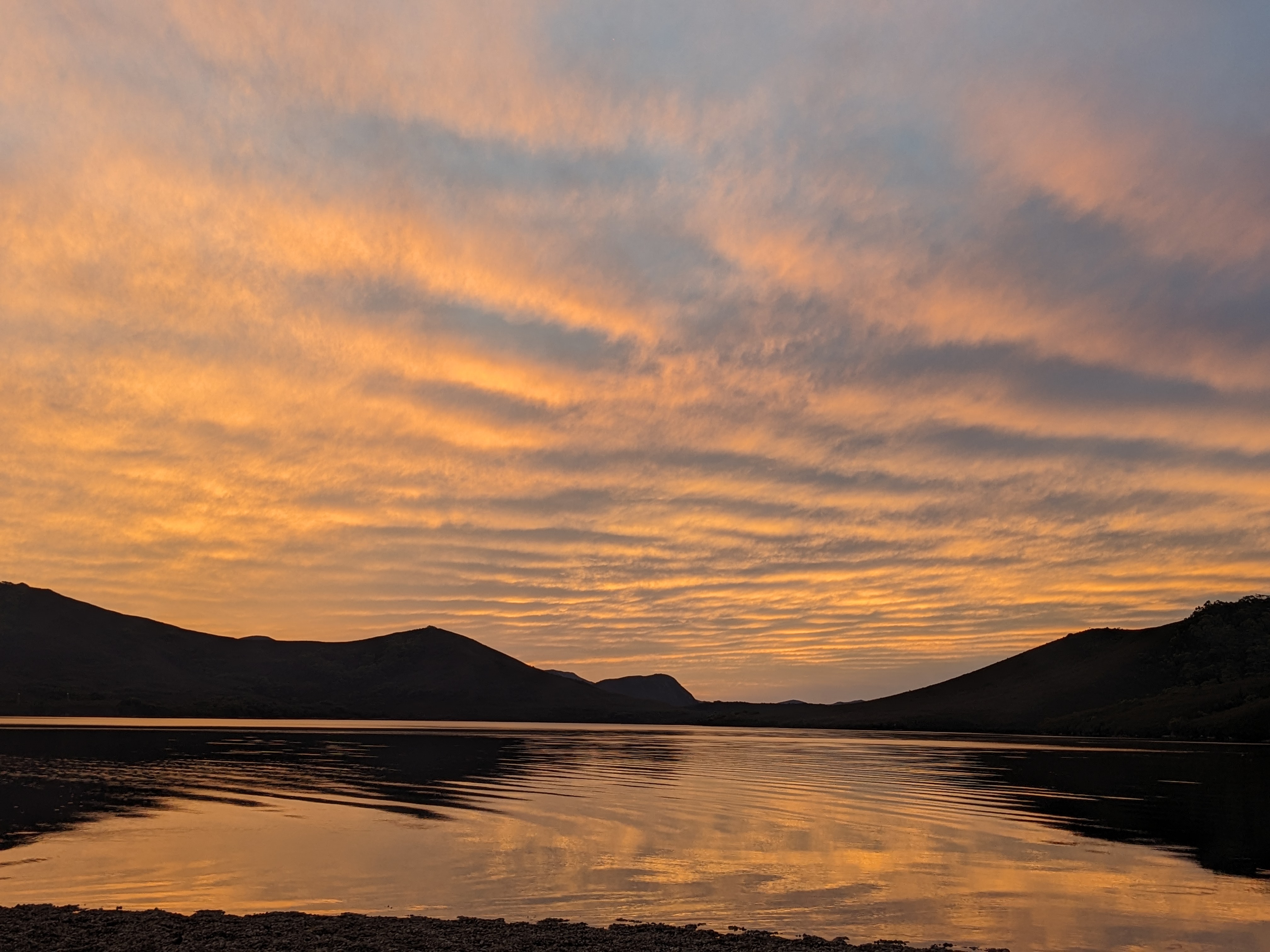
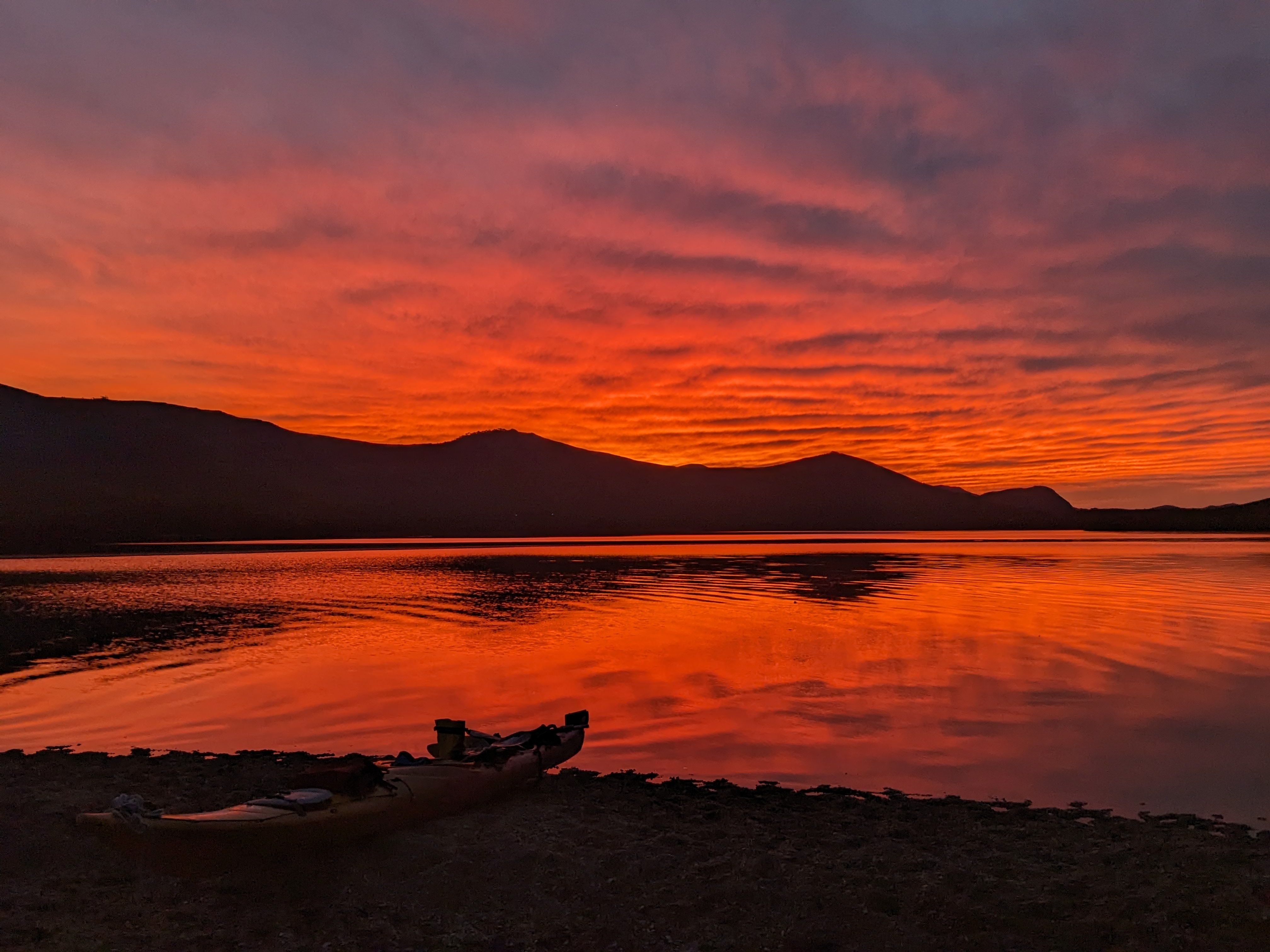
1/3/2026 The campsite of tangled dense vegetation, with discrete and tight spaces for 1- or 2-person tents, and soft, spongy ground combined to create a muted atmosphere for restful sleep. The birds that seemed absent when we settled in the night before made themselves known in the morning, though their call distracted me from emerging in time to see the stunning dawn sky. Lucky others were up in time to catch the spectacle. I was otherwise pondering the birds that live their whole lives in our temporary camping spot and wondering what they made of groups of humans that pass by just for 1 night. Happy for some crumbs and a change of company, perhaps? Then we were packed up and gone, to make the most of an anticipated wind that would push us along Bathurst Narrows and out to Port Davey.
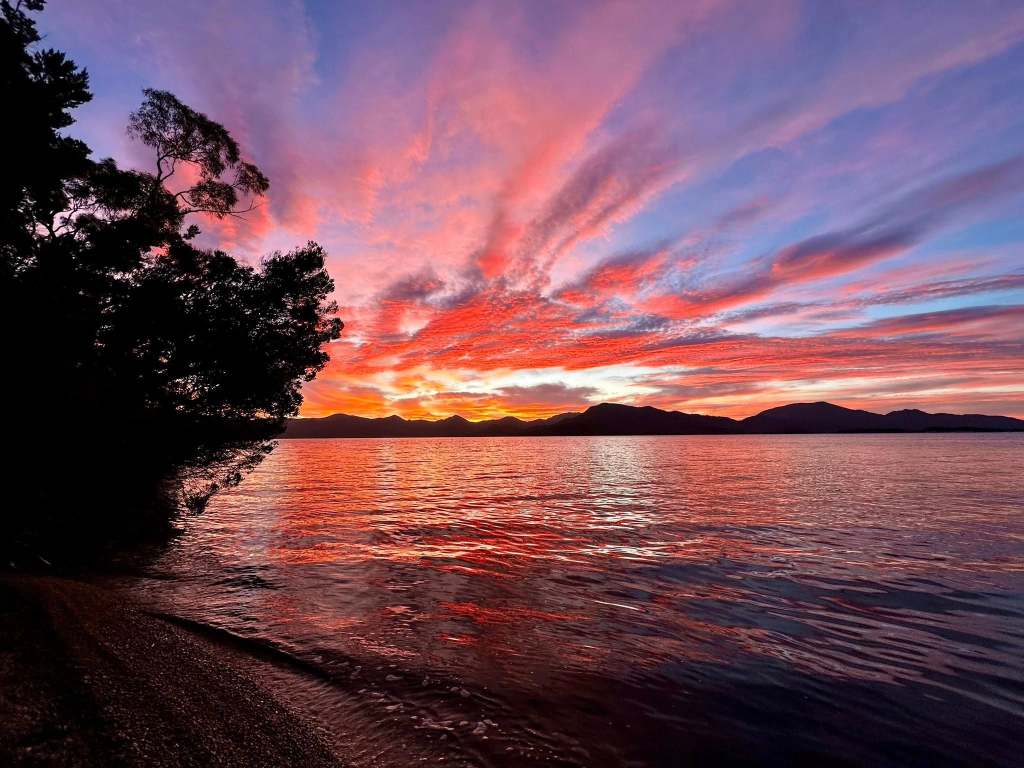
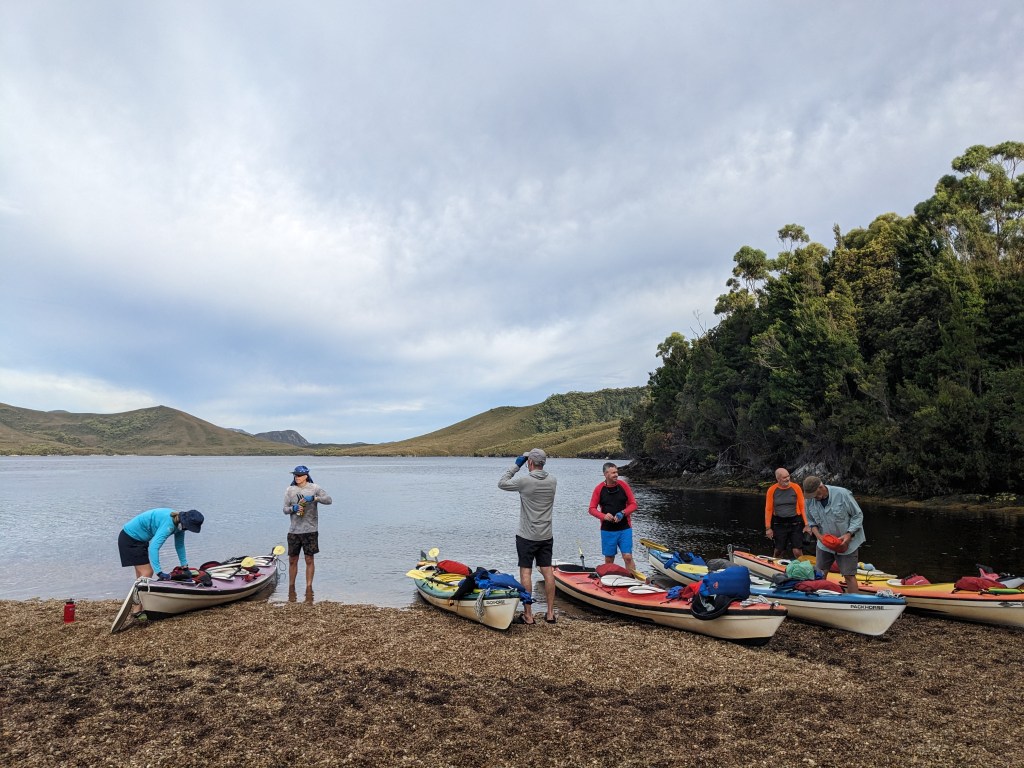
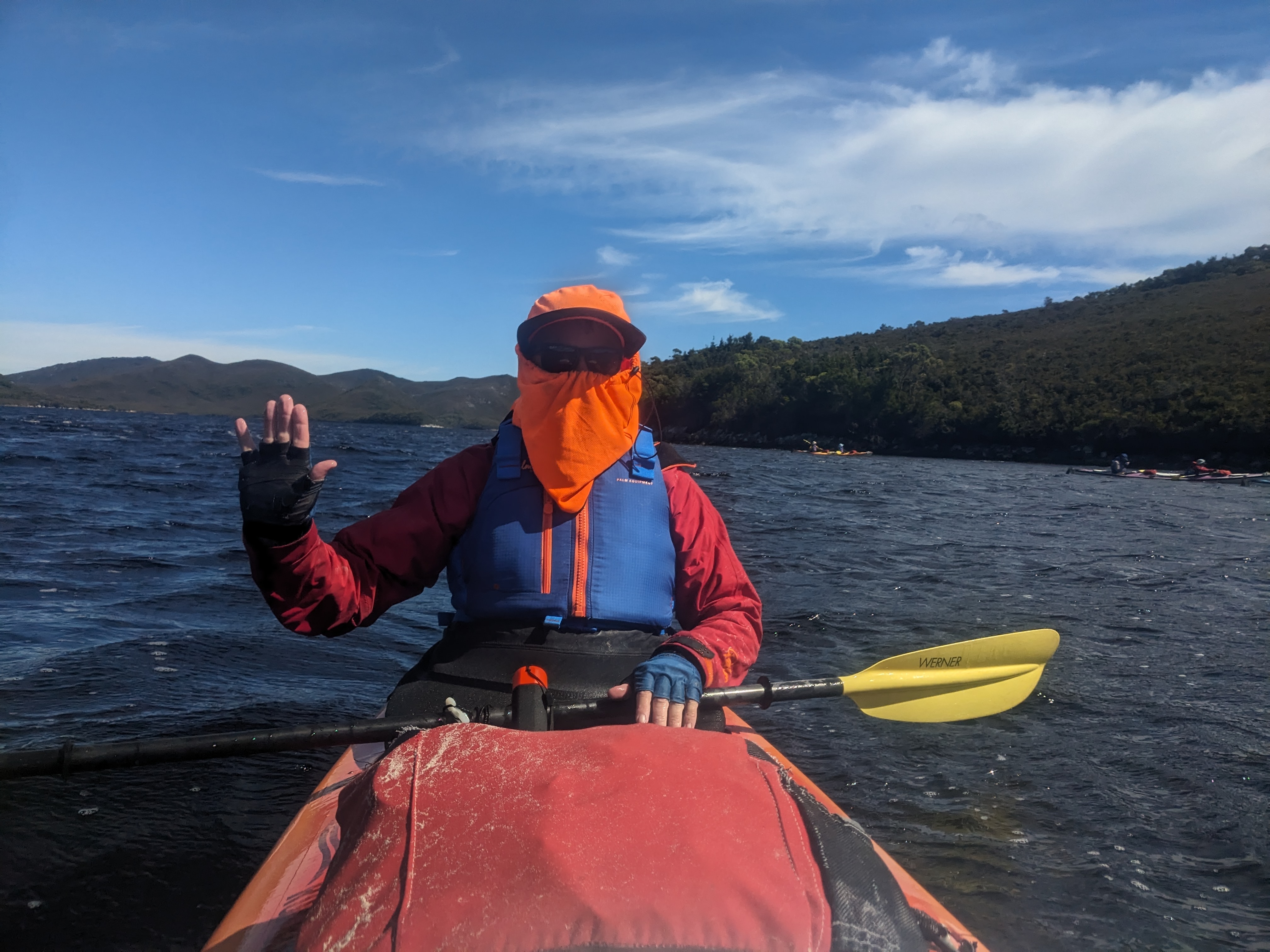
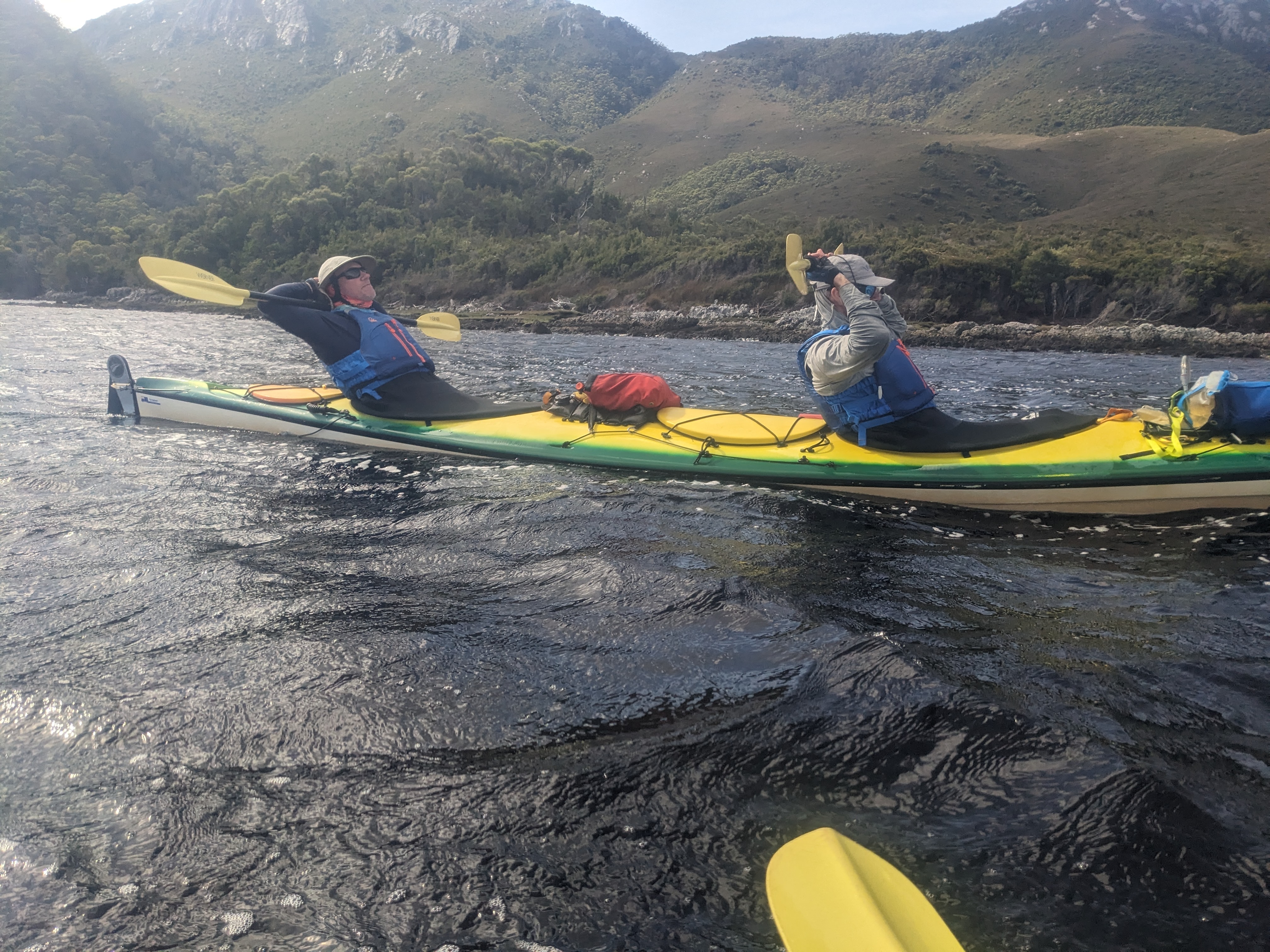
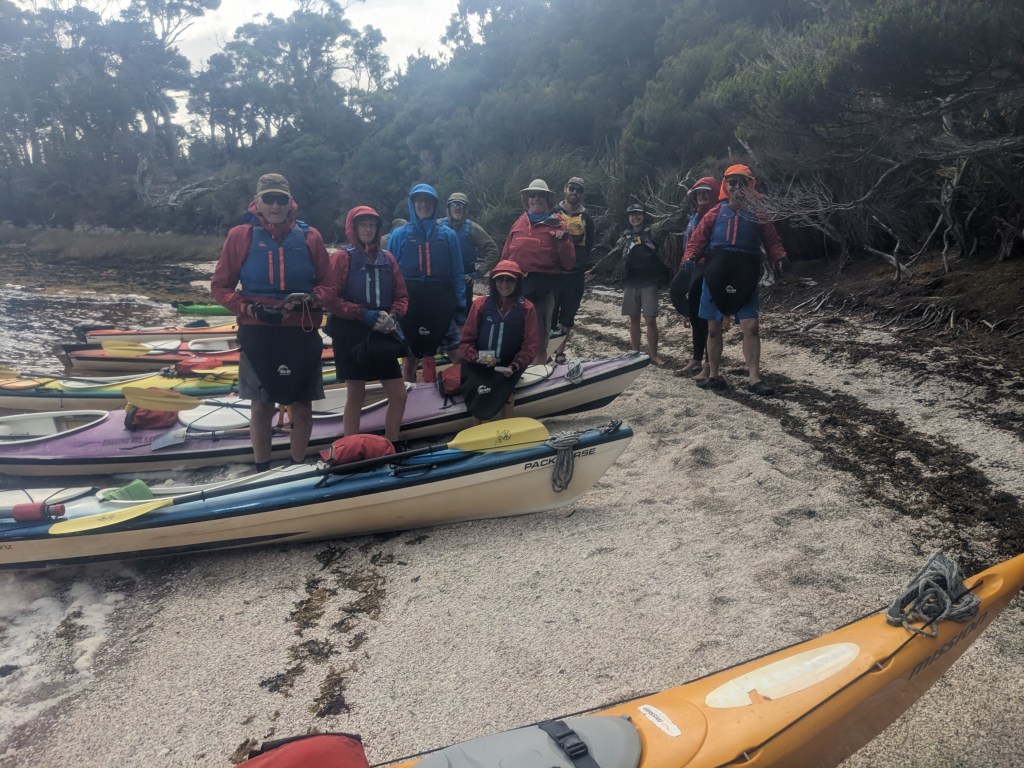
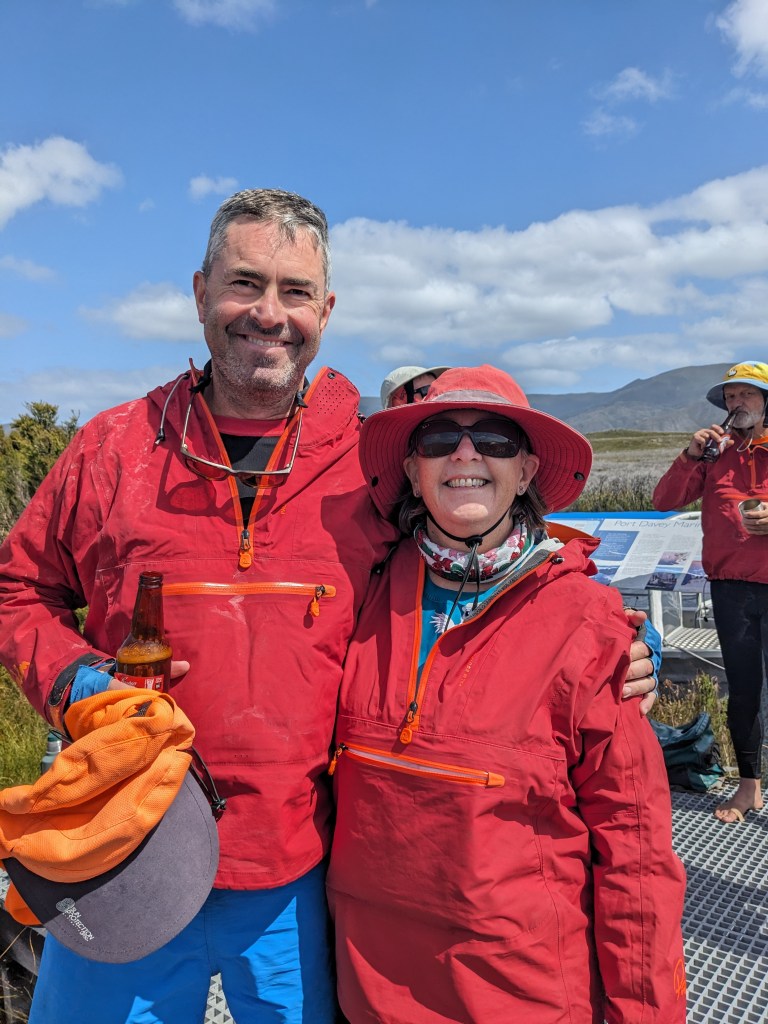
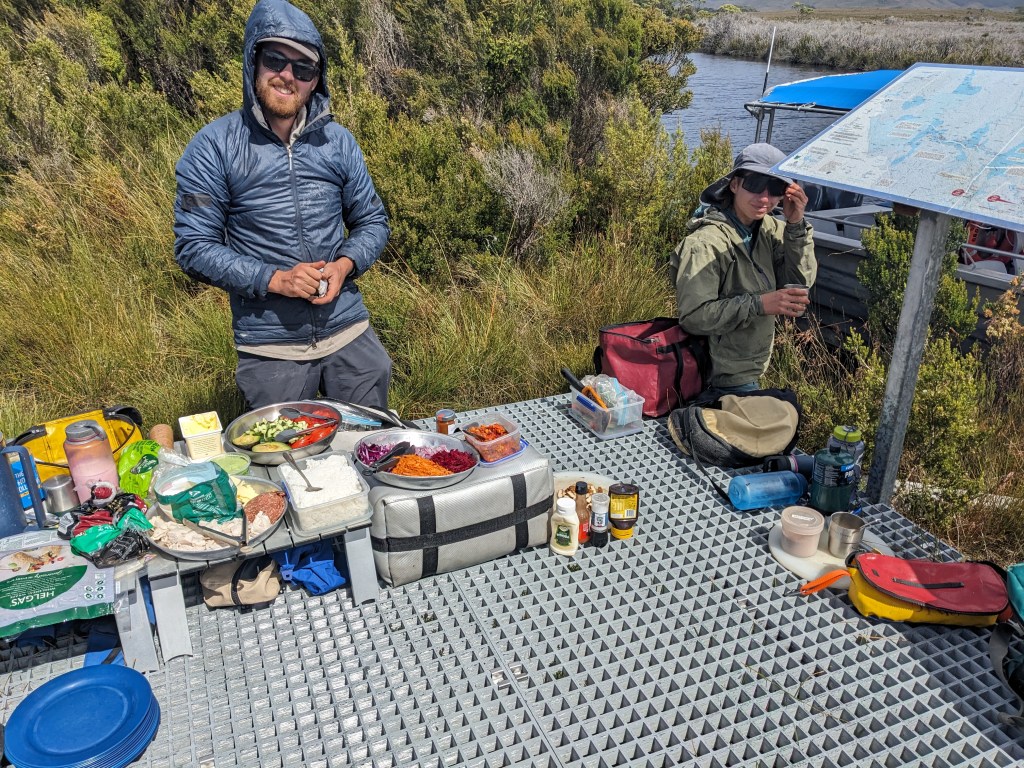
A comfortable paddling day under mostly cloudy skies. First stop was Schooners Hill and taking care to avoid rocks on the approach to the beach. Tristan and Rowdy had group feeding down to a fine art, with the orange lunch boat (manned by the Clark’s) yielding thermoses of coffee and hot water for tea, wraps with an abundance of choices of fillings, and always some sweet morsel to finish off. Lunch provided a chance to snap a photo of my paddling buddy, Jason Donald, who proved tolerant of my variable paddle speed, ready for a chat on a multitude of topics or equally ready to stay silent in the face of awesome scenery. Fortunately, Jason had the patience to ably steer the red juggernaut with its cantankerous rudder system (thanks, Jason). After lunch we topped up the water bags from a conveniently located waterfall before heading out to the Breaksea Islands, which provide an element of wind protection for Bathurst Channel. Remarkable for the completely up-ended rock layers that they are comprised of, the weathering has resulted in a line of small islands with others under development. From there our destination for two nights was Spain Bay, which is a part of Port Davey that kayaks trips can’t always reach when the wind is up.
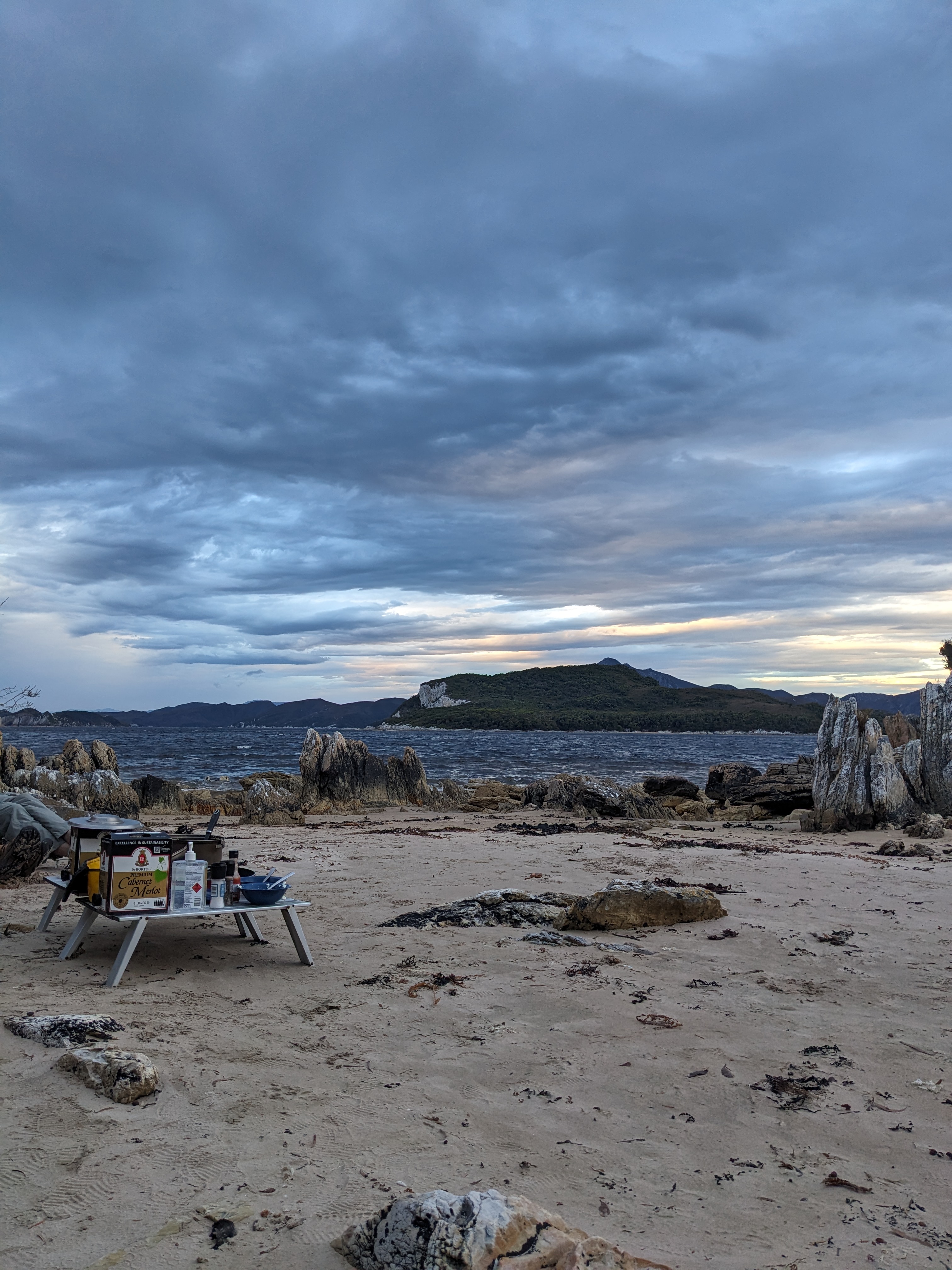
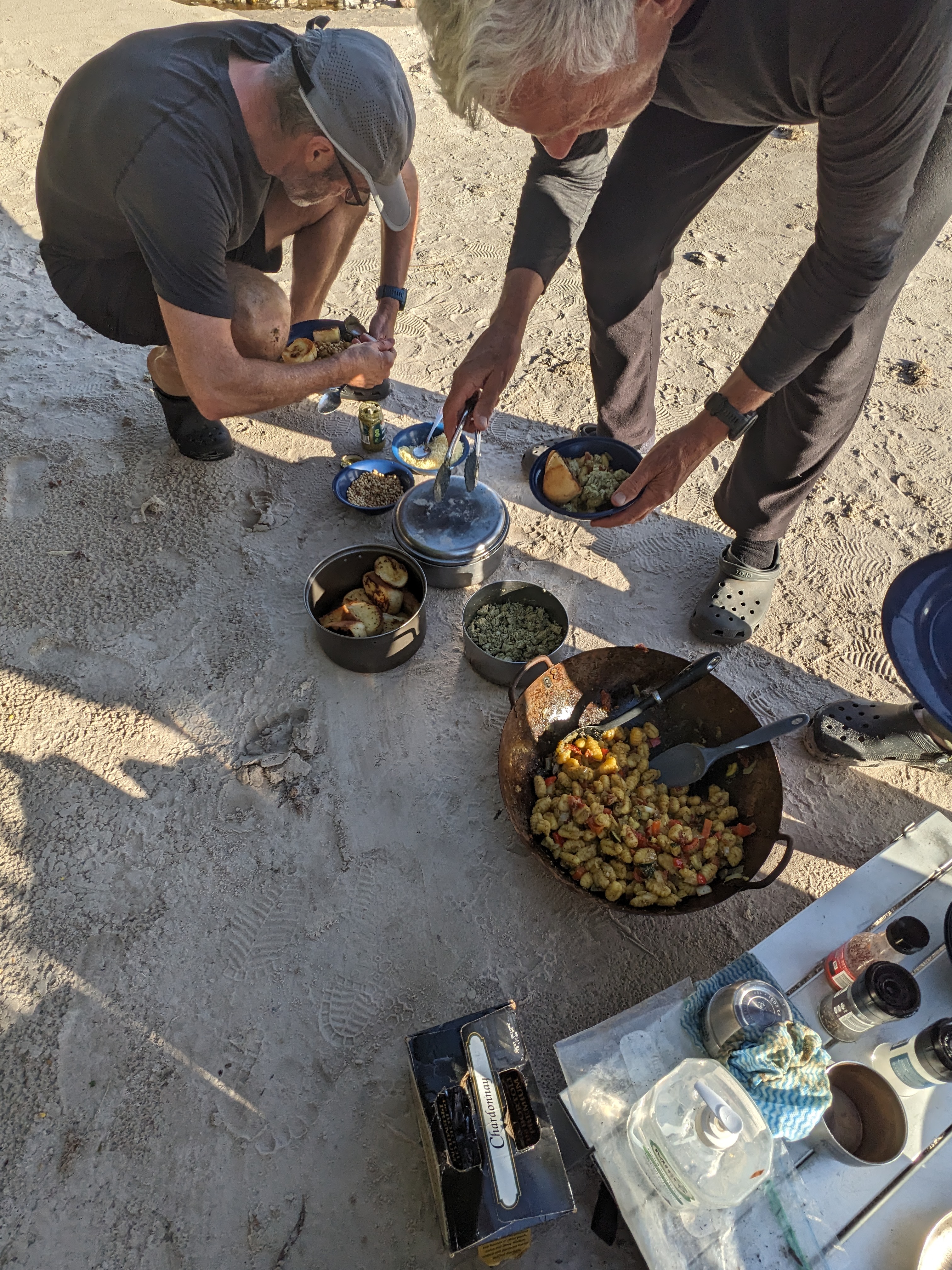
Spain Bay was a beautiful wide sandy beach where the kayaks could be easily lifted above the tide line. We were there in plenty of time to set up camp, walk to a far corner of the beach for a refreshing swim and explore the rocky outcrops near the campground, finishing with dinner on the beach as the sun and Chardy went down.
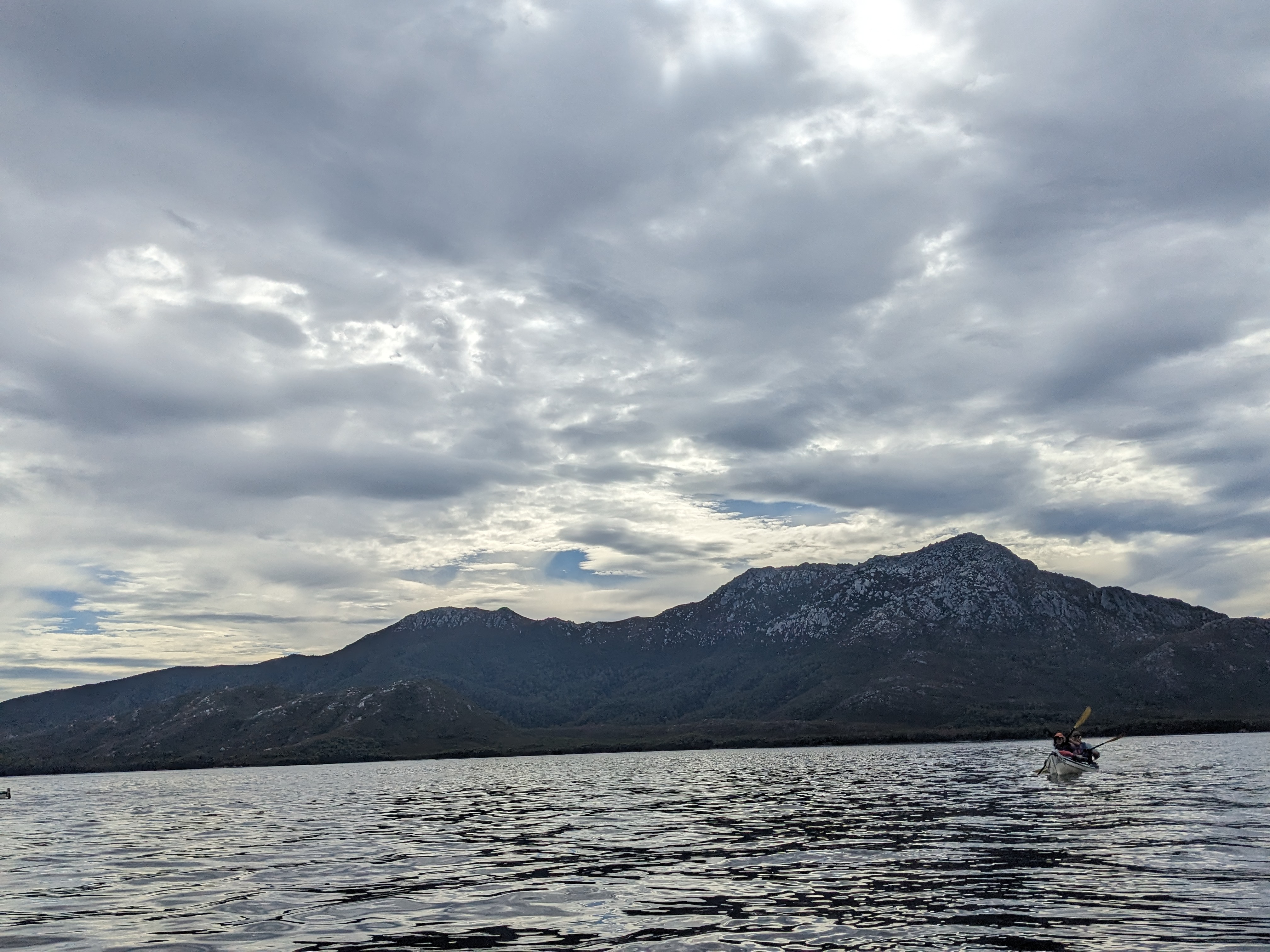
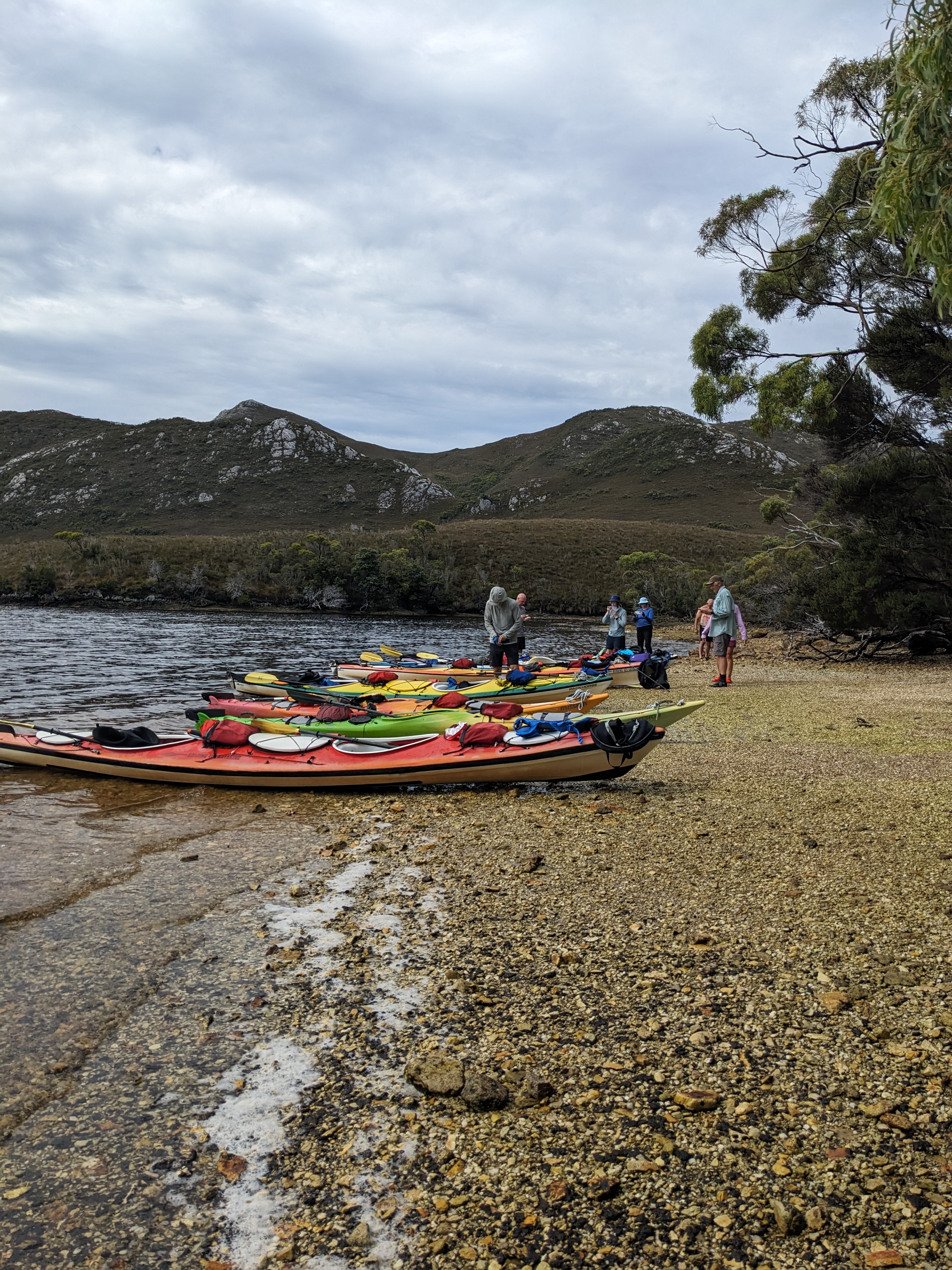
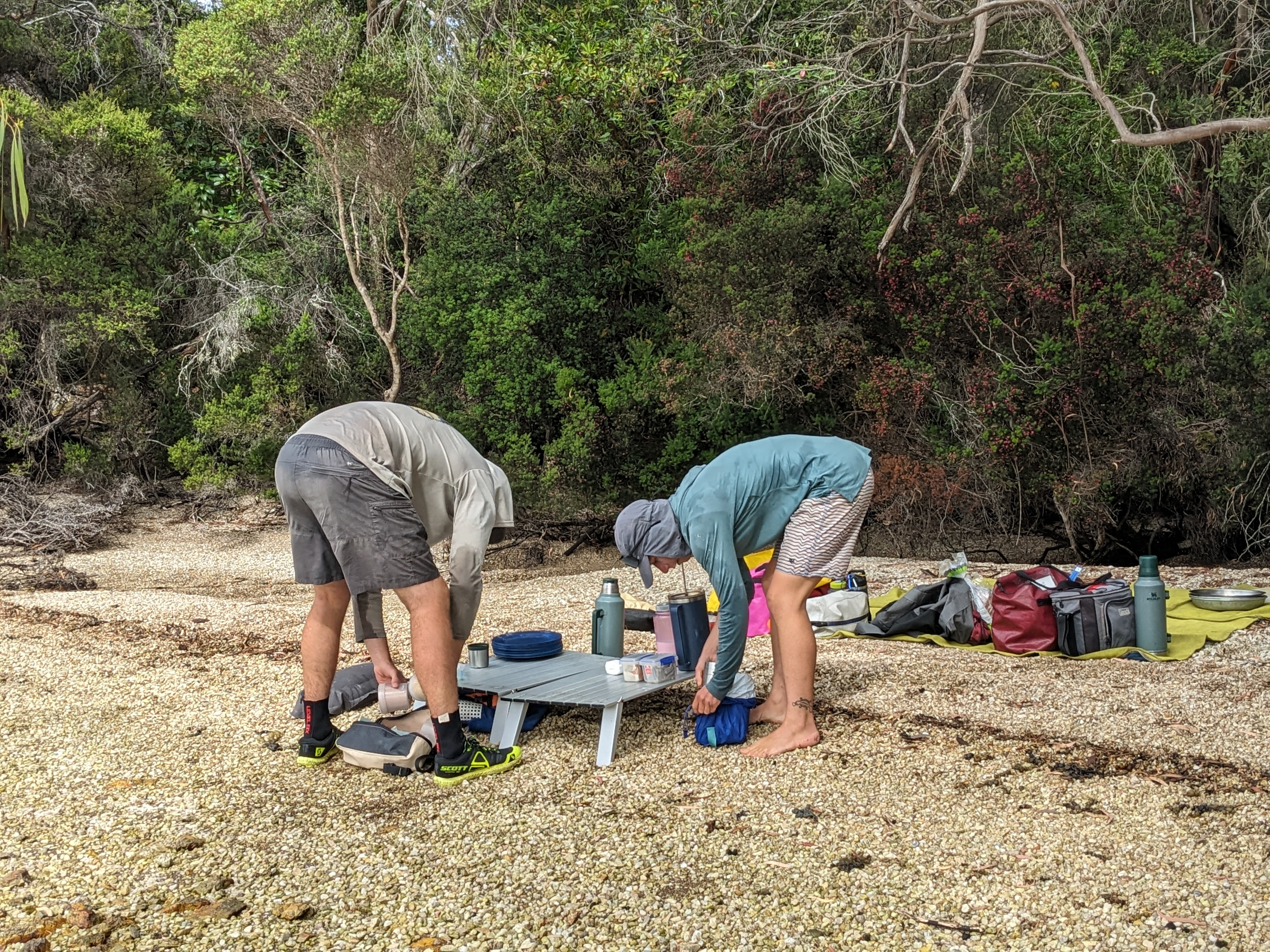
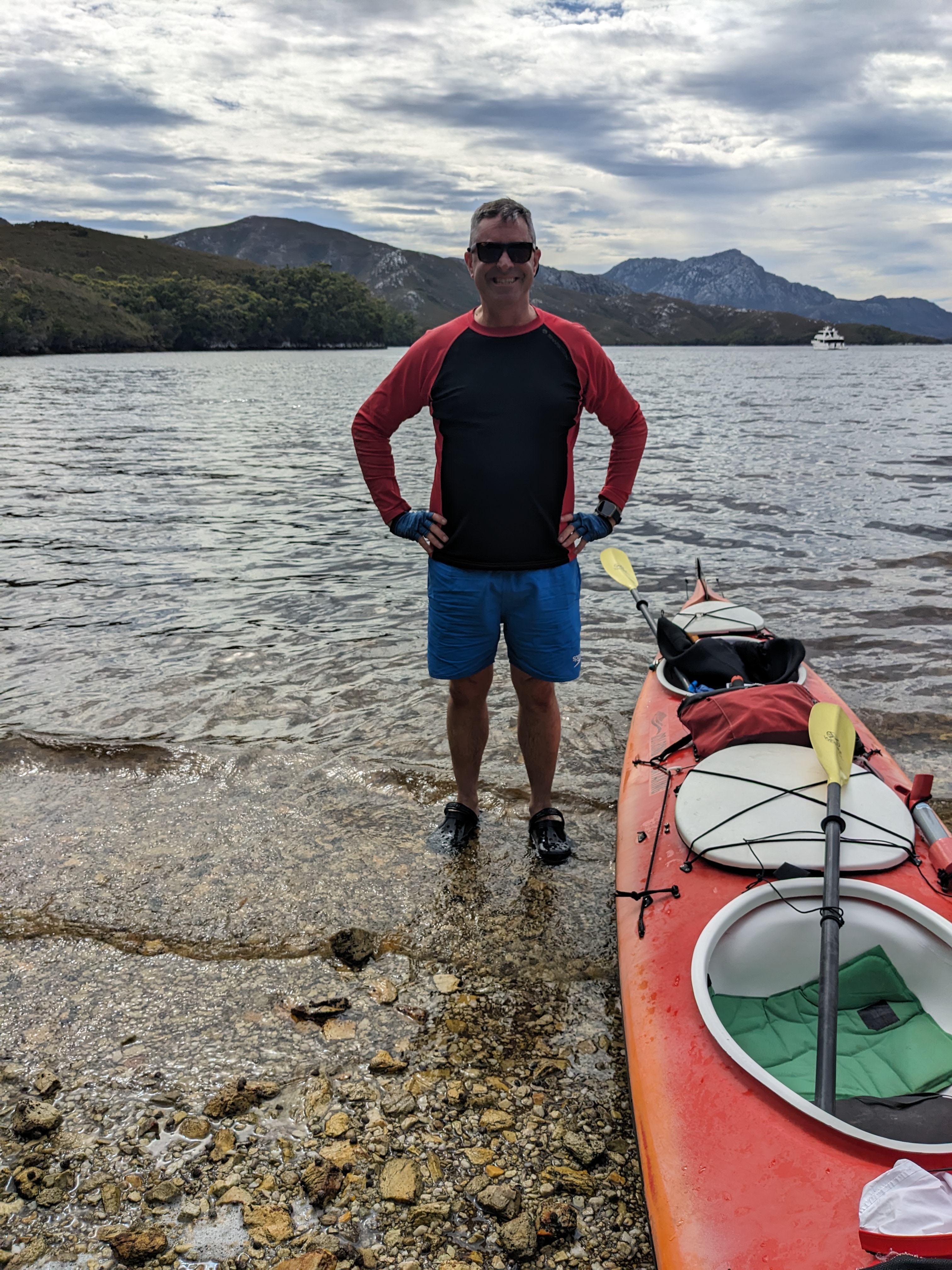
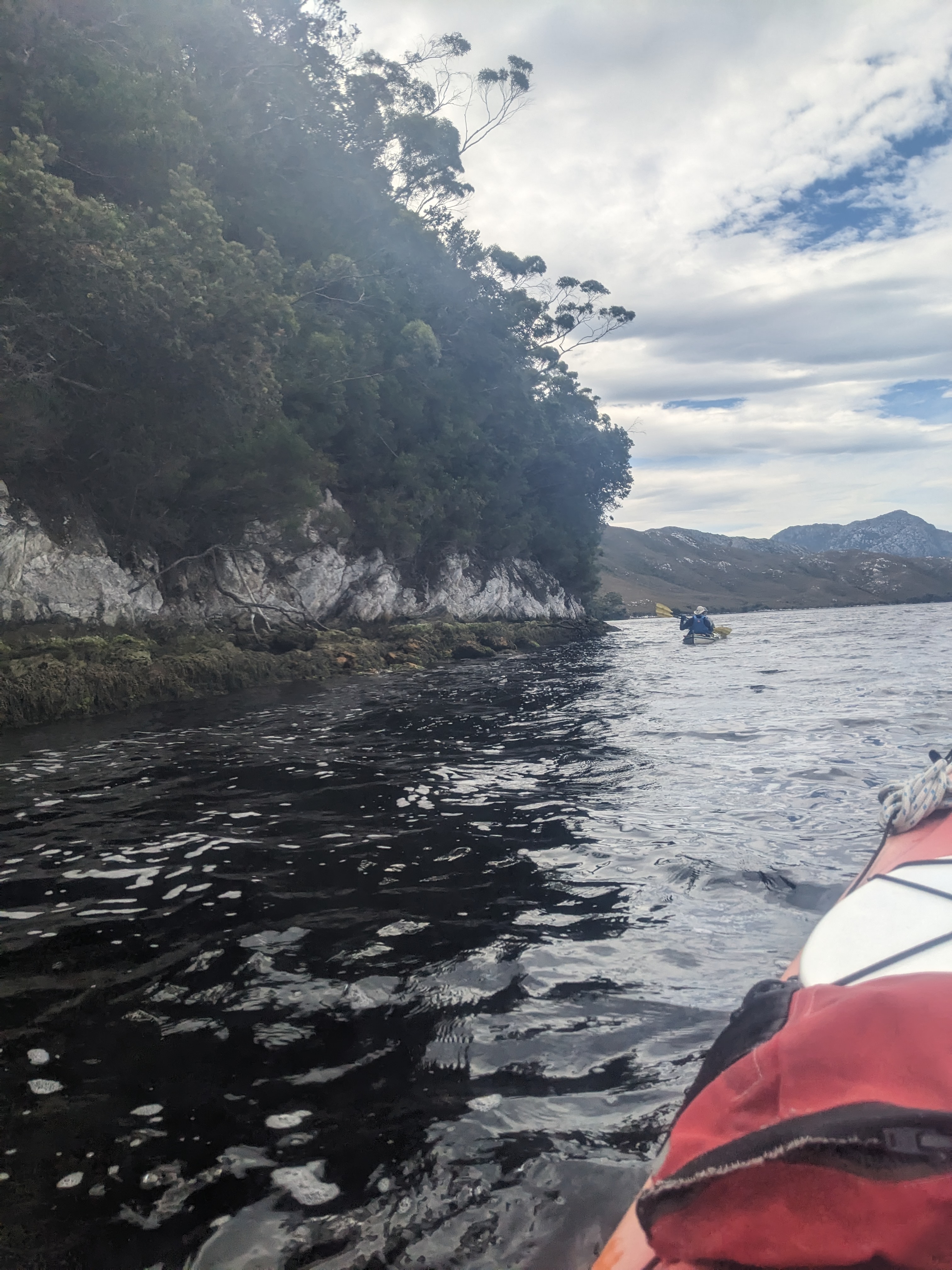
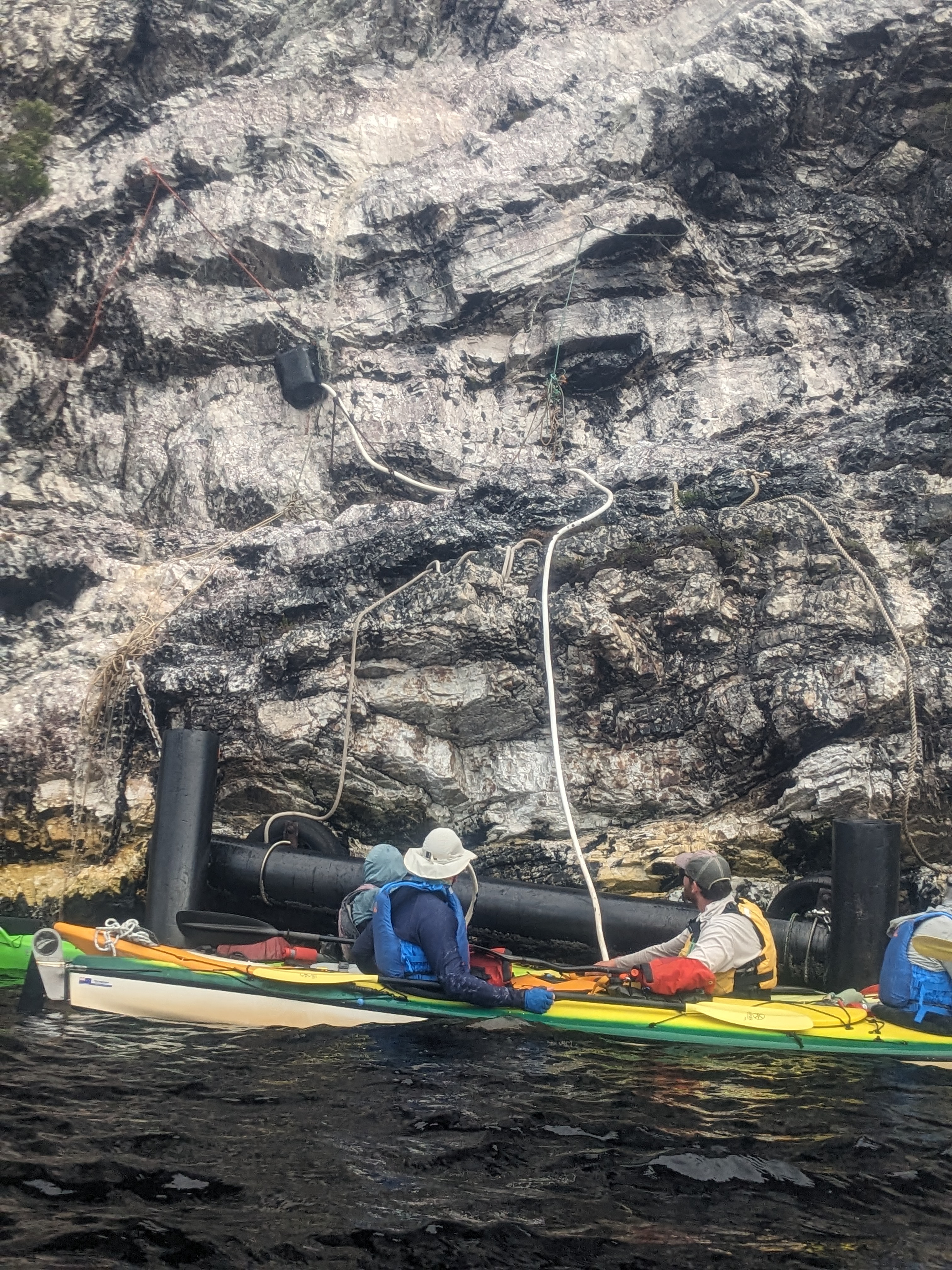
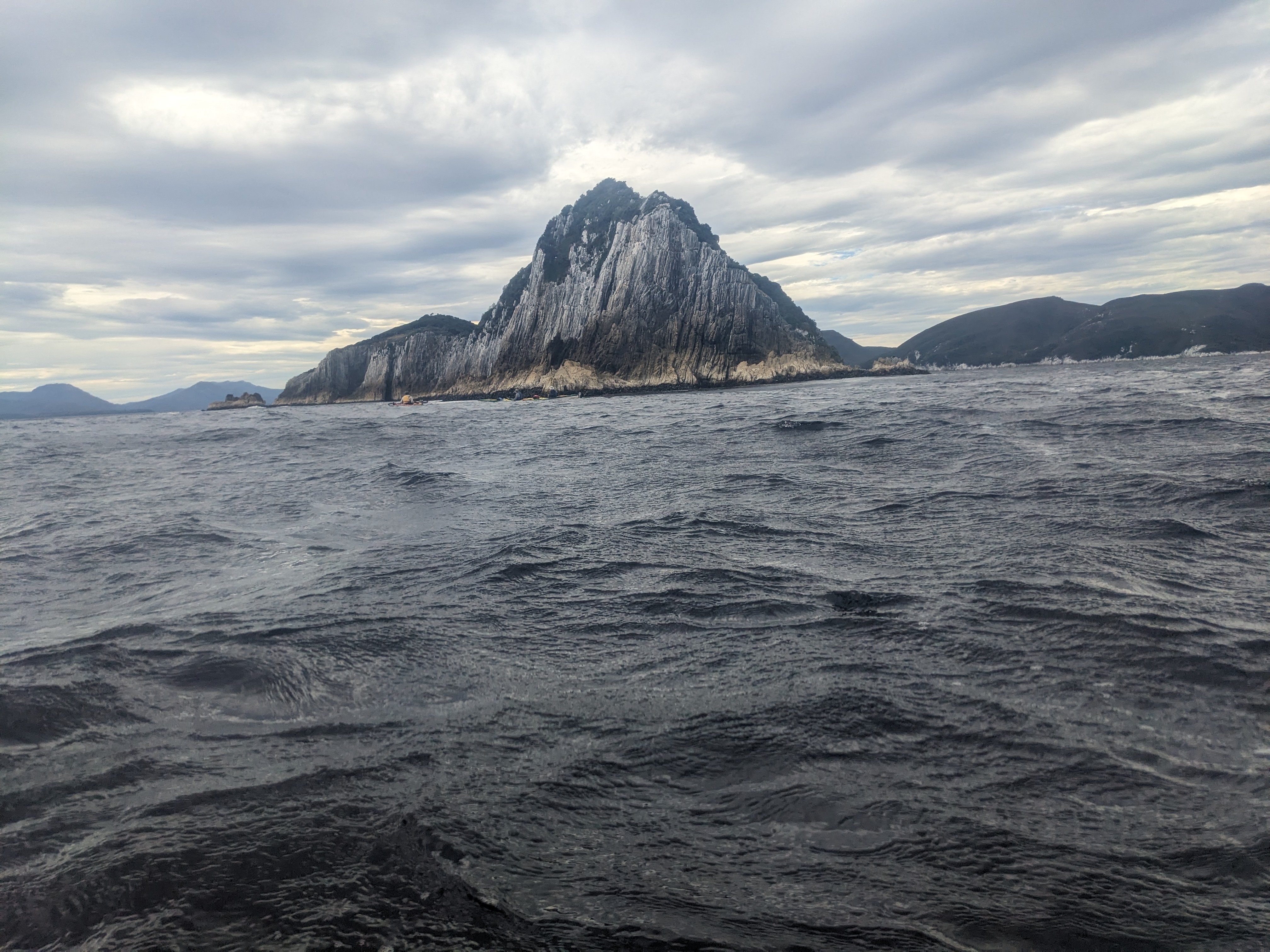
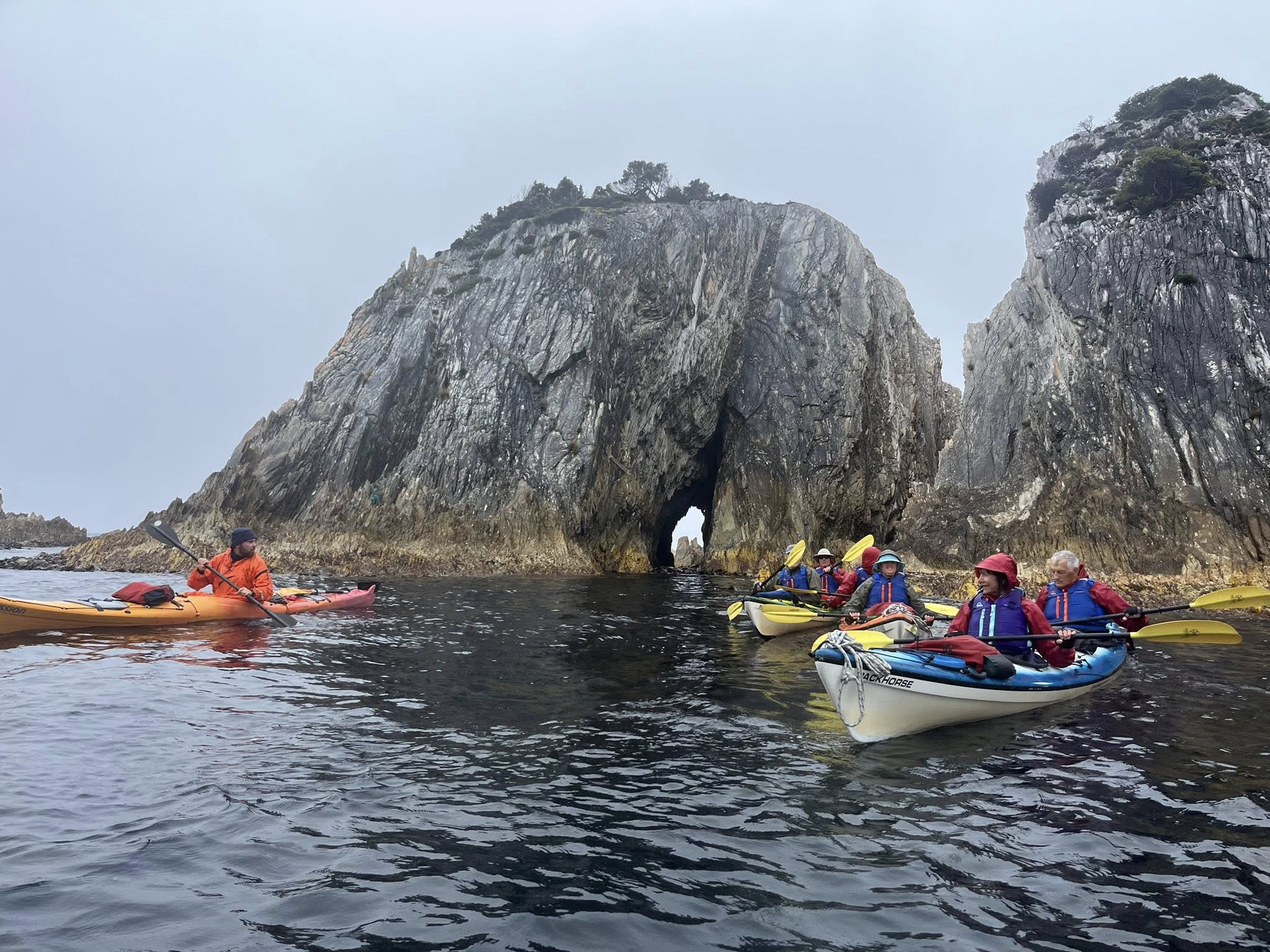
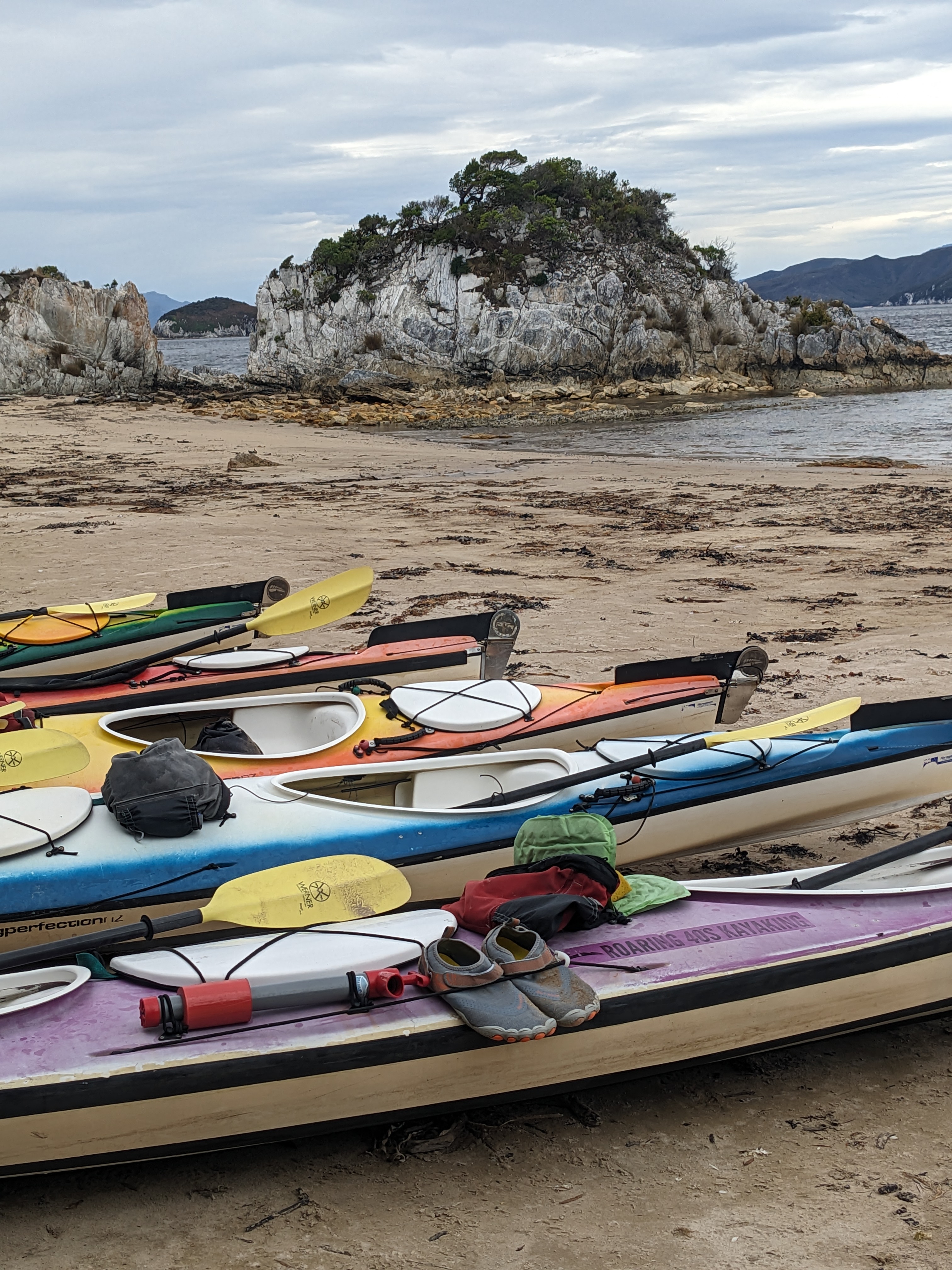
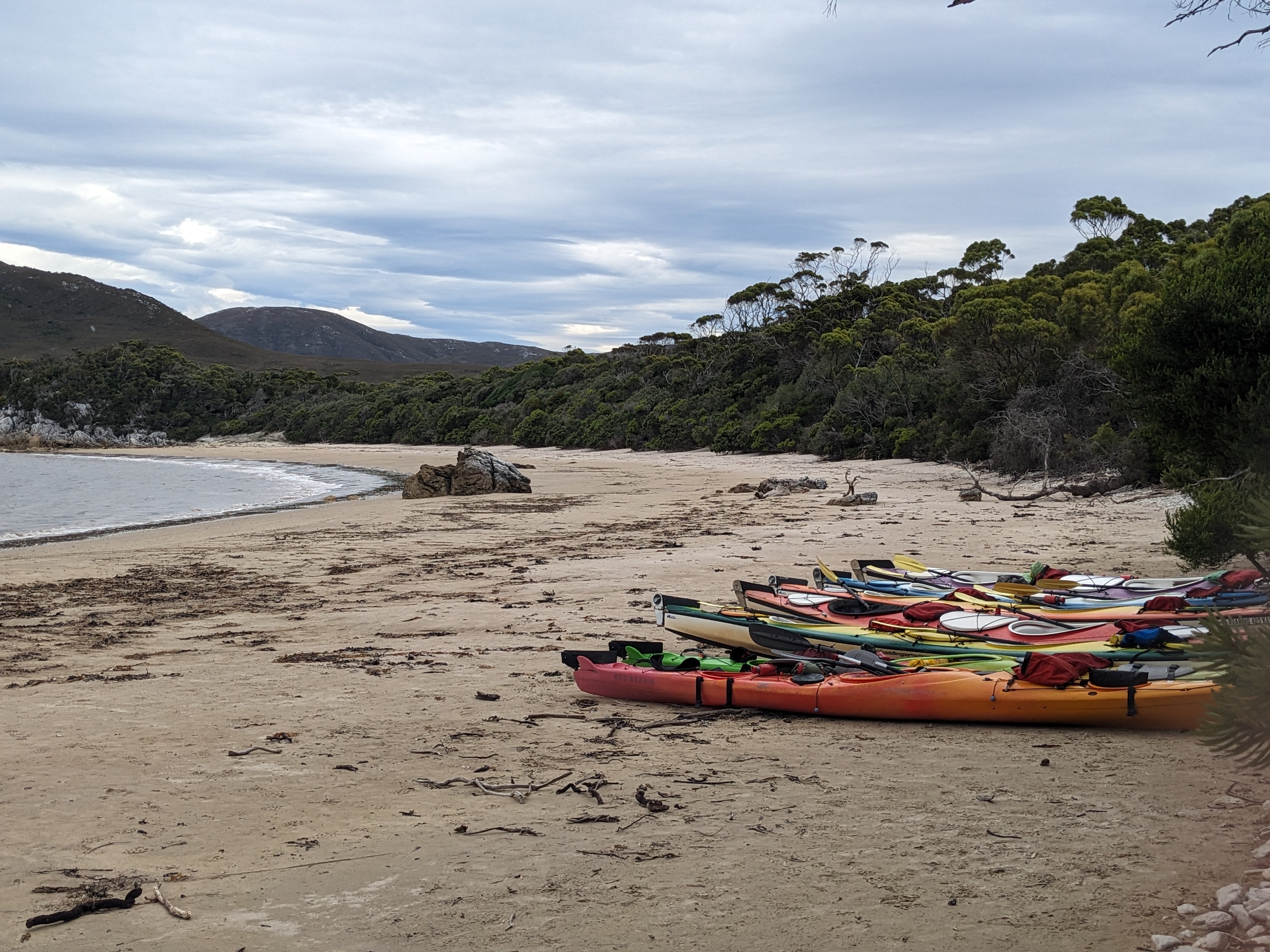
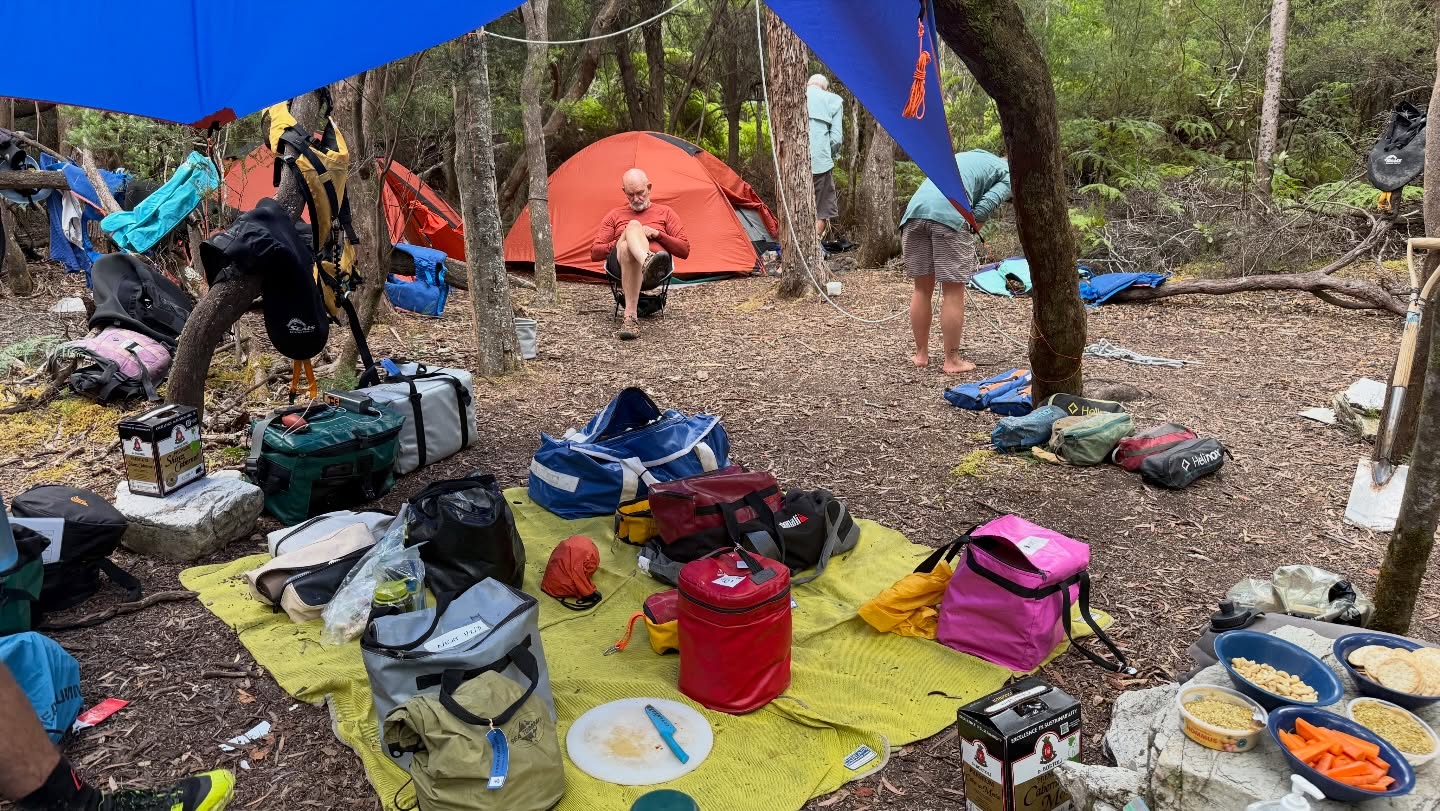
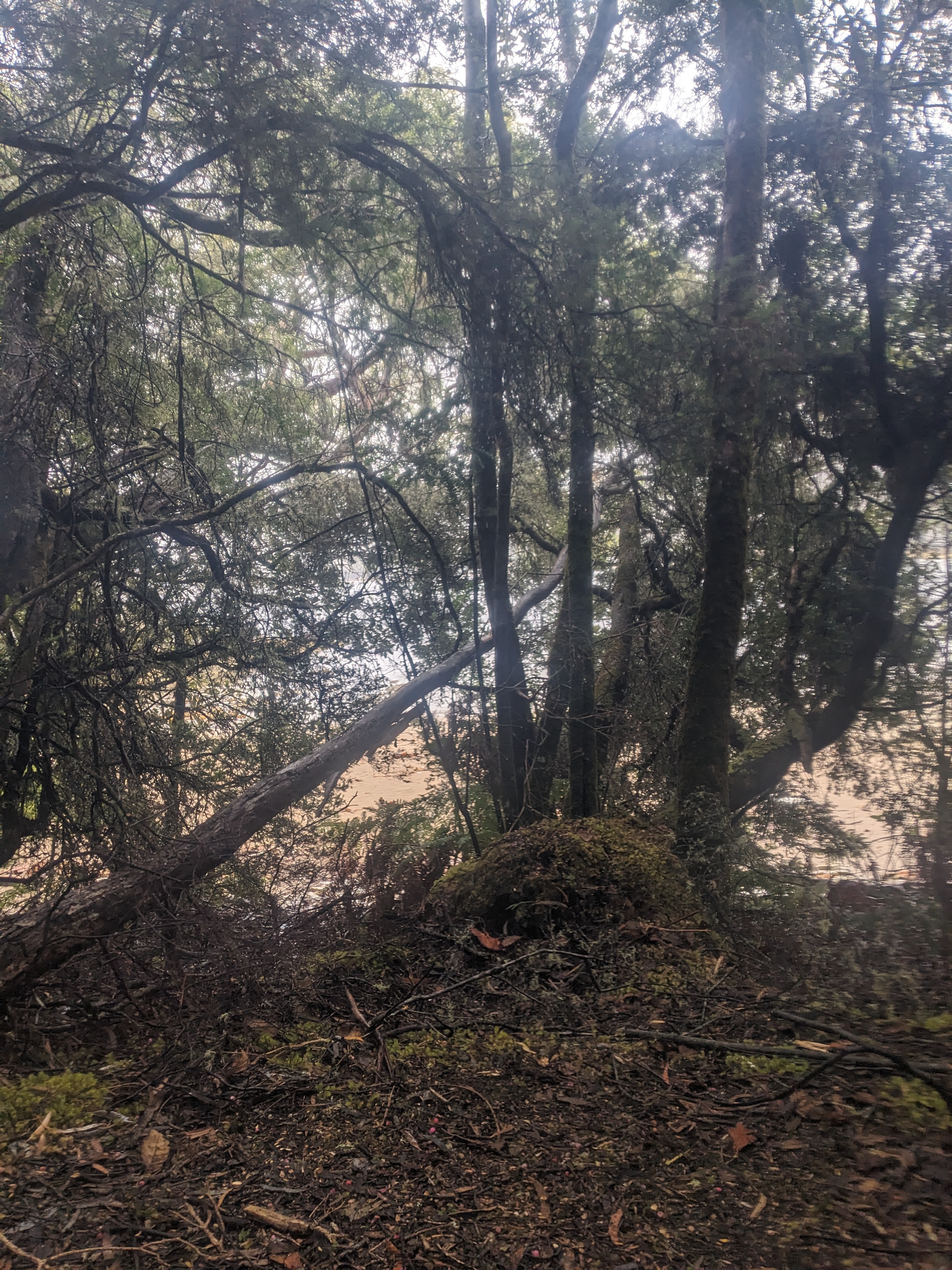
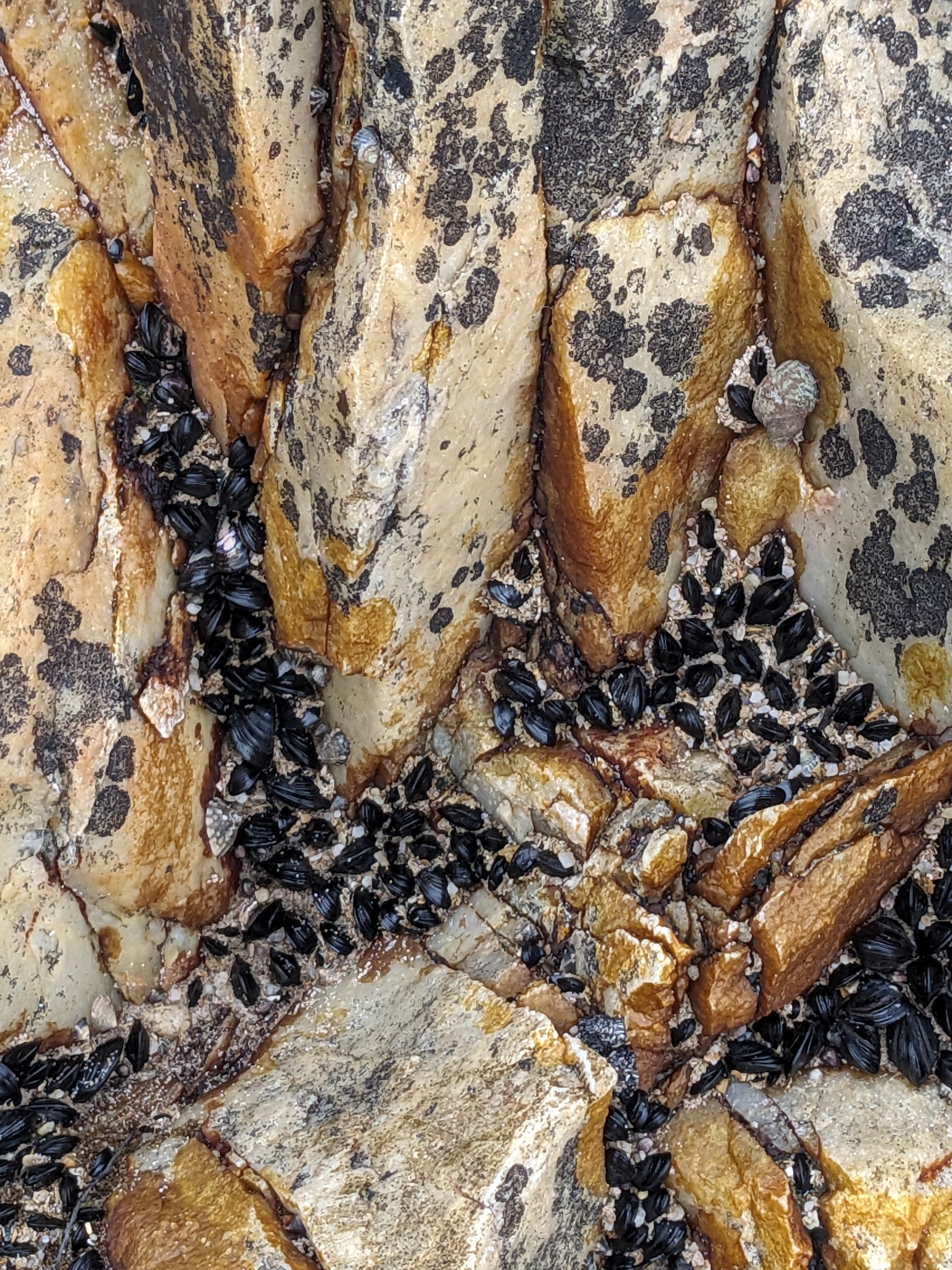
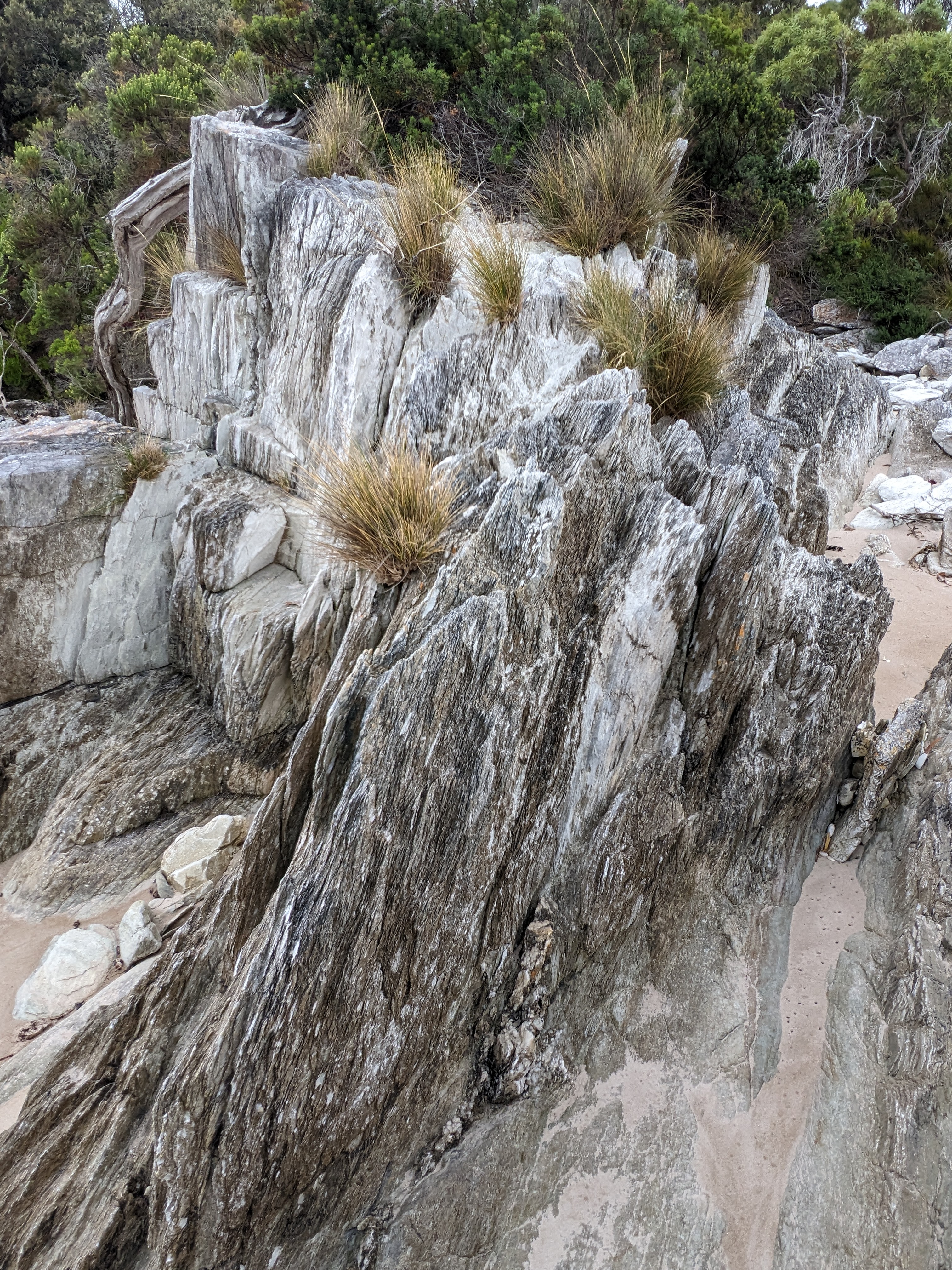
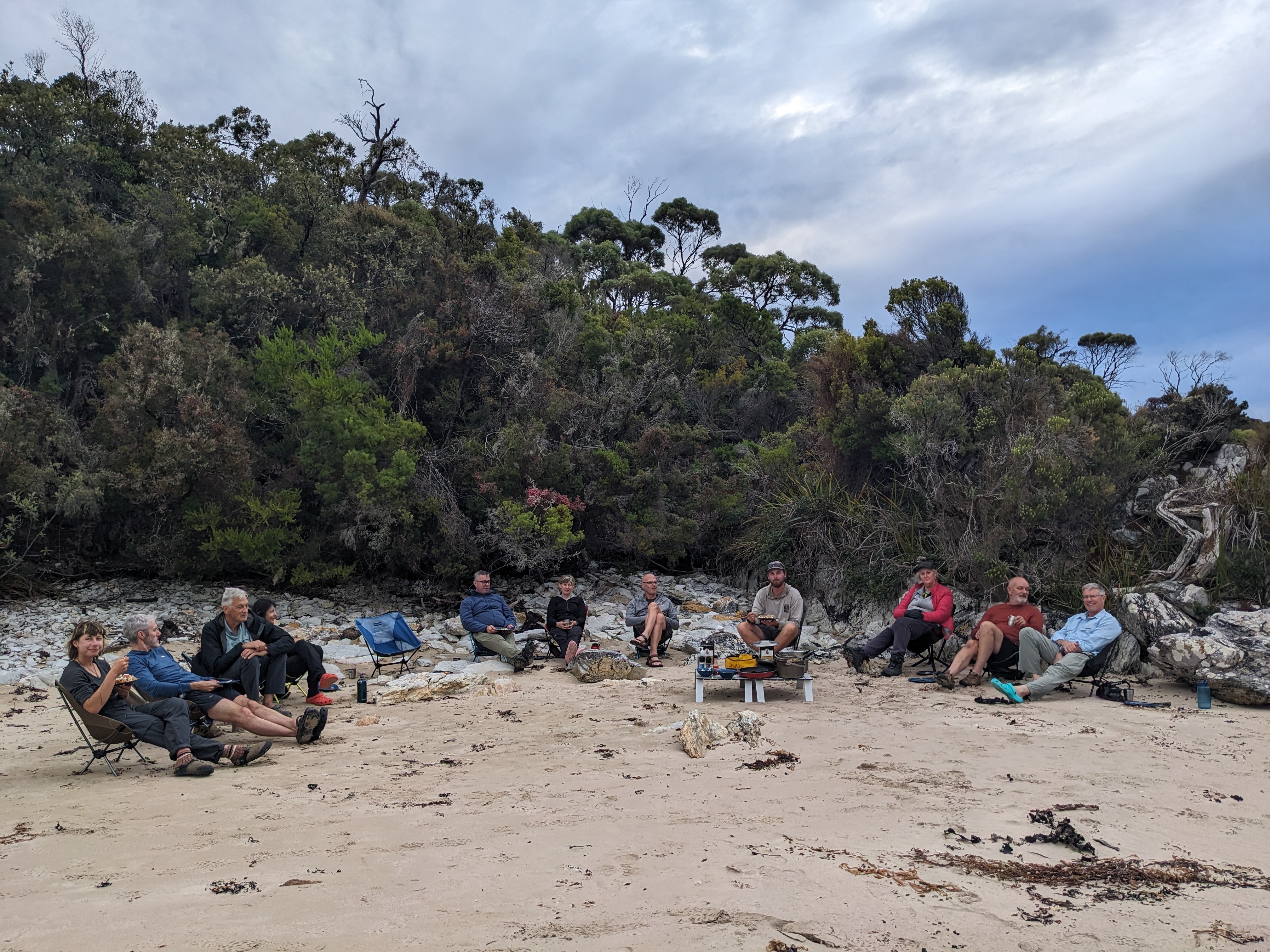
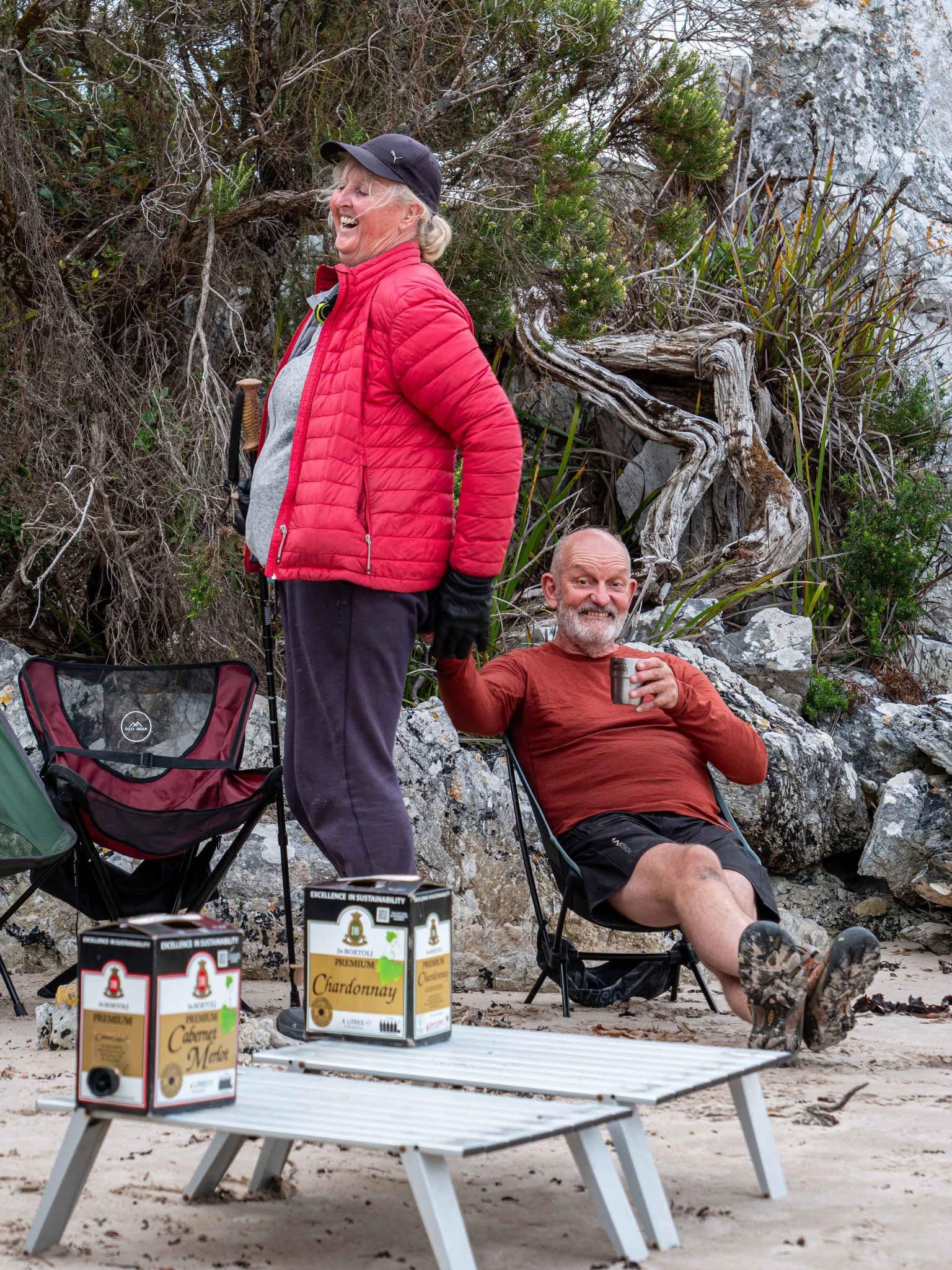
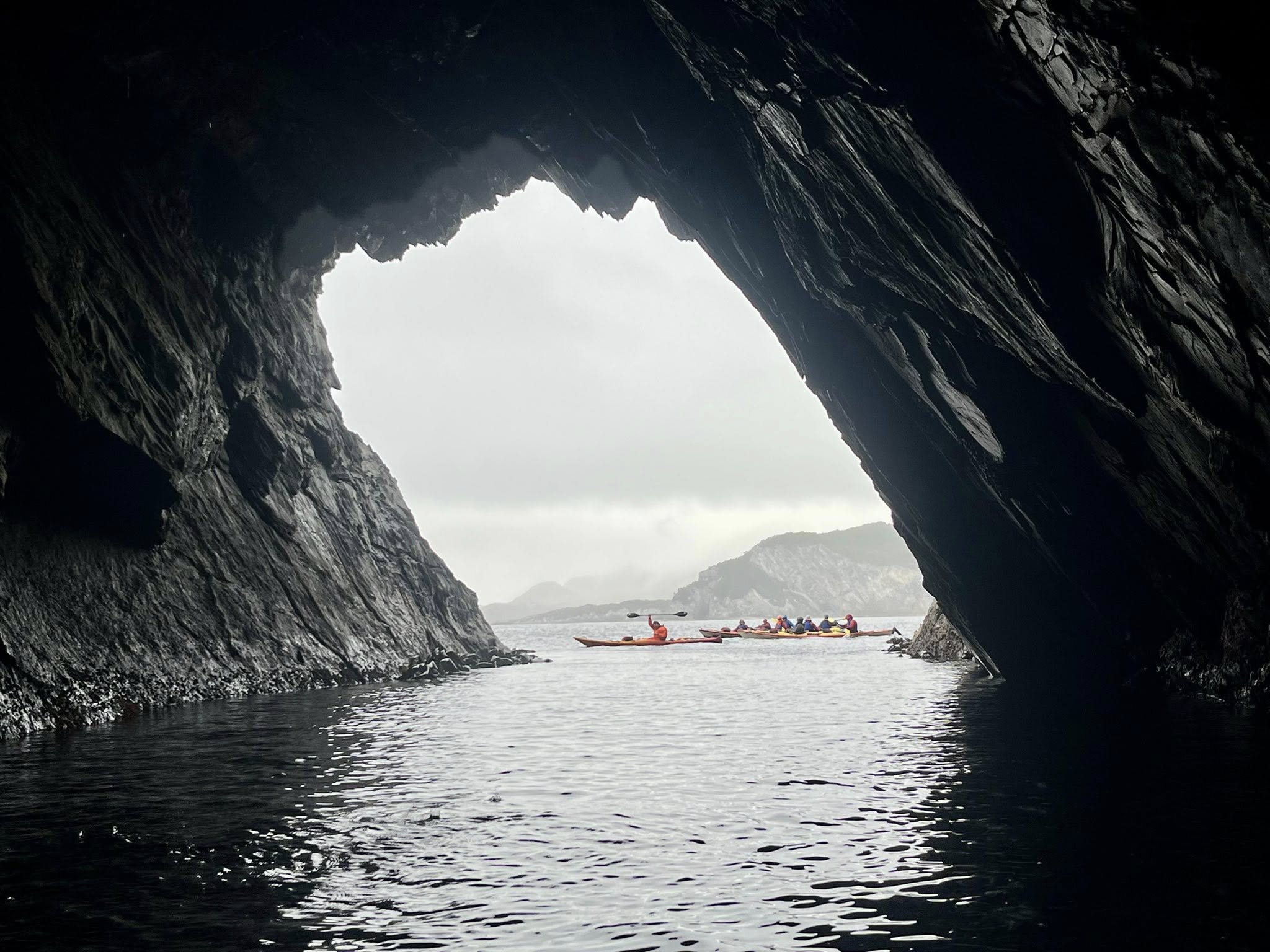
2/3/2026 Two days in one spot meant no packing the next day, leaving time to explore the Breaksea Islands in the morning and taking a walk later in the afternoon. For some reason I was a bit slack with photos, so most are borrowed from others (Rod, Jason and Roaring 40s). We were told it was a rare day to be able to explore the Breaksea Islands in such good weather. While not glassy and smooth the whole day, the water was sufficiently calm for us to paddle close to the islands, admiring once again the vertical layering and taking turns to reverse the weighty and un-nimble Packhorses into deep caves. In the afternoon we took the deeply rutted and peat-boggy track across to south-facing and windswept Stephens Beach. The photo of us on the beach does not reveal the sogginess of my trousers and shoes and the mess of mud on my rear end from stepping into an unexpectedly knee-high boggy pool.
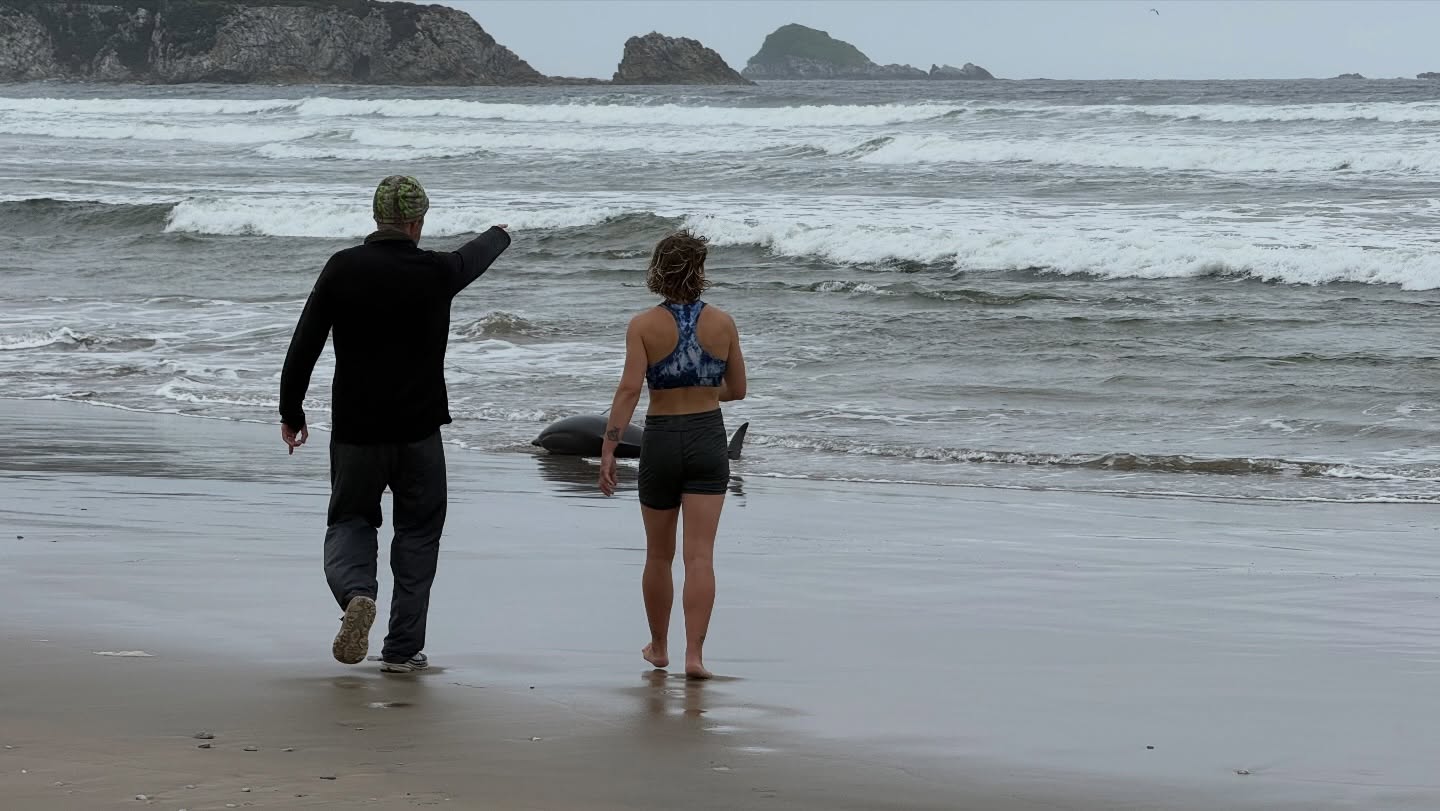
However, this was soon forgotten when we found four stranded dolphins in the shallows and nature’s harshness played out in front us. One sleek dolphin was already dead, and we battled to help the other three stay upright and make their way back out through the shallow but forceful surf. We think one made it through, but the others were either too tired, disorientated or wounded and they kept returning and getting stuck on their side. Heart breaking to see creatures that are so agile and graceful in the water being beaten around by waves that they would otherwise nimbly navigate. Unfortunately, we had to reluctantly admit that we would need to let nature to take its course.
This experience somewhat detracted from our purpose, which was to visit the large and impressive cultural living sites of the Needwonnee people (formerly known as midden sites). From there it was back along the boggy track for our second night at Spain Bay.
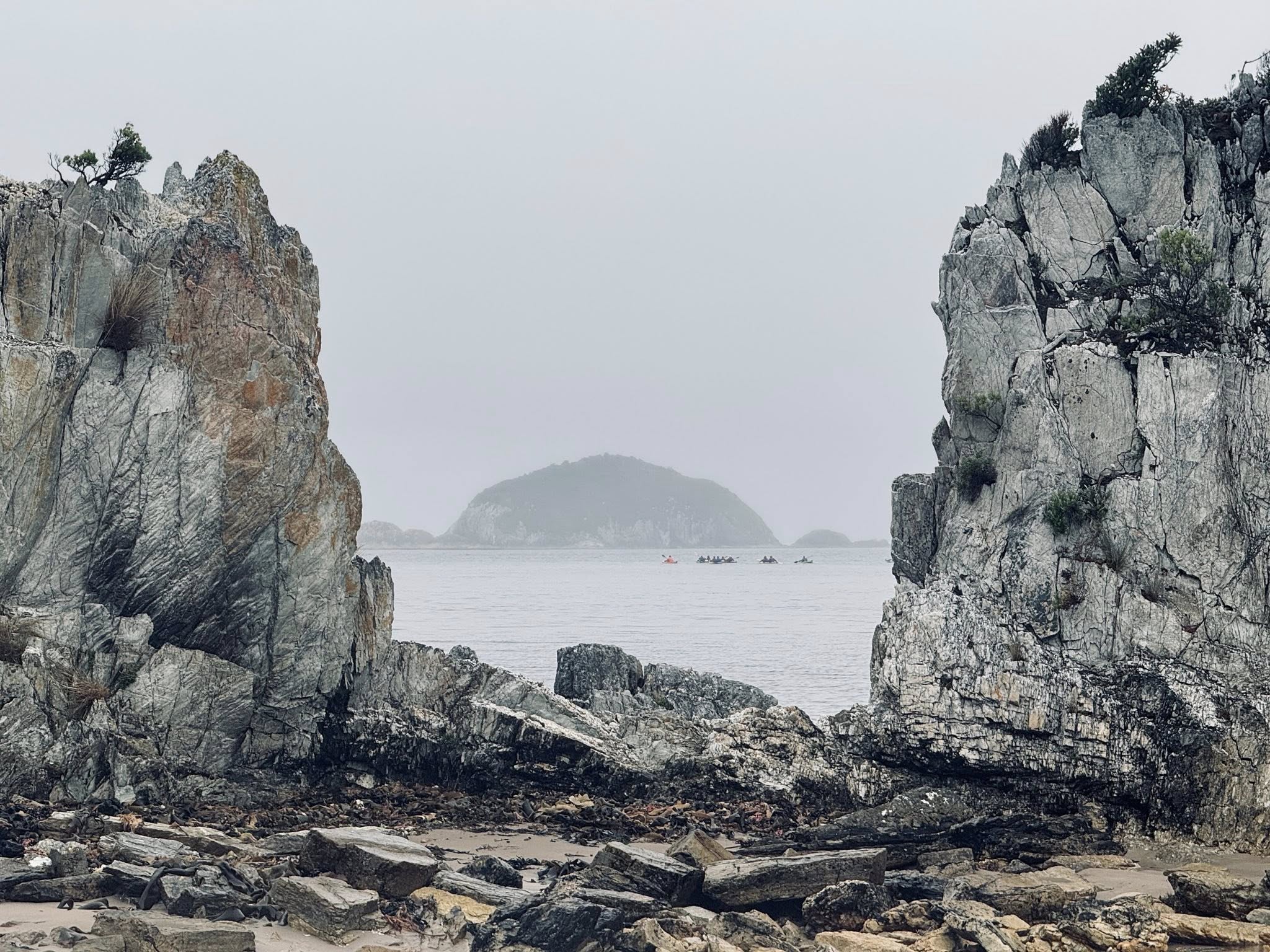
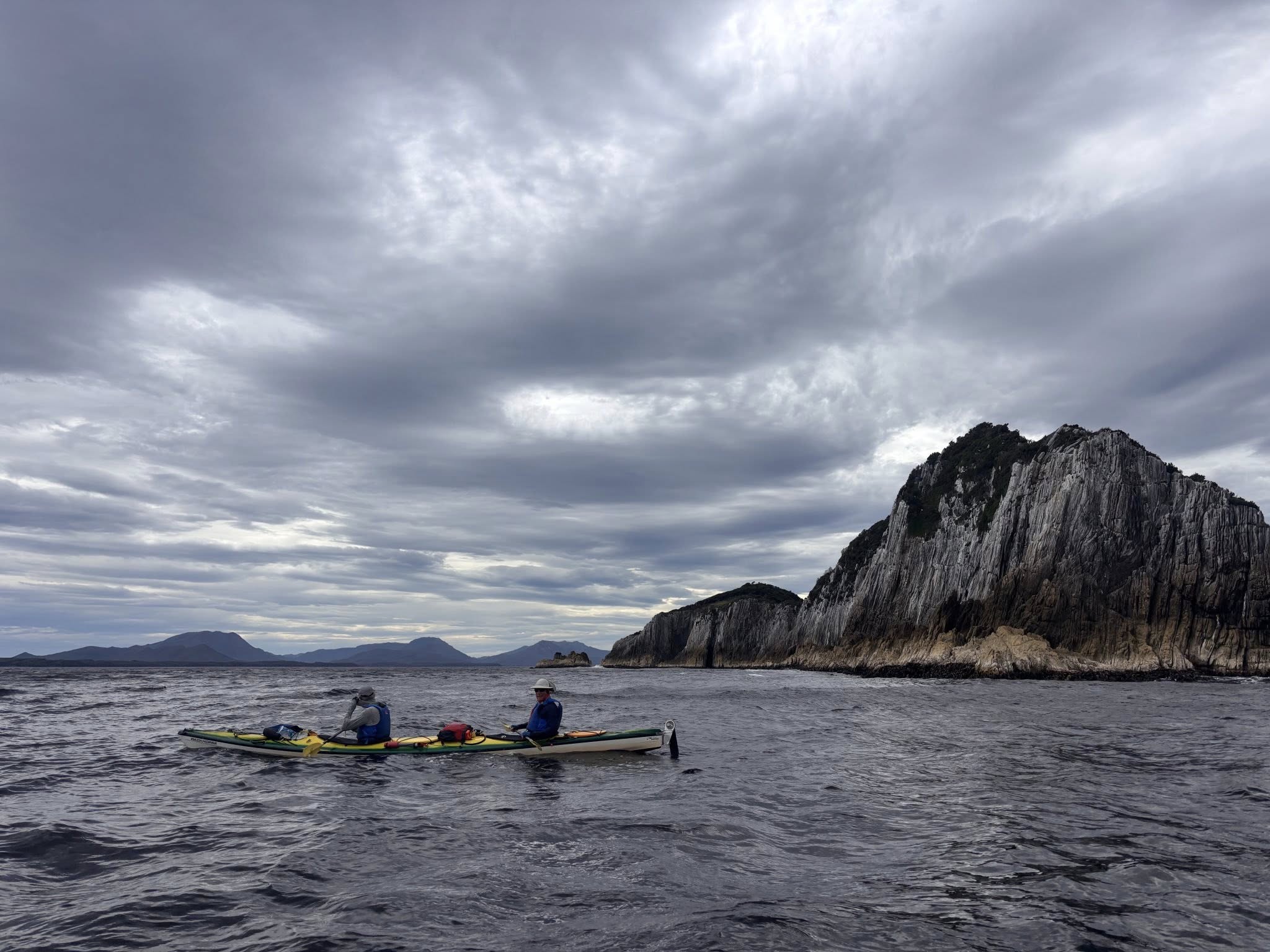
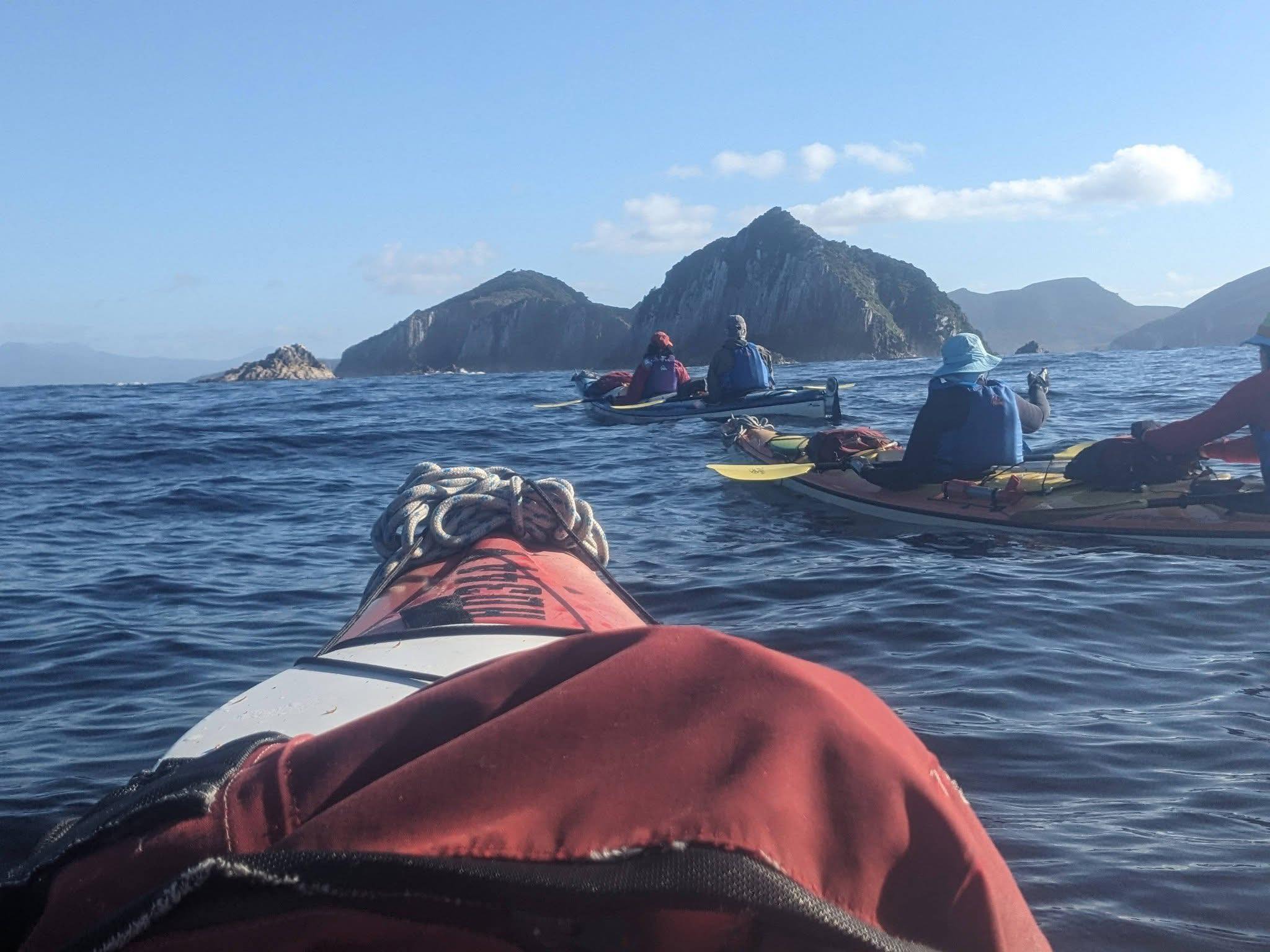
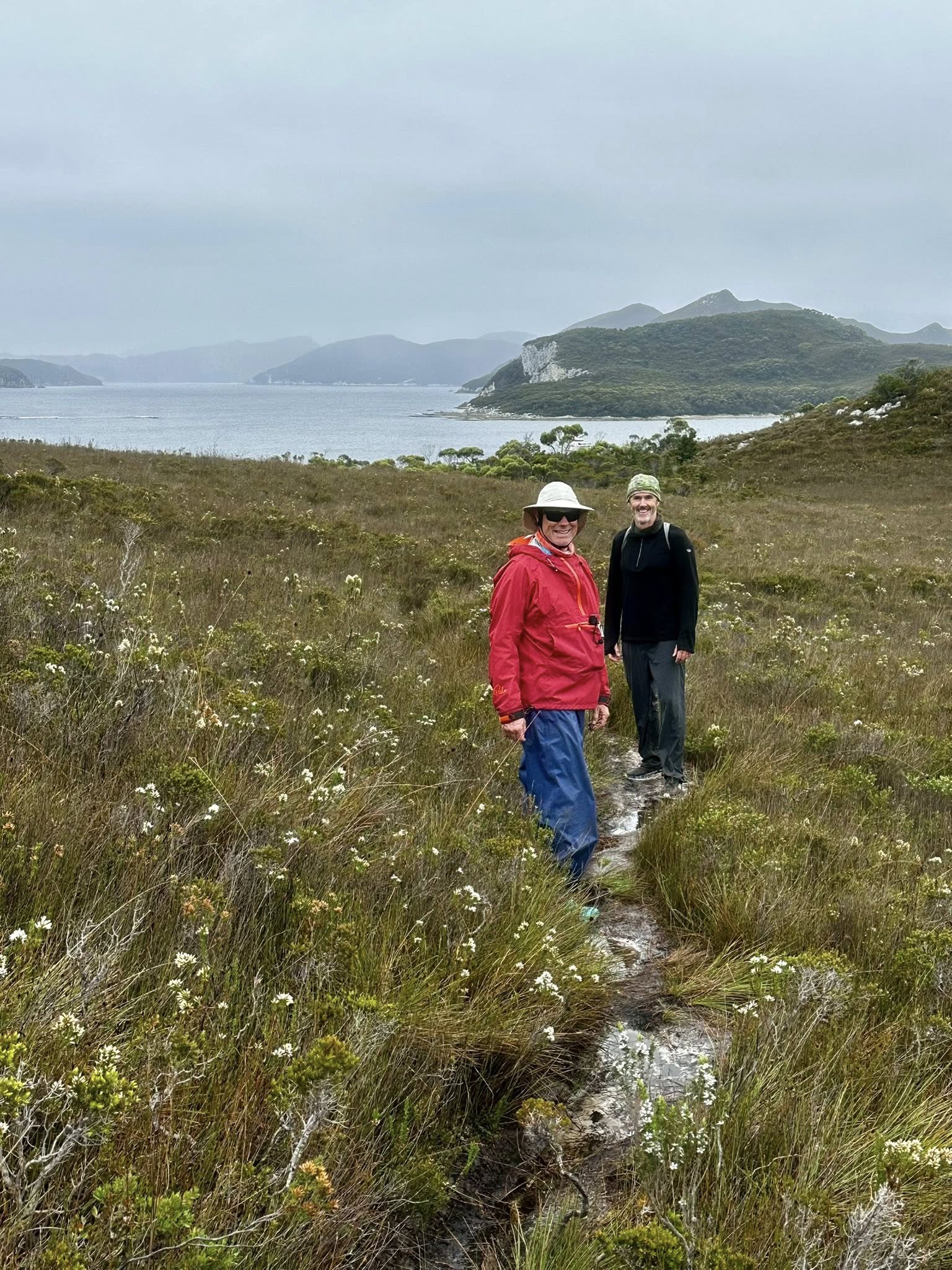
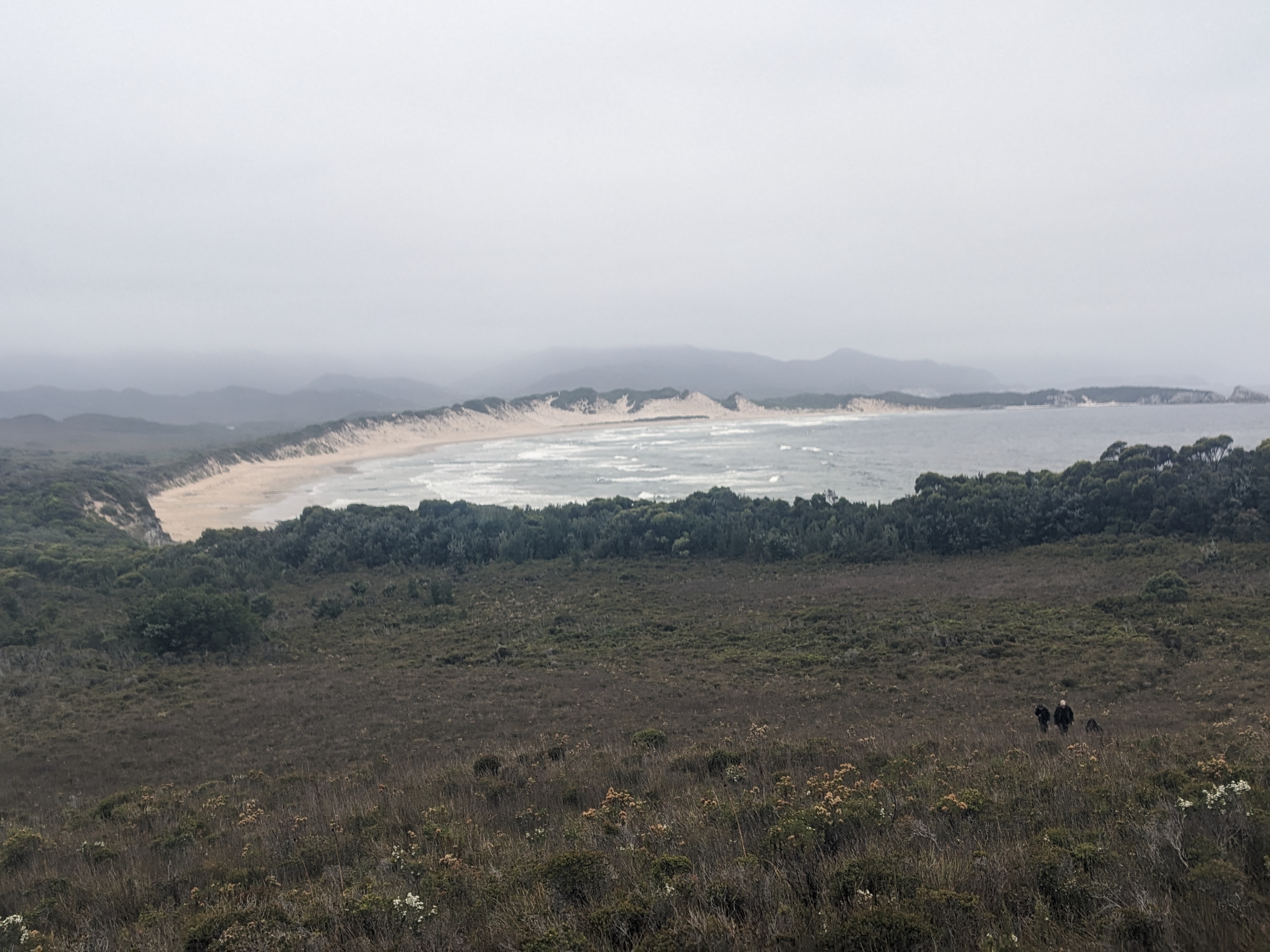
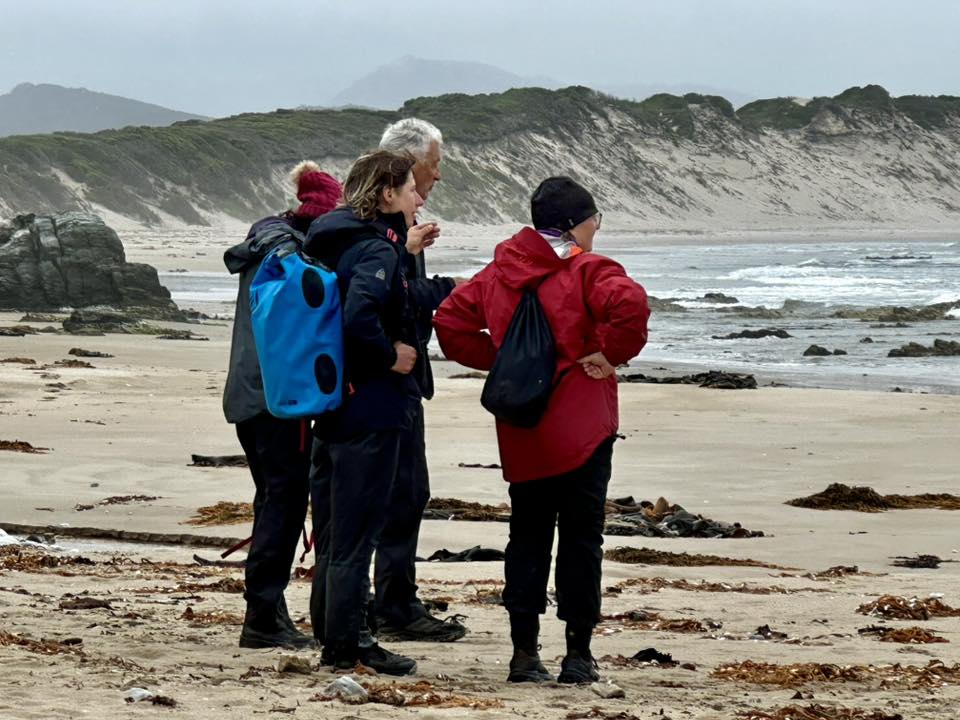
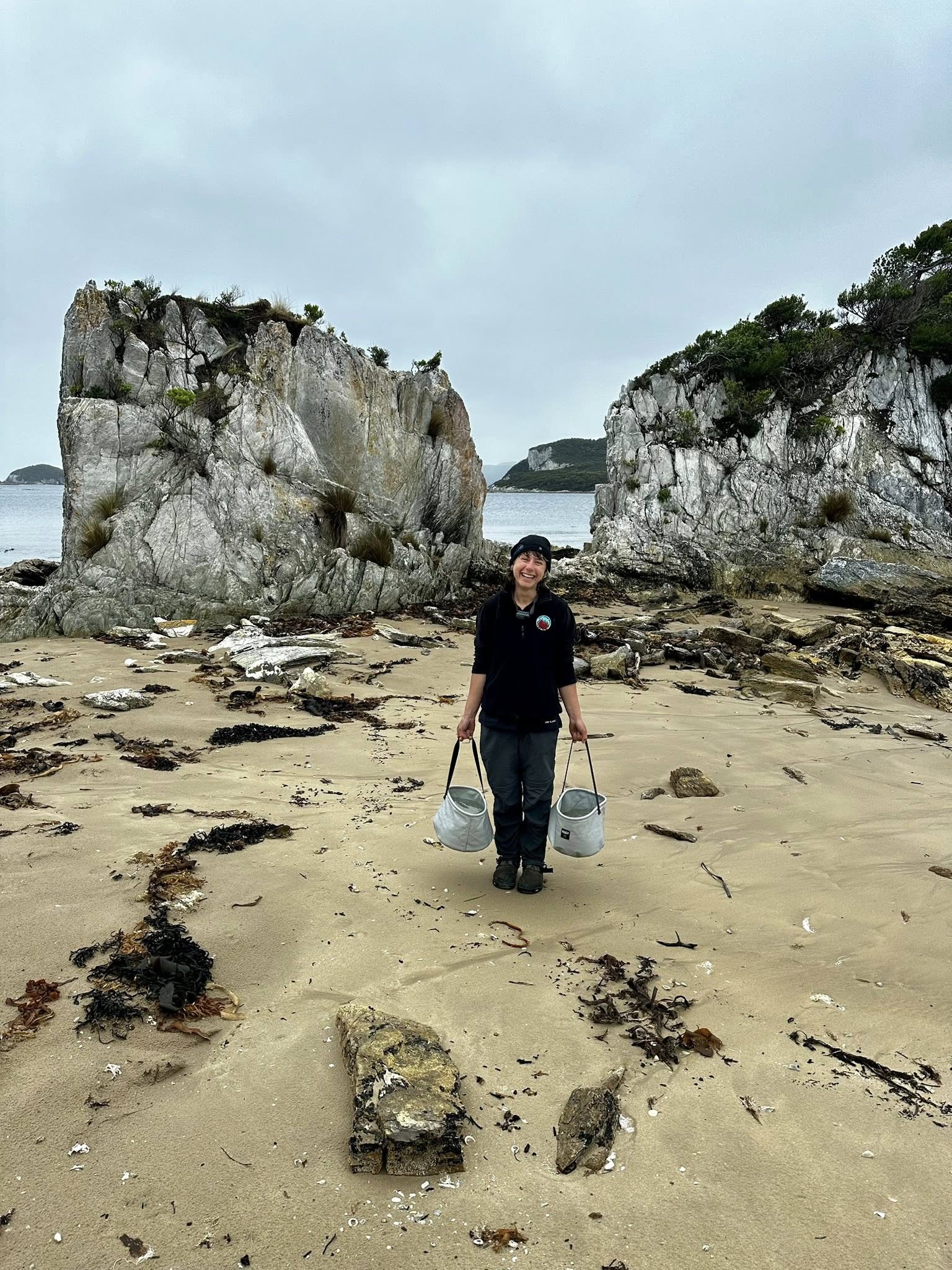
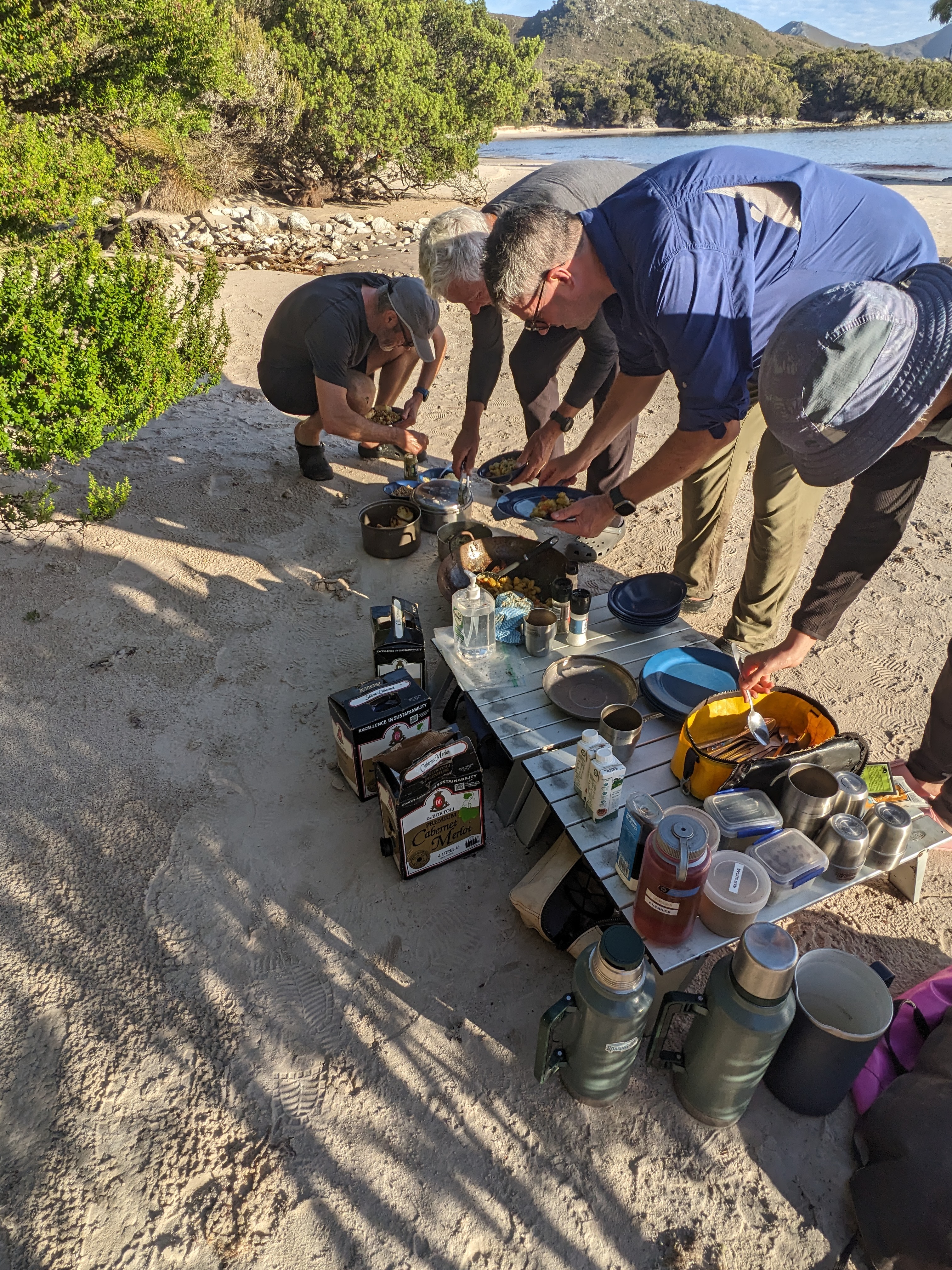
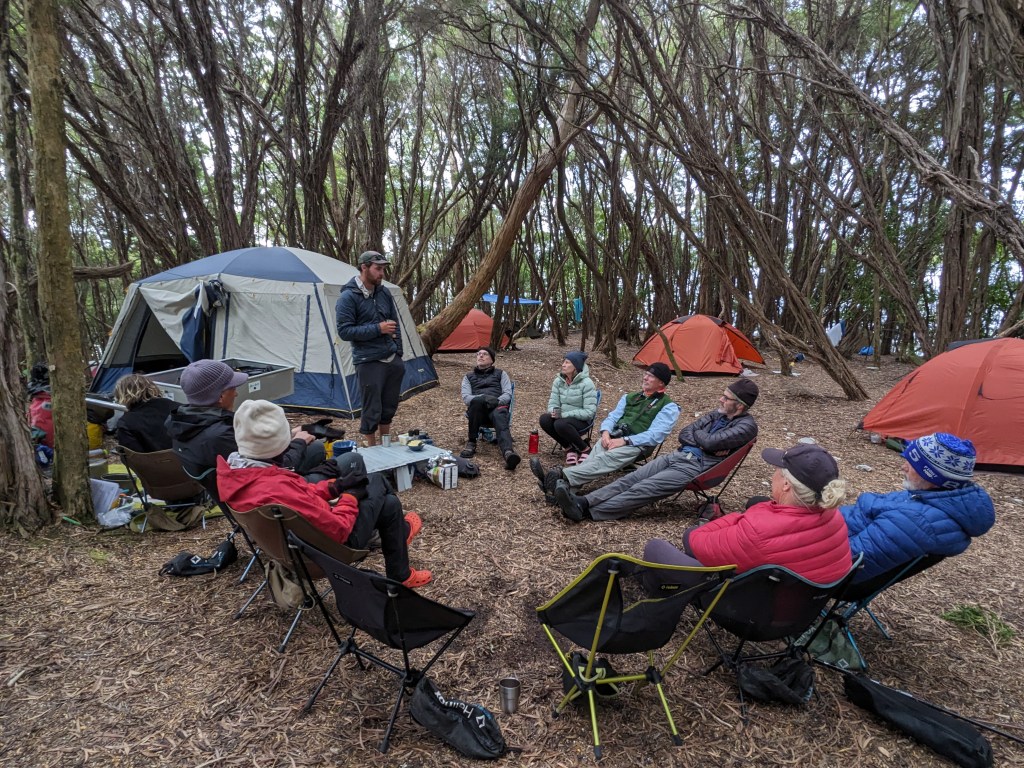
3/3/2026 Farewell to Spain Bay and first a paddle out towards the Shanks and Breaksea Islands. The sea was so calm that we could paddle right up close, which gave us a chance to watch the bull kelp perform its mesmerising and gently swirling dance with the ebb and flow of the sea. At times, we passed densely vegetated and steeply rising slopes or patches of silky button grass, as we paddled through glassy and reflective water. Our destination at Bramble Cove provided a welcome opportunity to dry clothes that were drenched during our dolphin rescue. Billed as the top camping spot in the locale, Bramble Cove did not disappoint with shady, companiable camping and a couple of tables for food prep and serving.
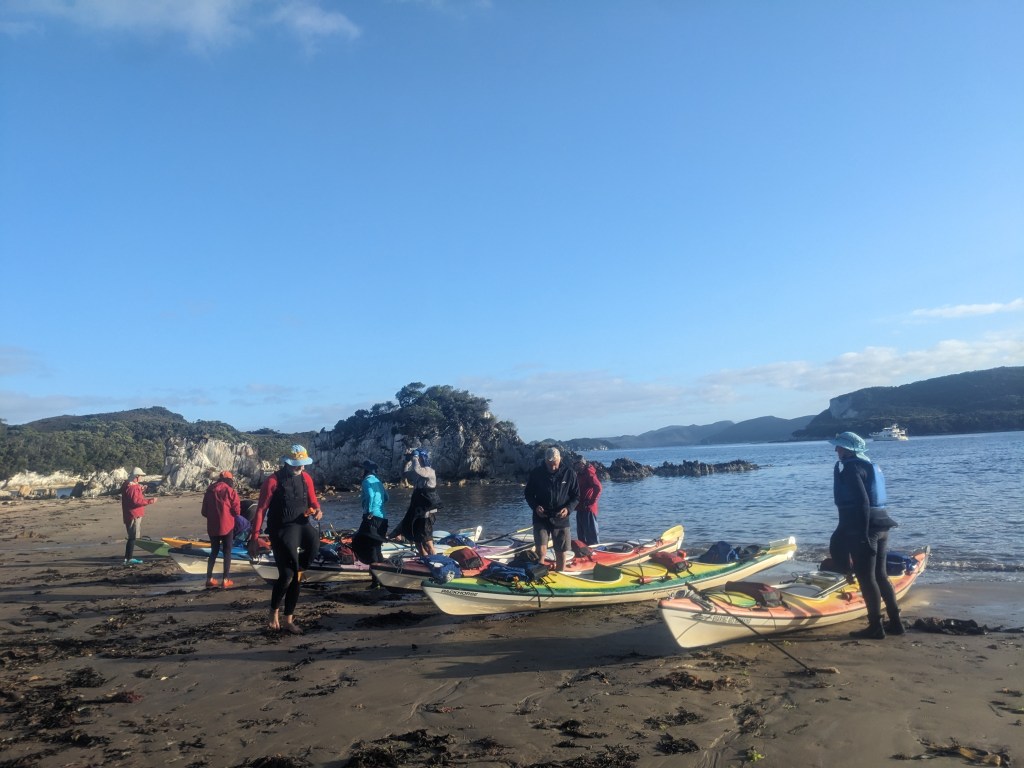
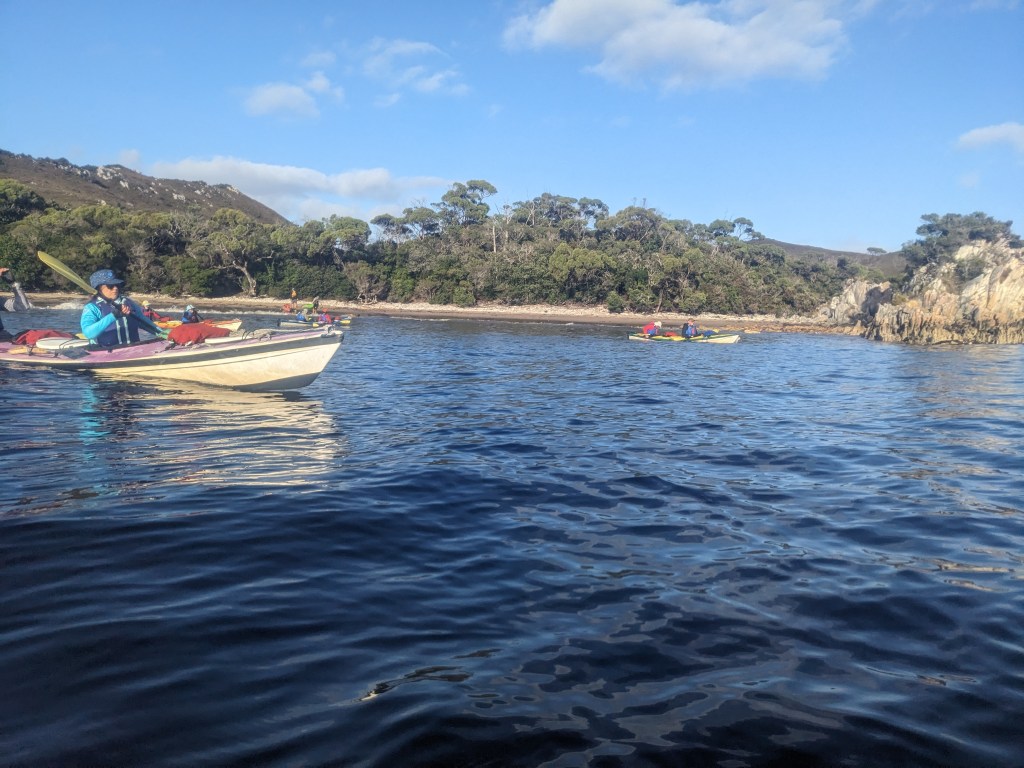
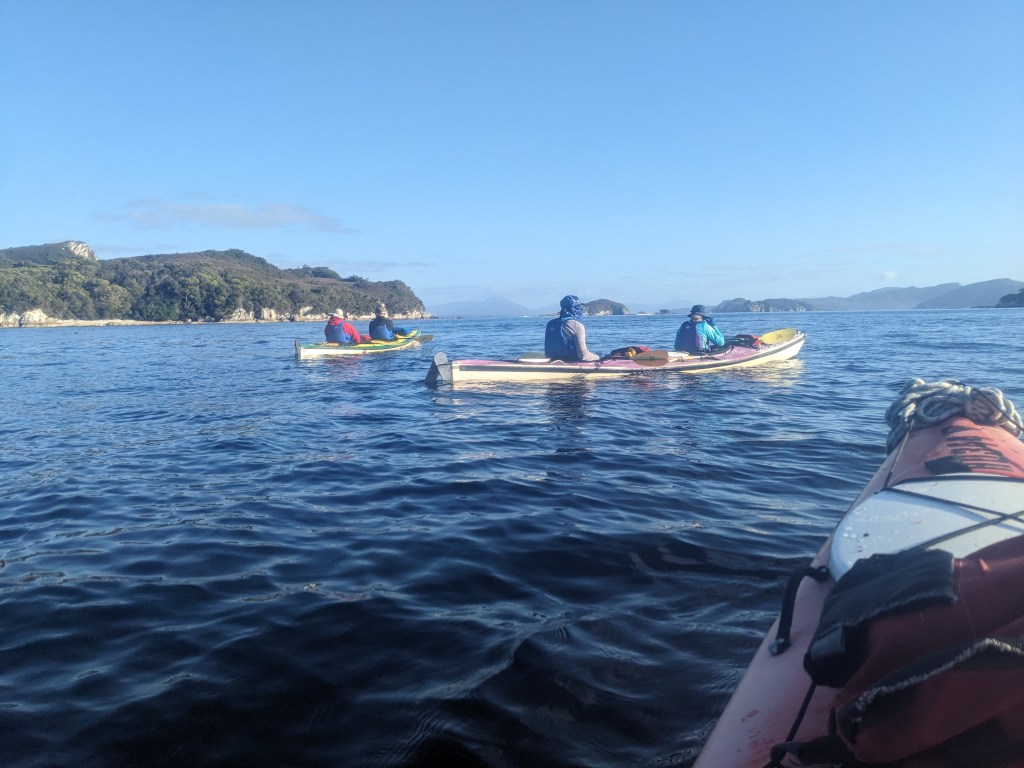
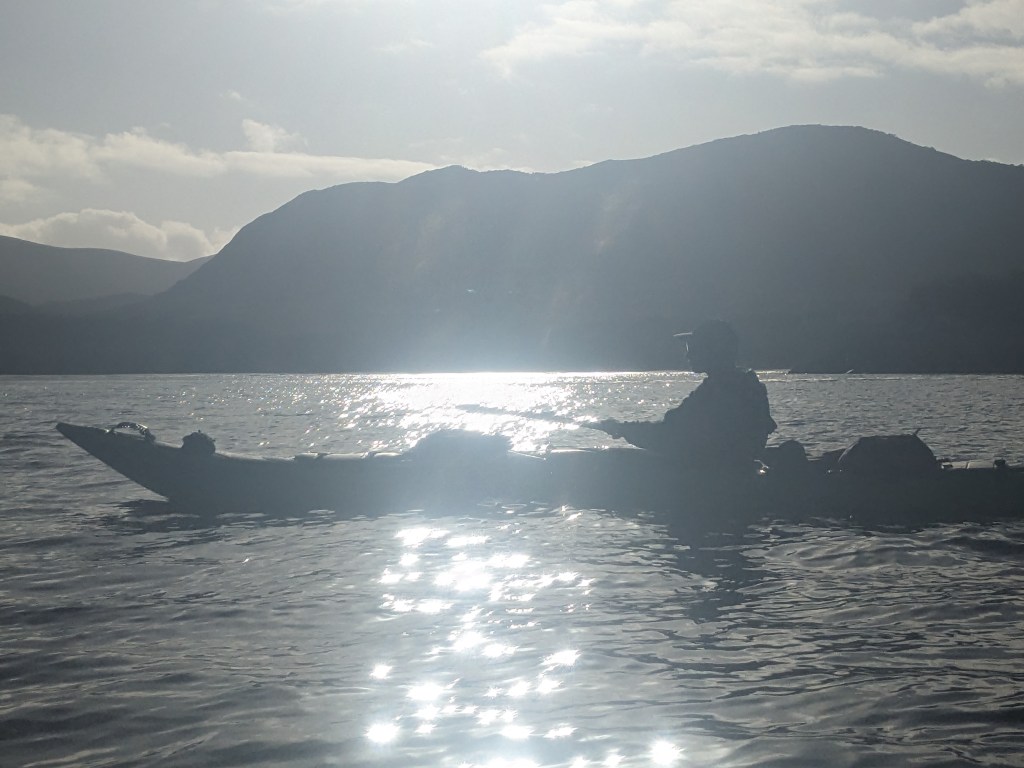
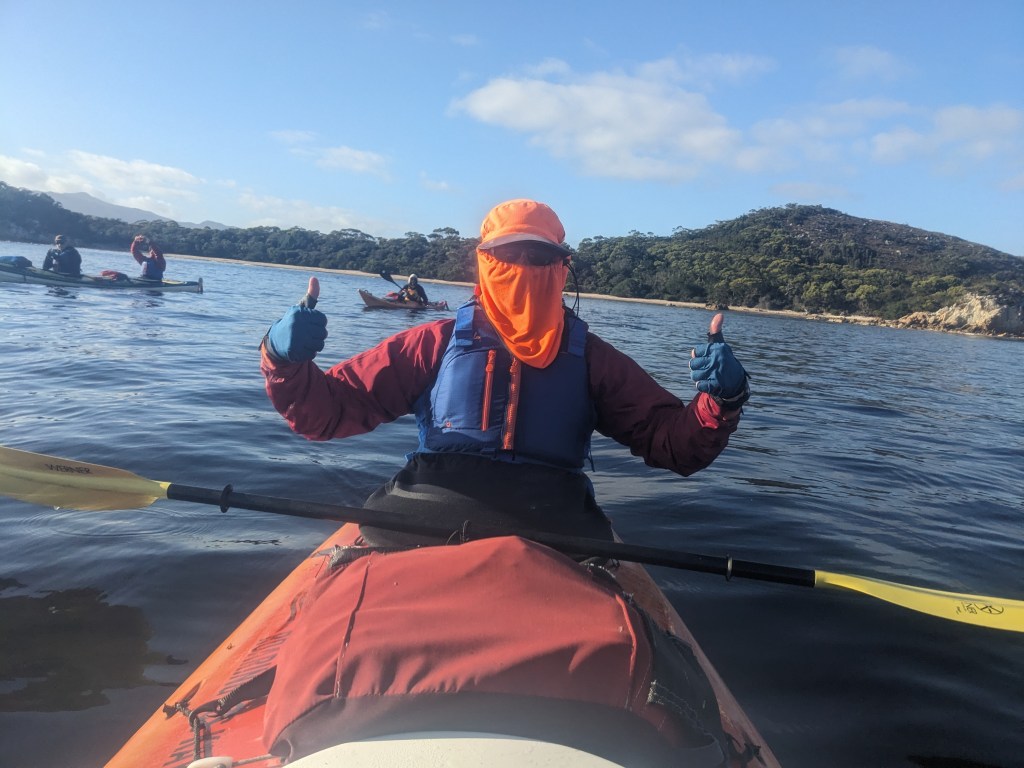
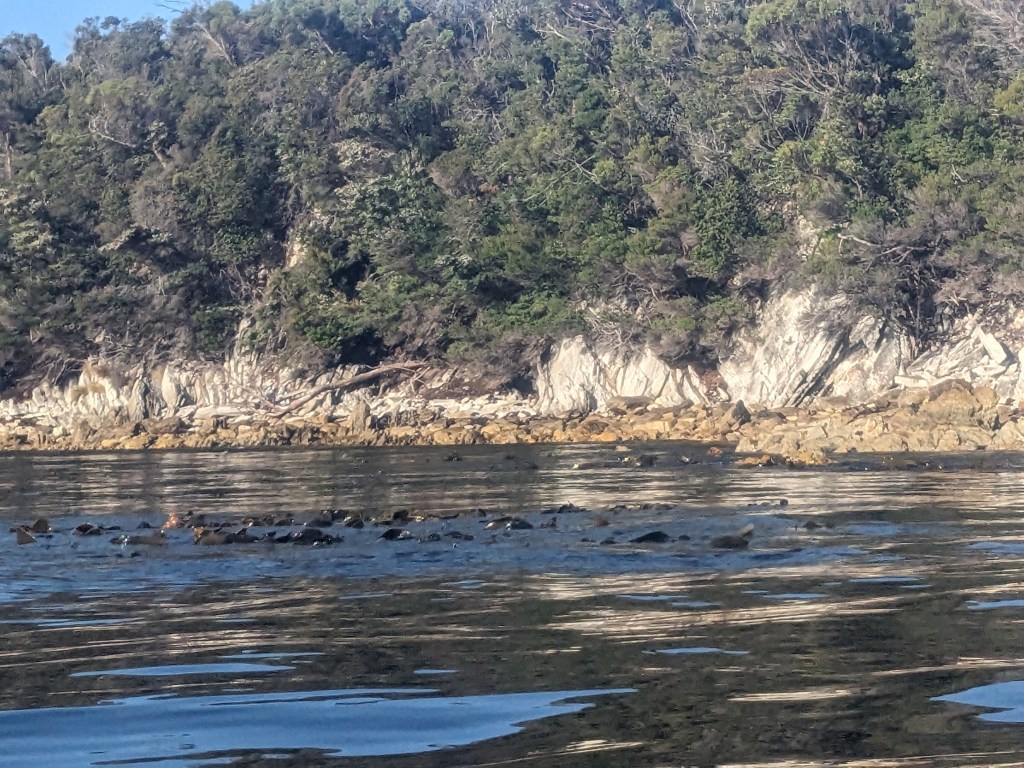
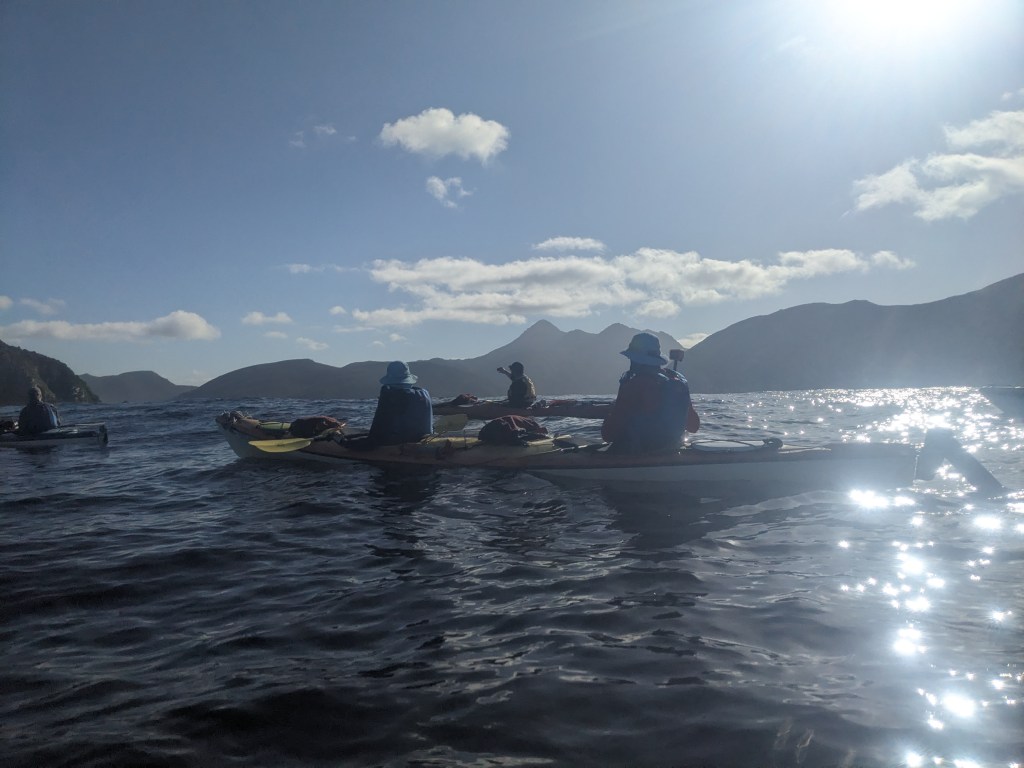
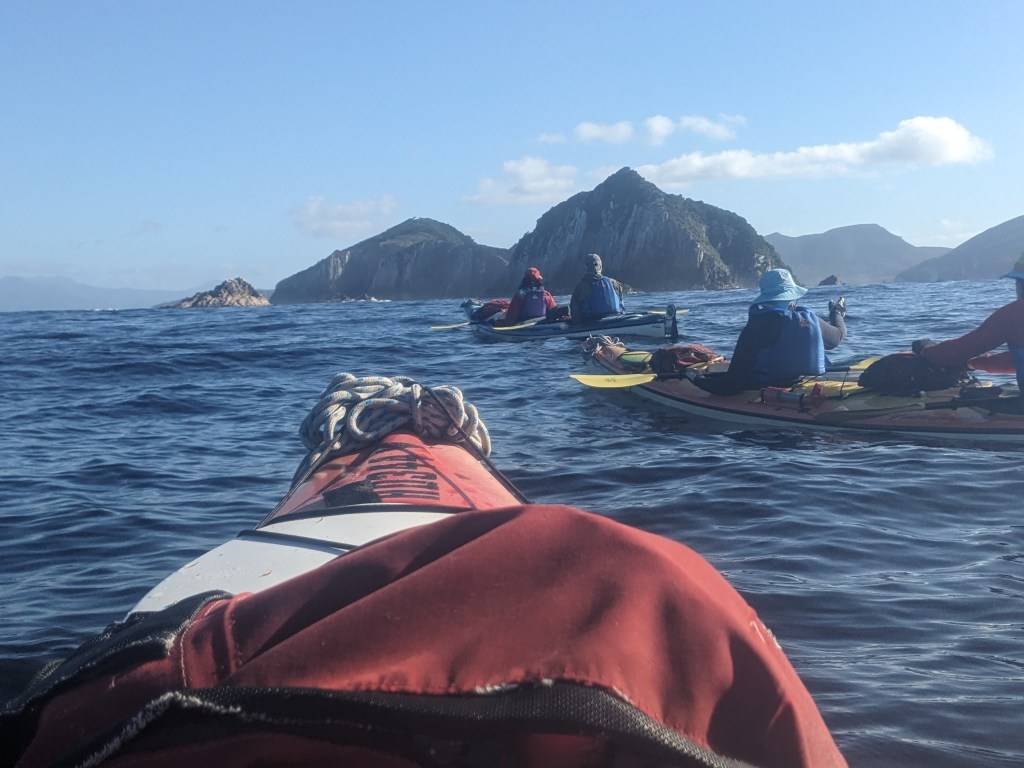
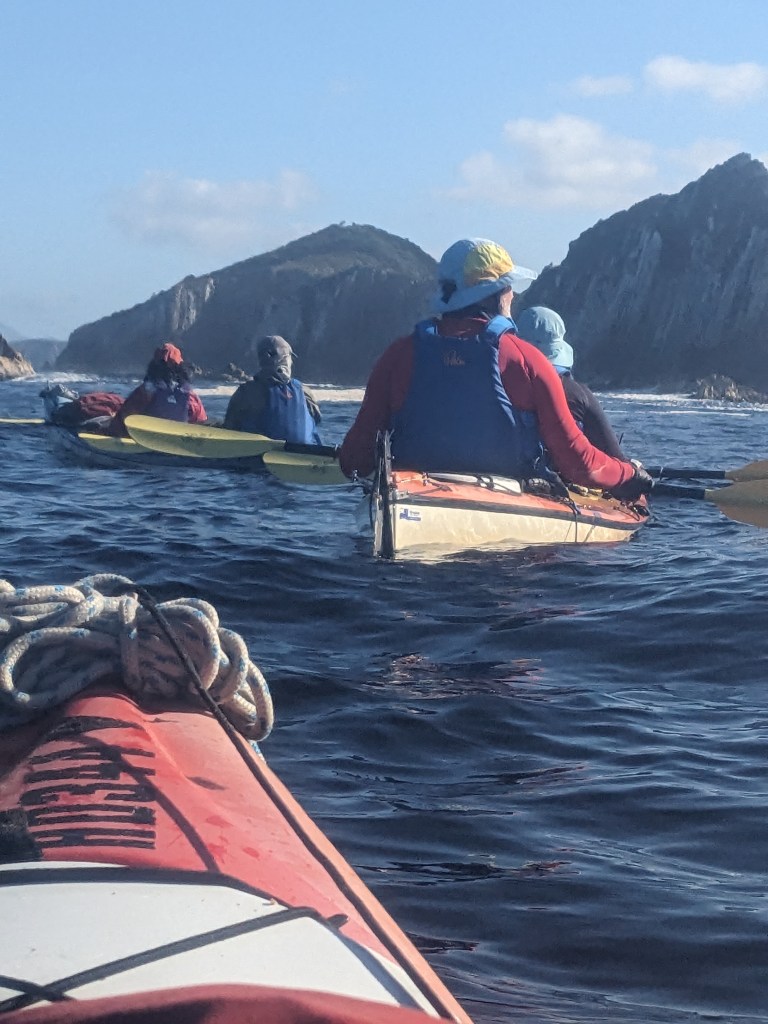
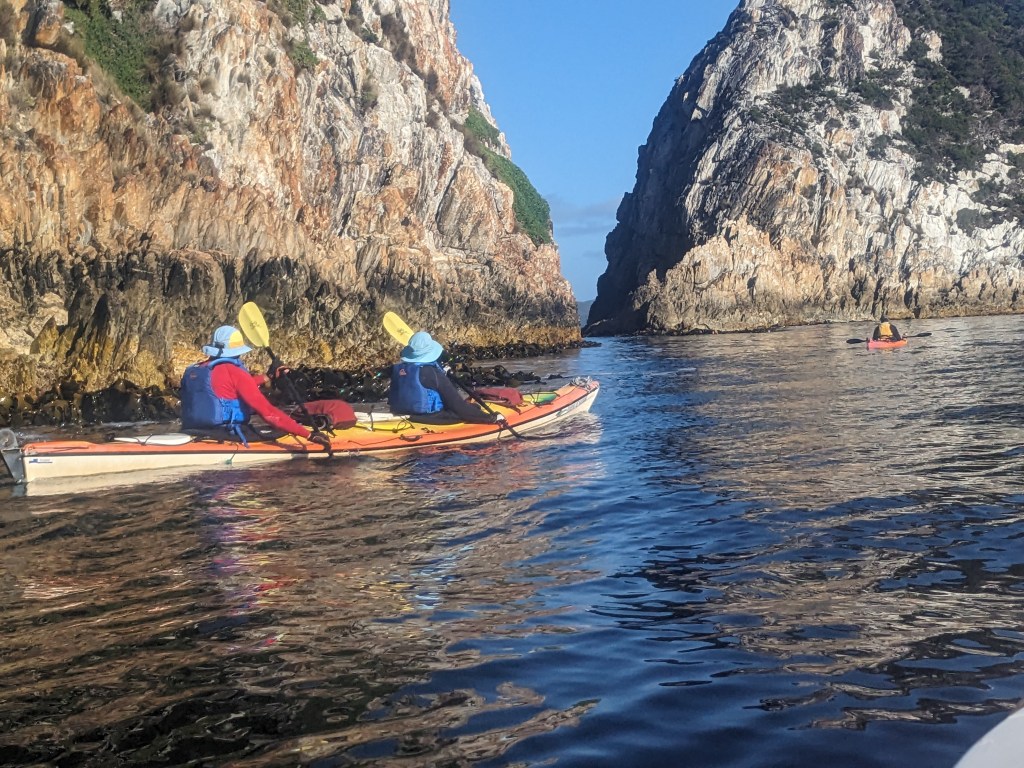
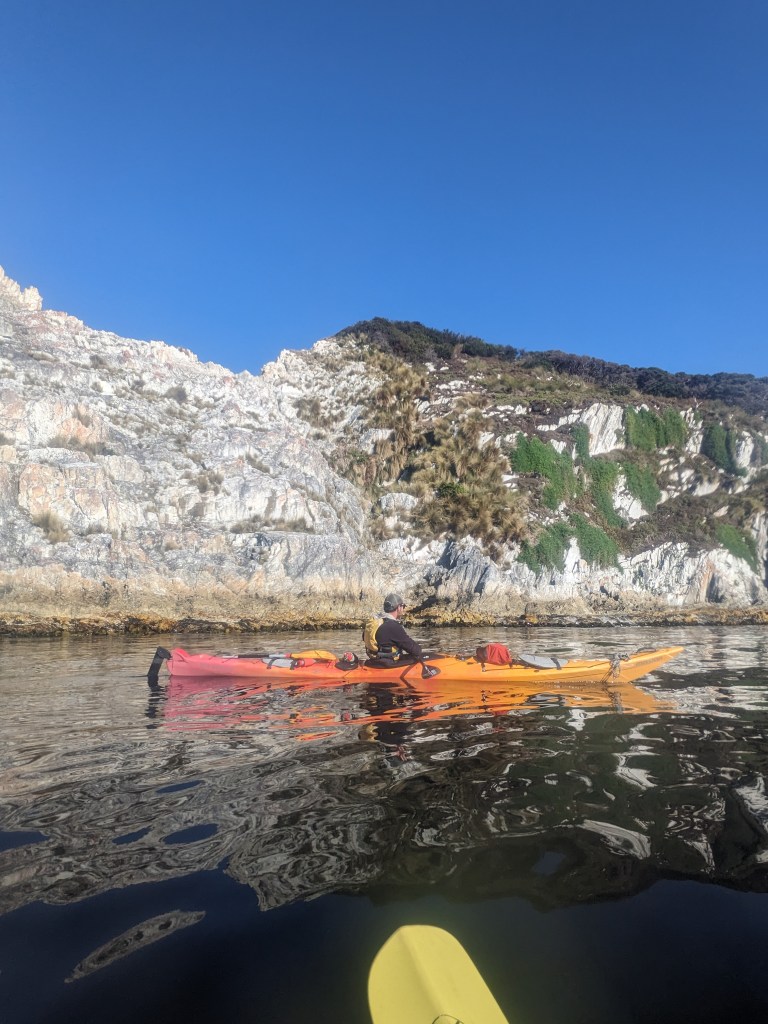
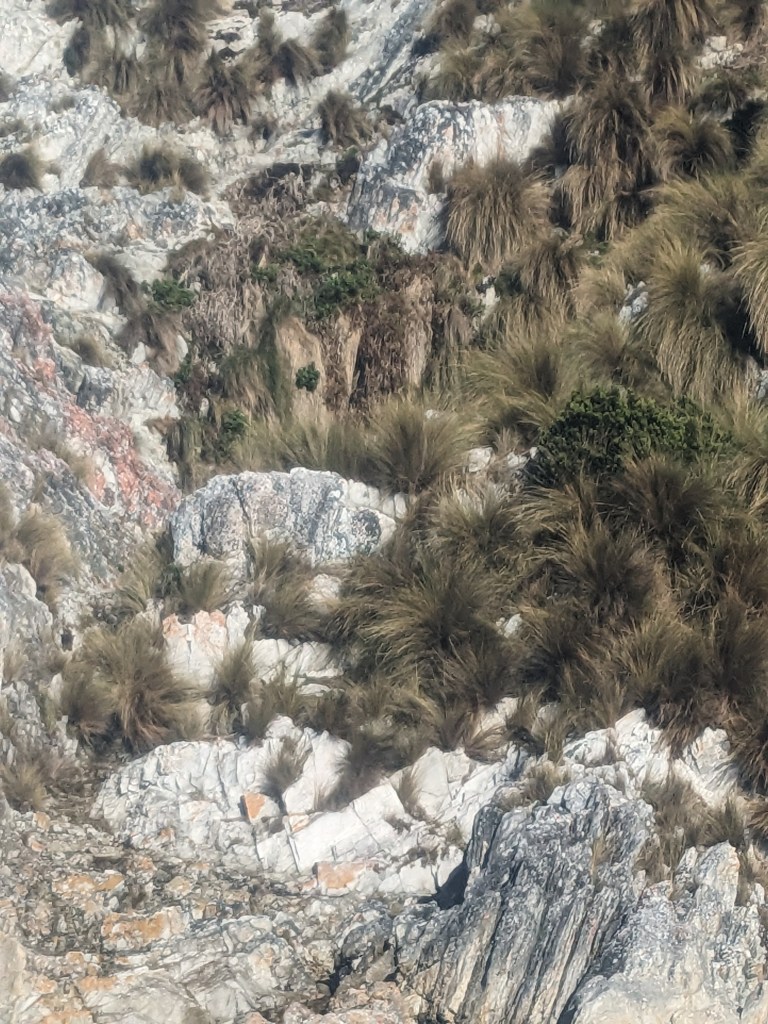
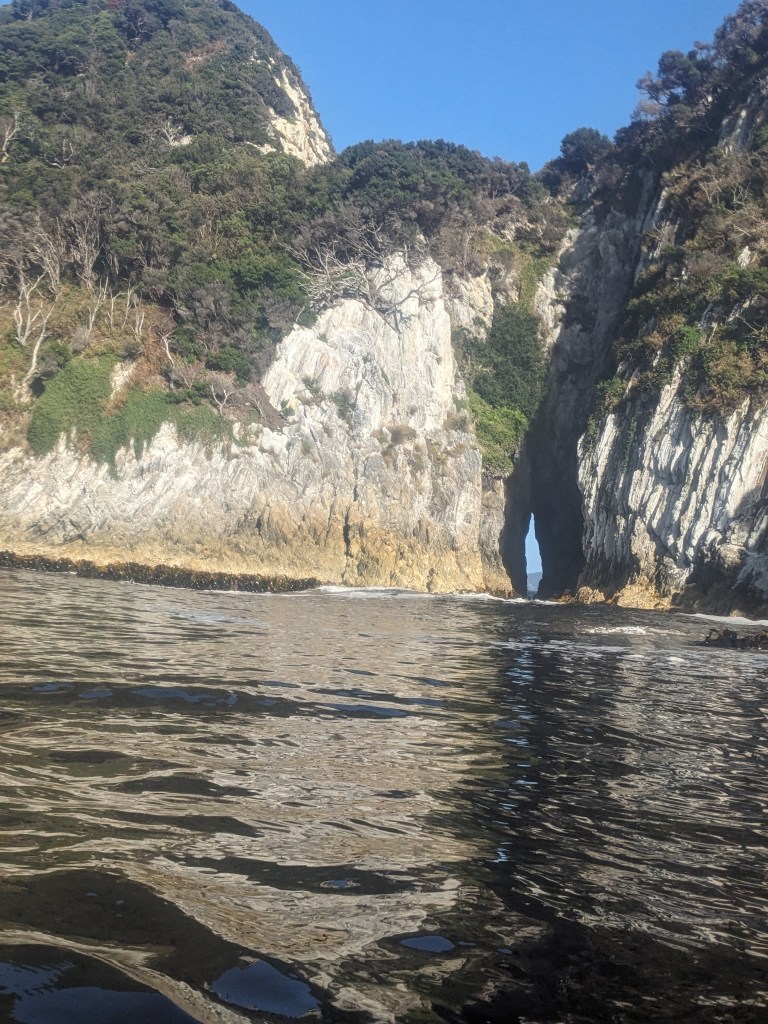
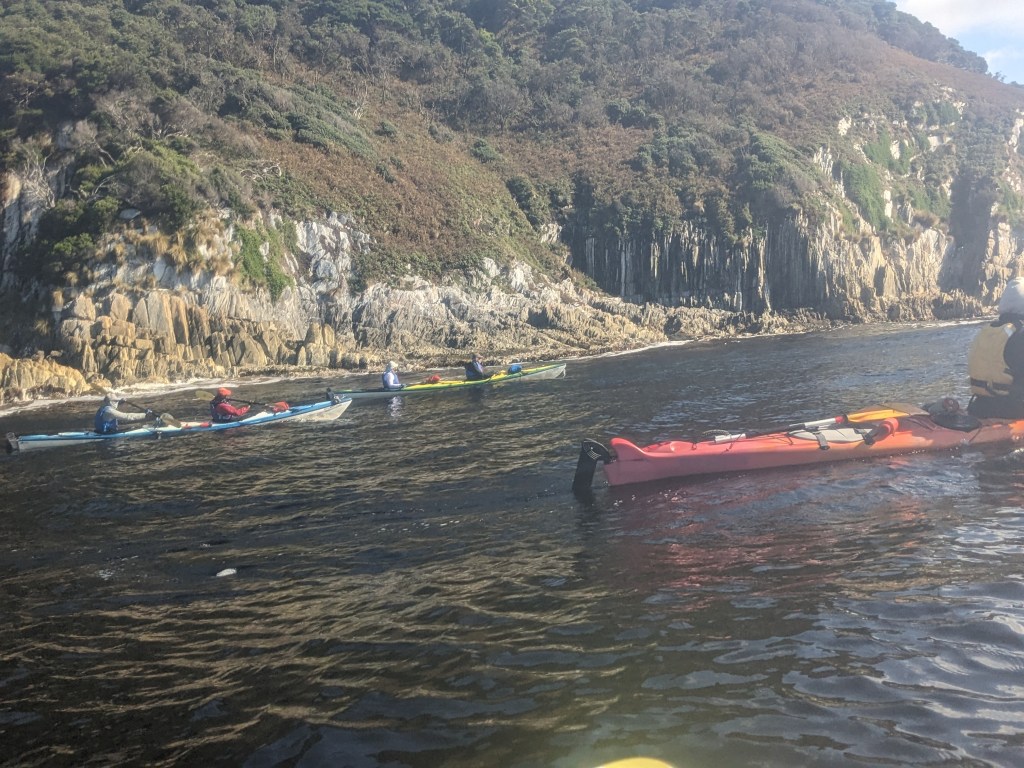
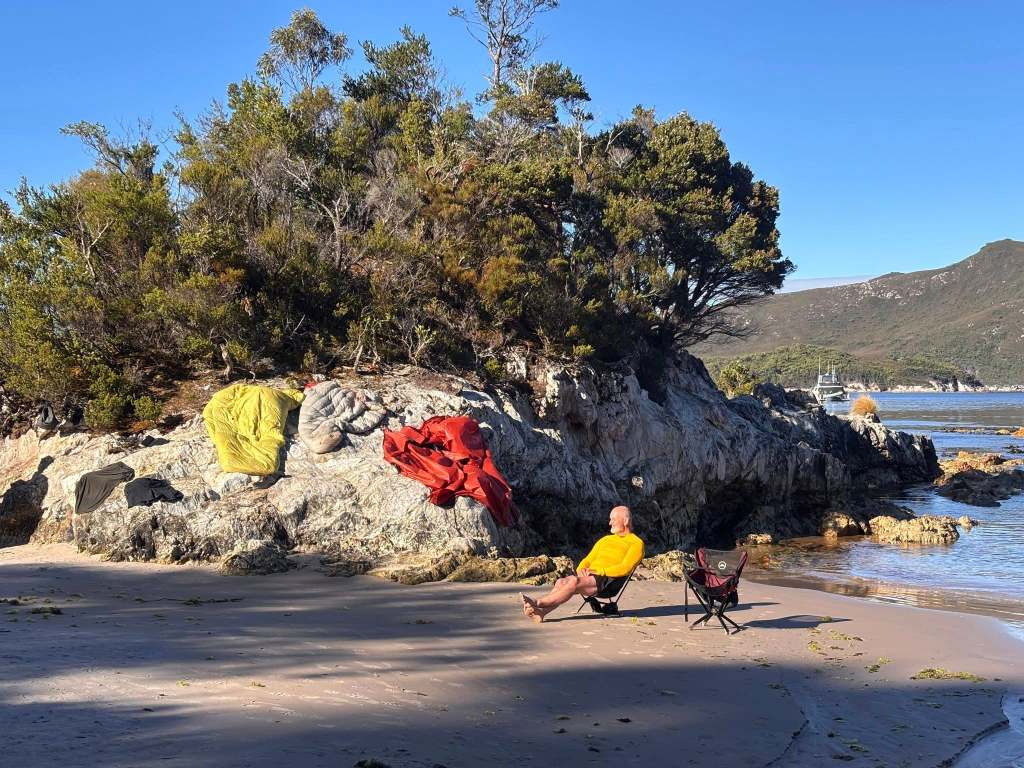
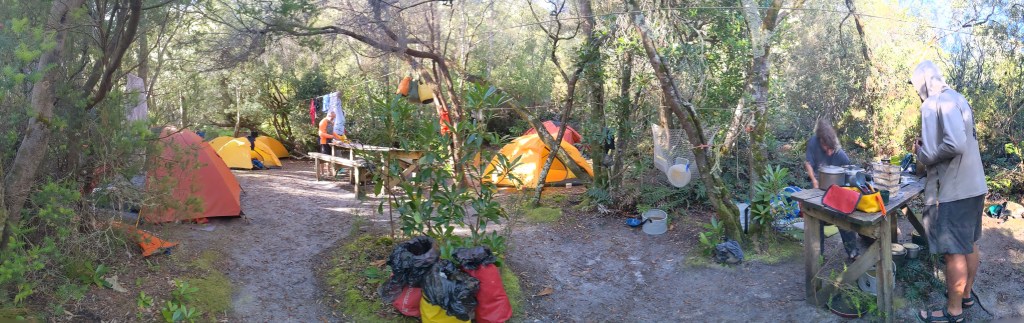
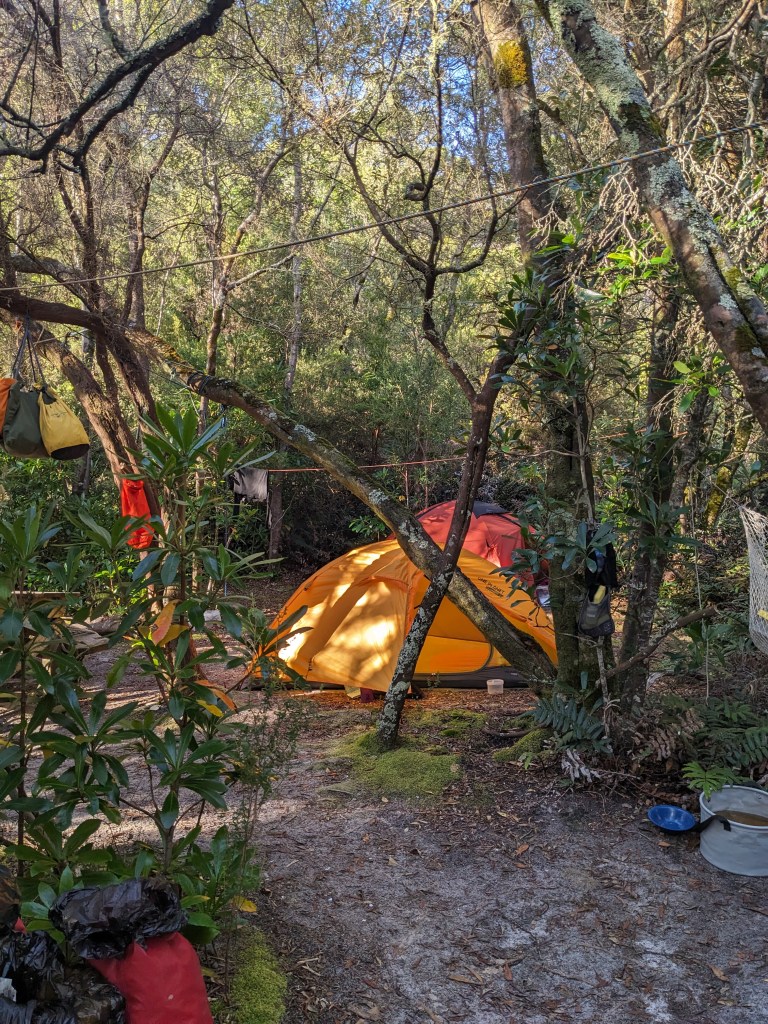
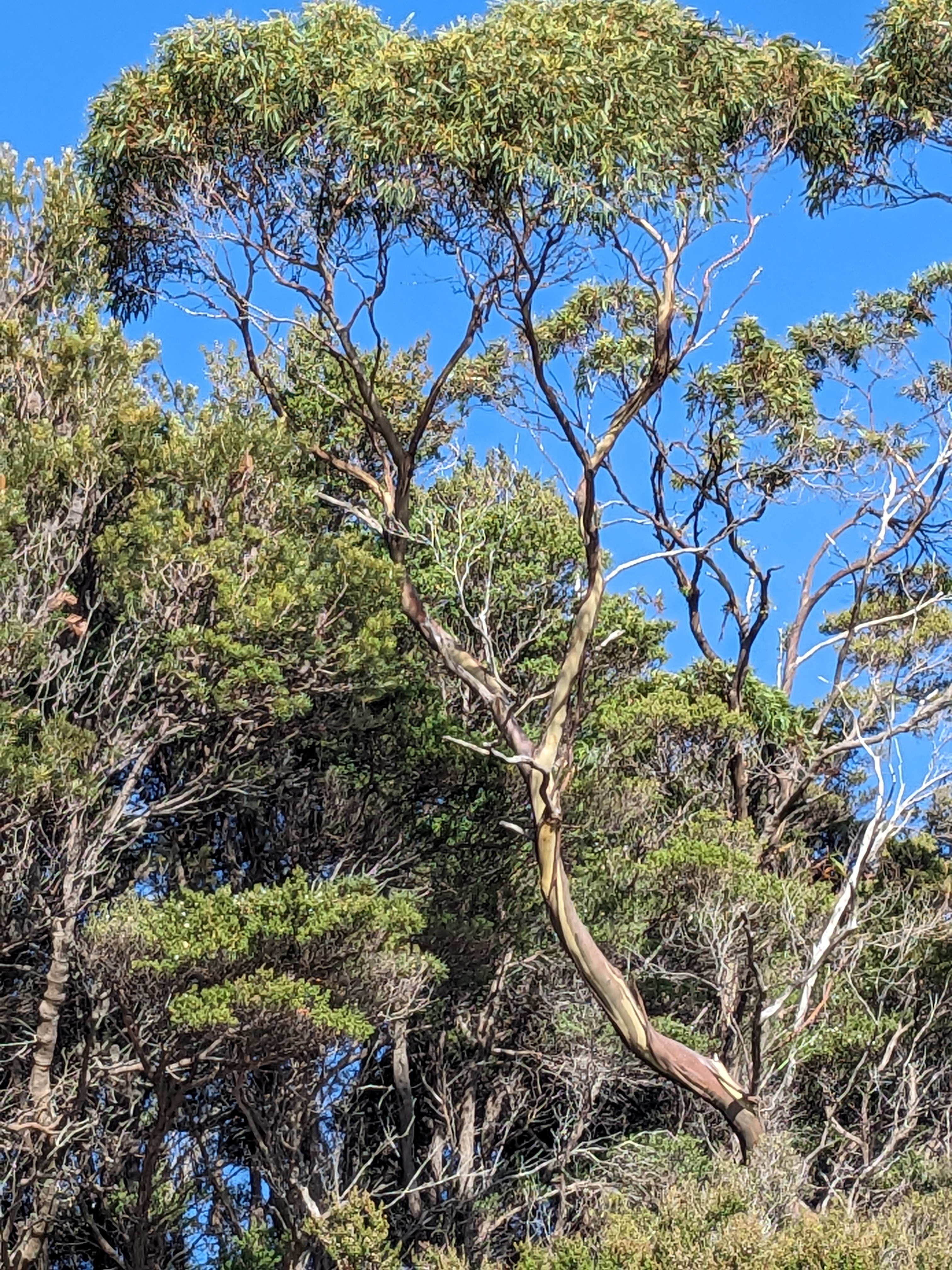
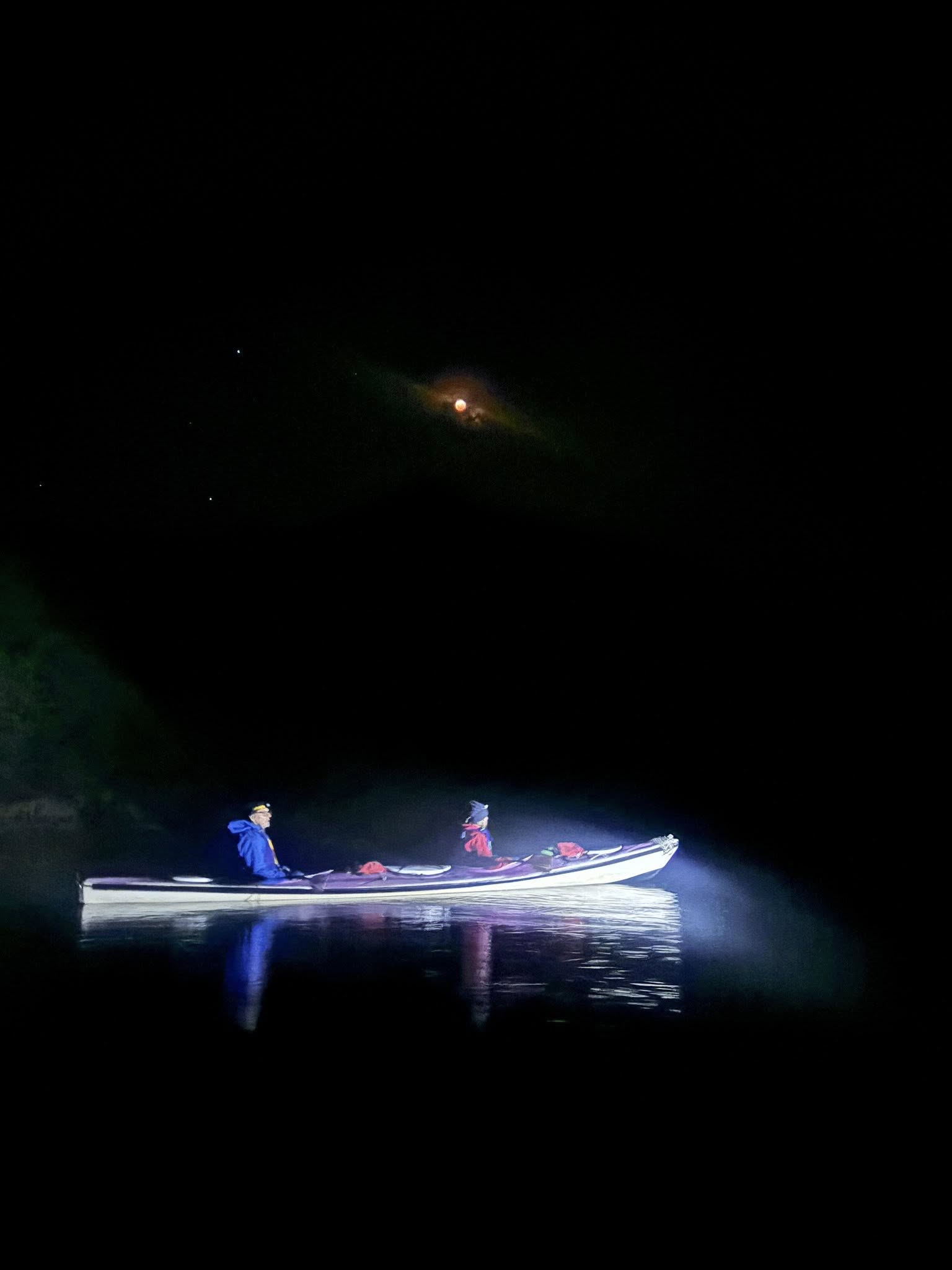
Bramble Cove offered a choice of afternoon entertainment: a hike up Mt Stokes or lazing around camp chatting, swimming and exploring the beach. I chose the latter. Of course this meant missing out on stunning views across Port Davey and surrounds, but it was a real treat to explore the beach with its small tannin-rich creek, dense vegetation and the colourful trunks of the local eucalypts. All capped off with beach dining and the pink hues of a delicate sunset. I made a poor decision not to join the night excursion to watch the eclipse of the moon accompanied by bioluminescence. Lucky others with more energy took some photos.
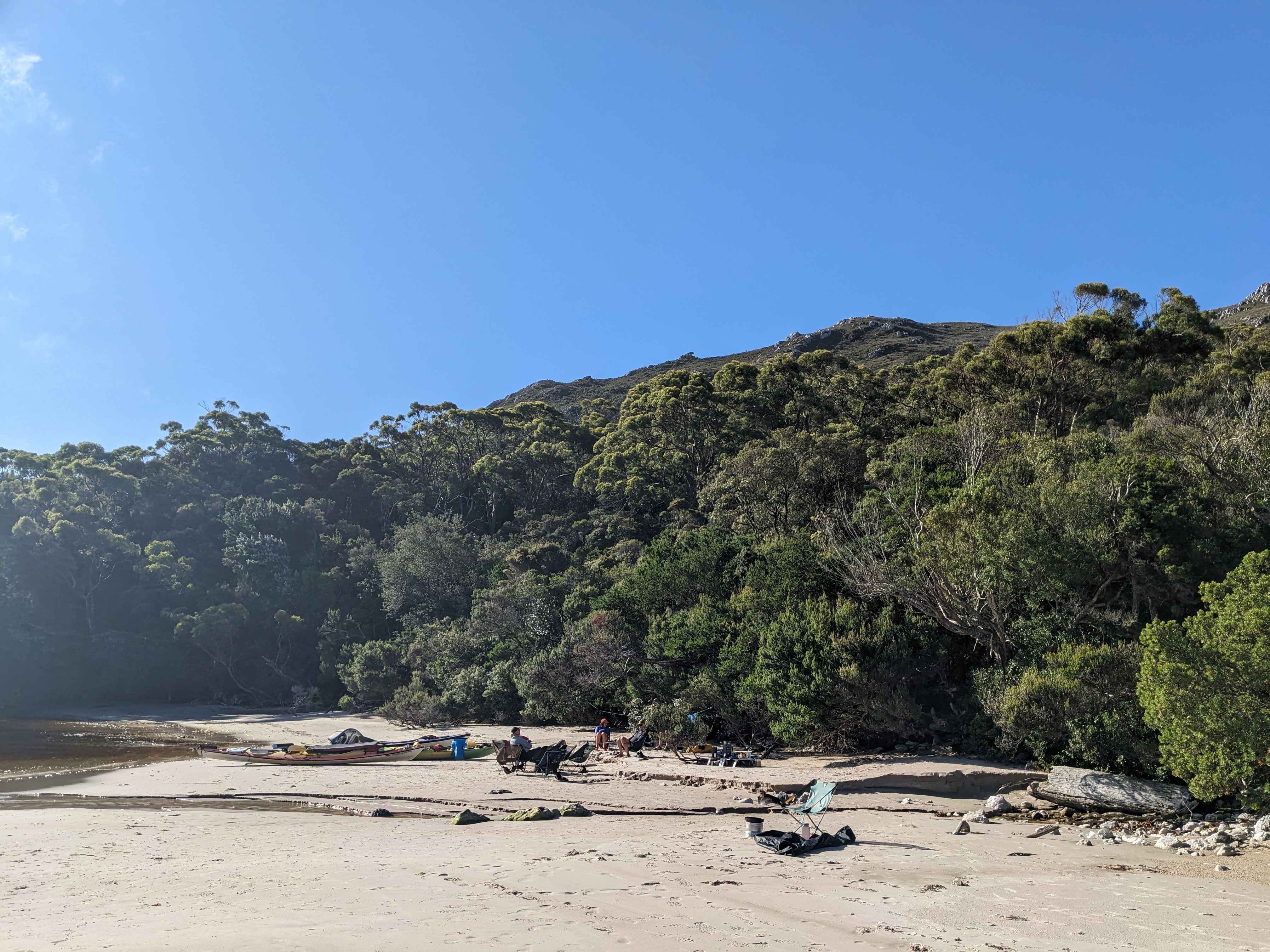
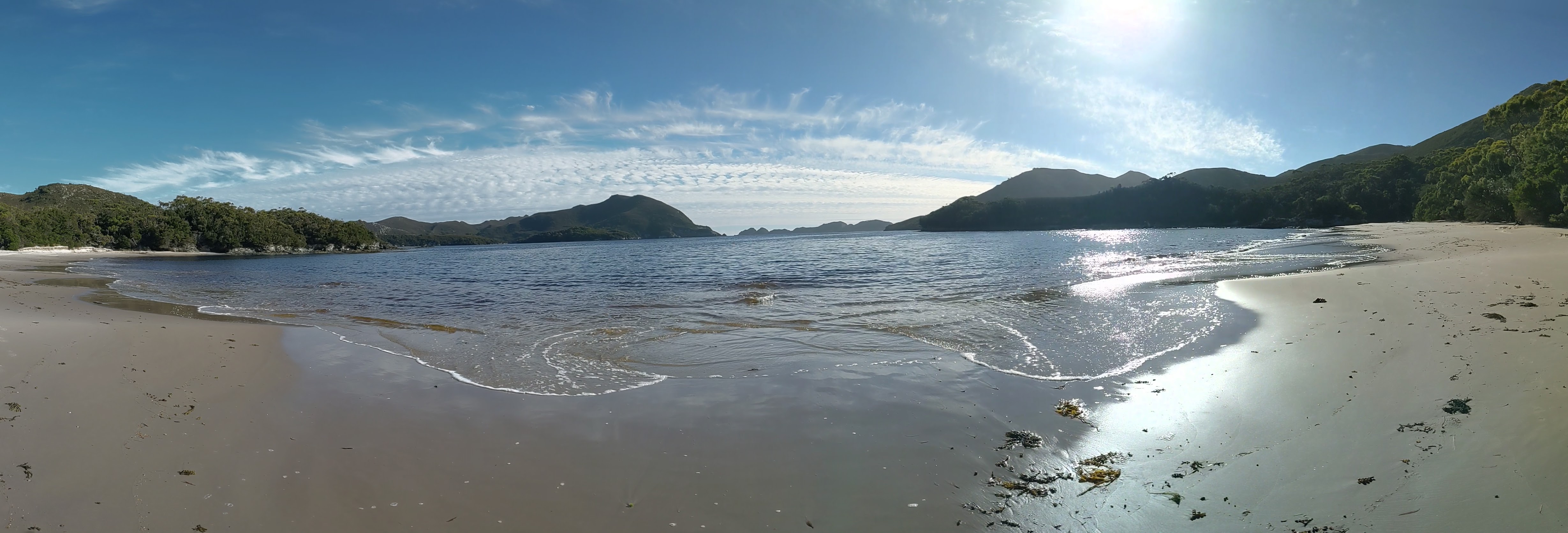
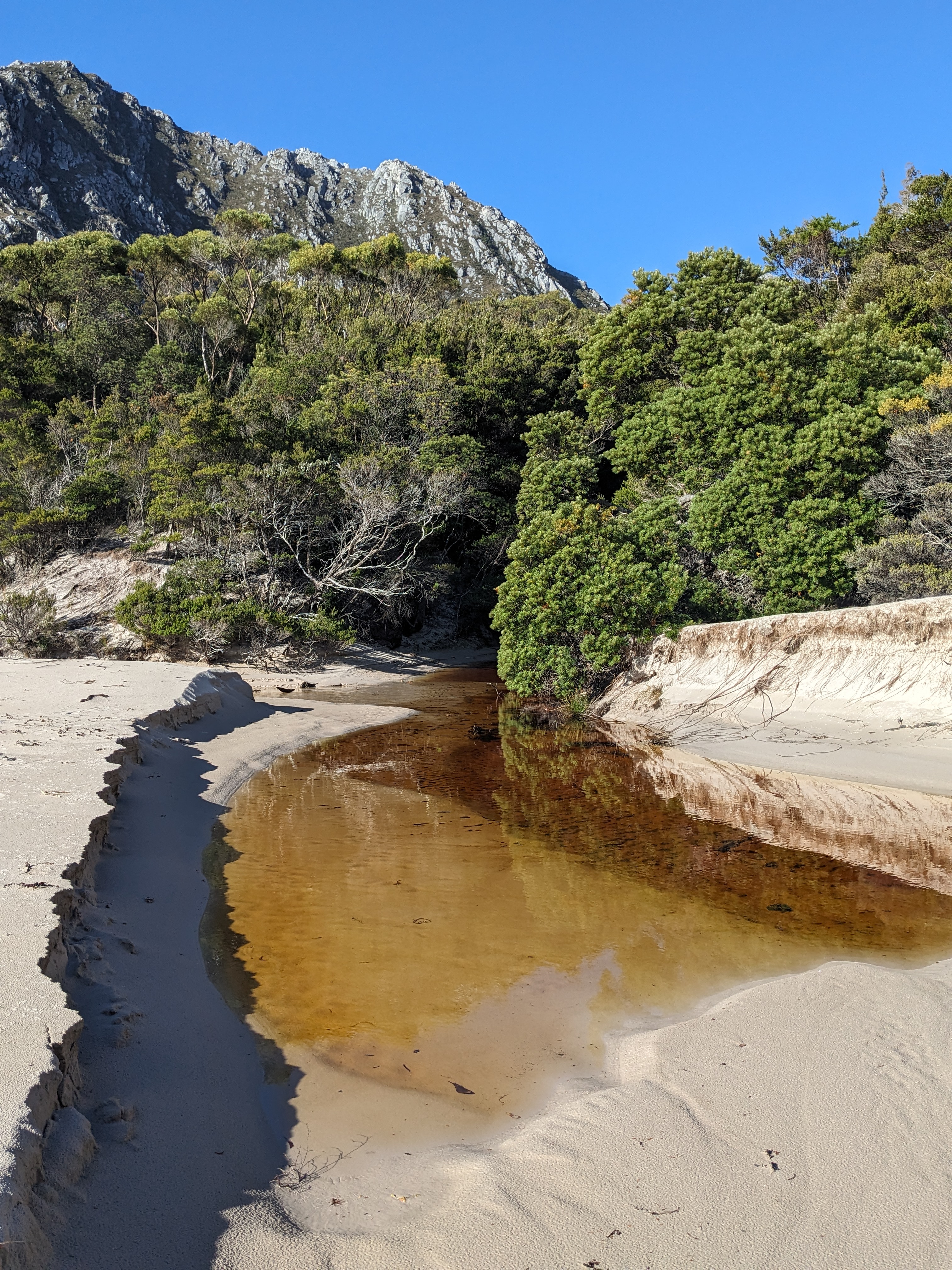
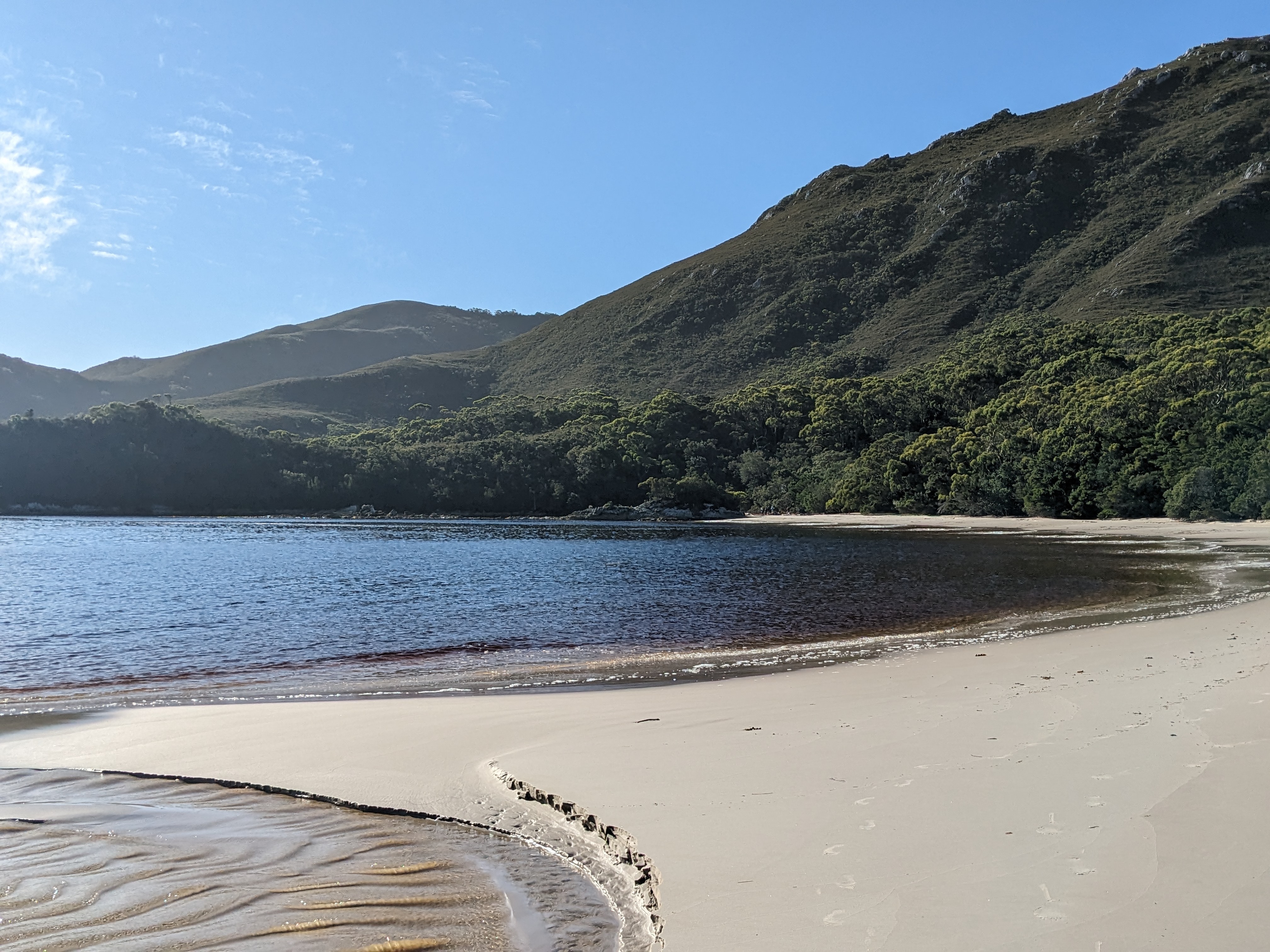
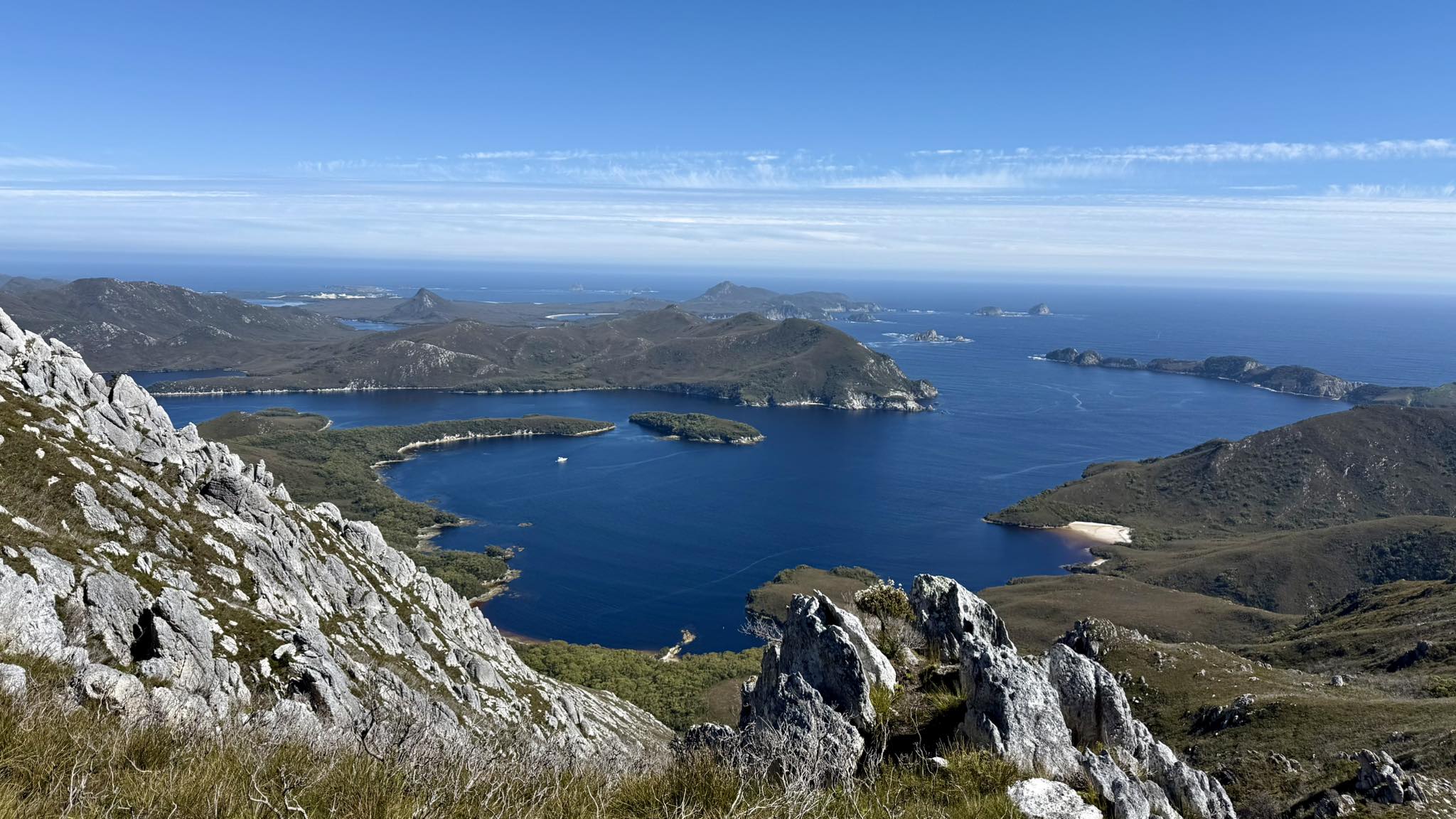
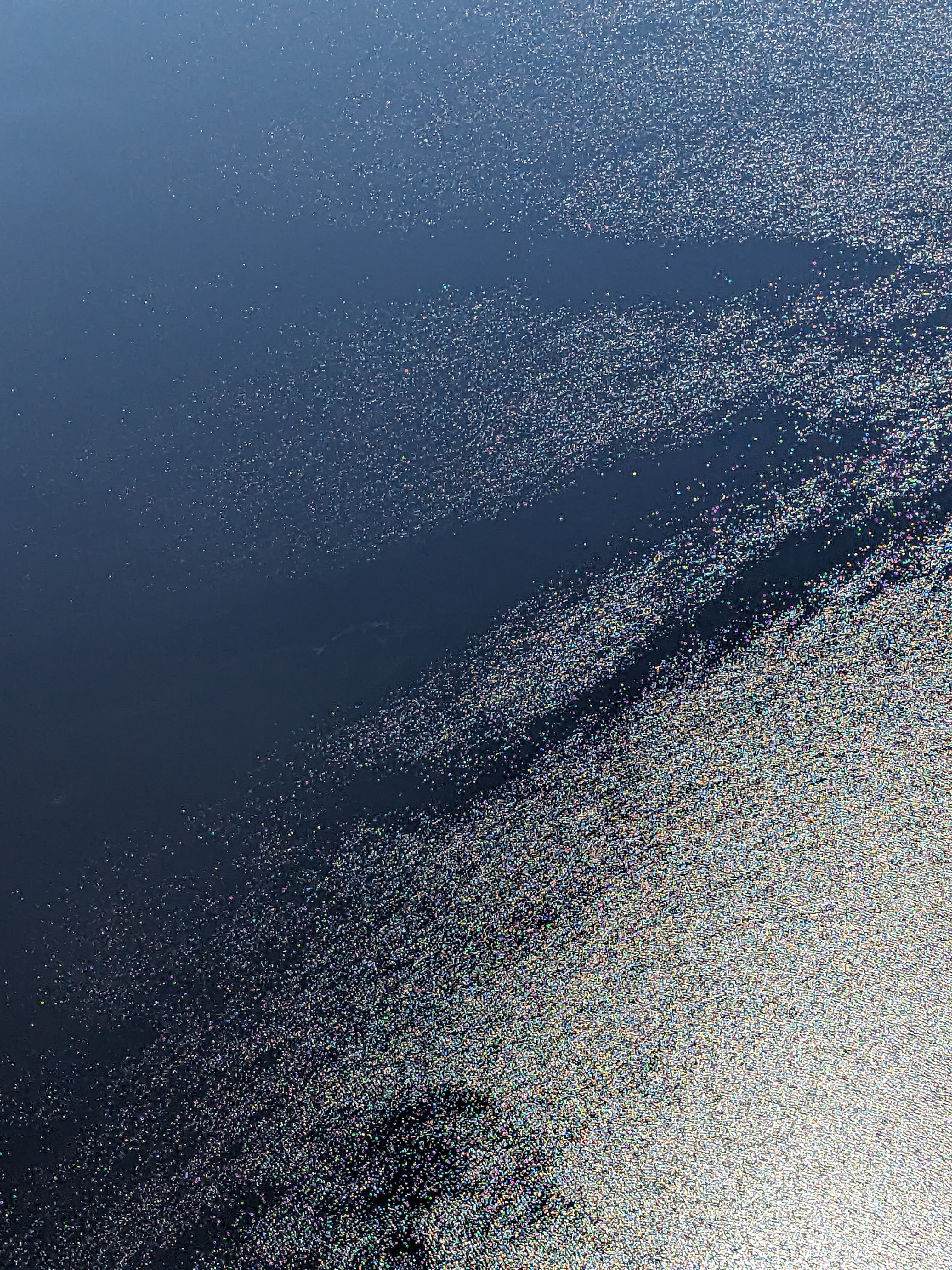
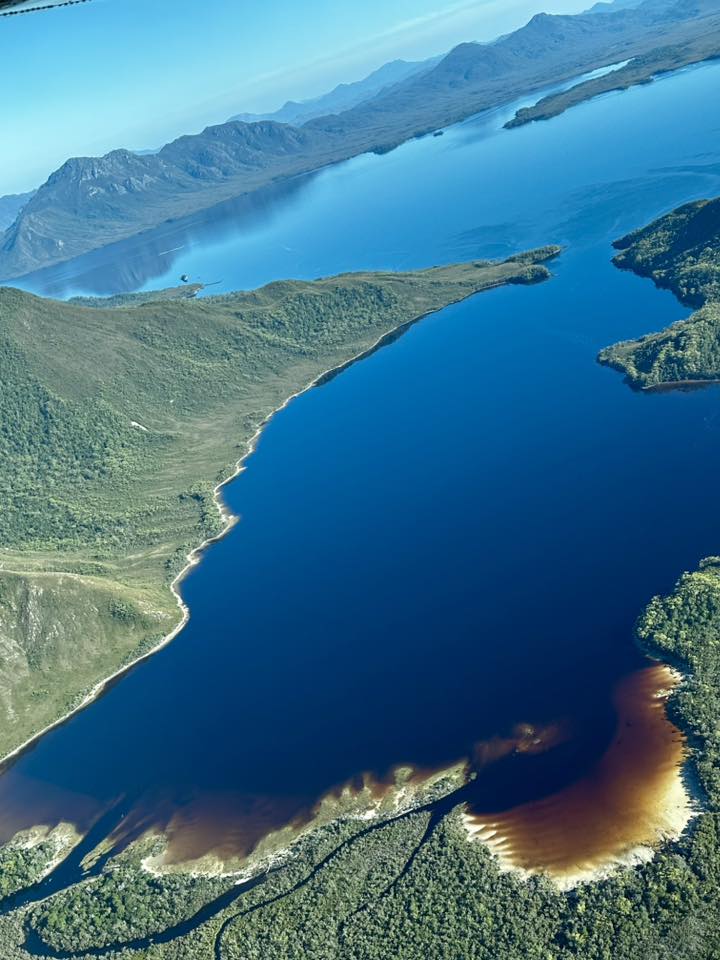
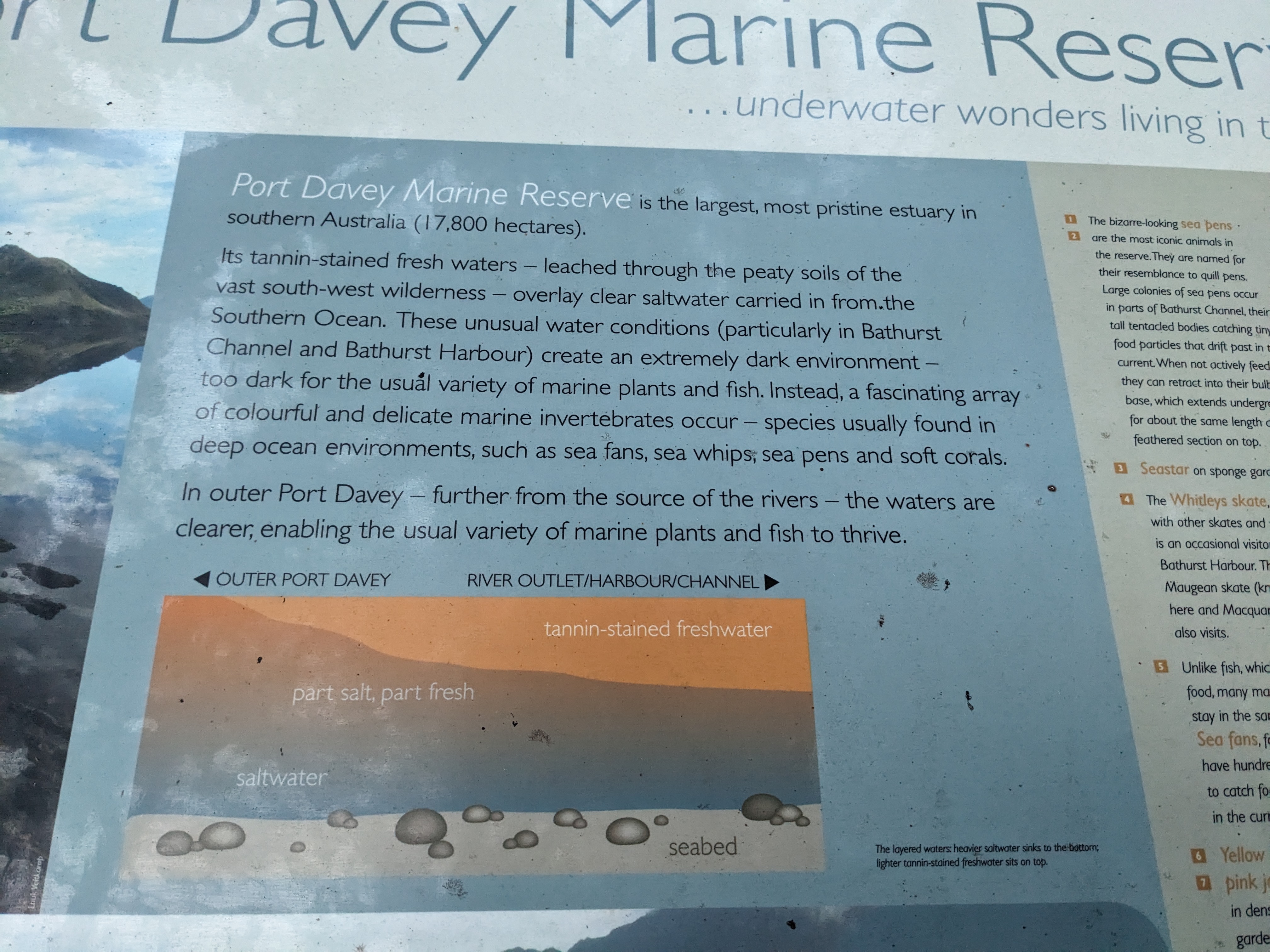
No day in particular. As you will have picked up in photos so far, the waters in the area we paddled are rich in tannin – shown clearly in the aerial photo below. The combination of dense button grass, peaty soils and high rainfall result in the leaching of a deeply tea-coloured brew that accumulates in small rivulets before running into the marine reserve. This freshwater stays above the saltwater but creates a dark environment that supports few fish … and hence there is limited bird life. While we did see a pair of magnificent and stately sea eagles wearing their beacon-white plumage and perched on a high vantage point, we otherwise saw few sea birds bar the occasional cormorant or silver gull. A curious coastal ecosystem, with interpretive signs alluding to unusual and special marine plants living deep below the surface.
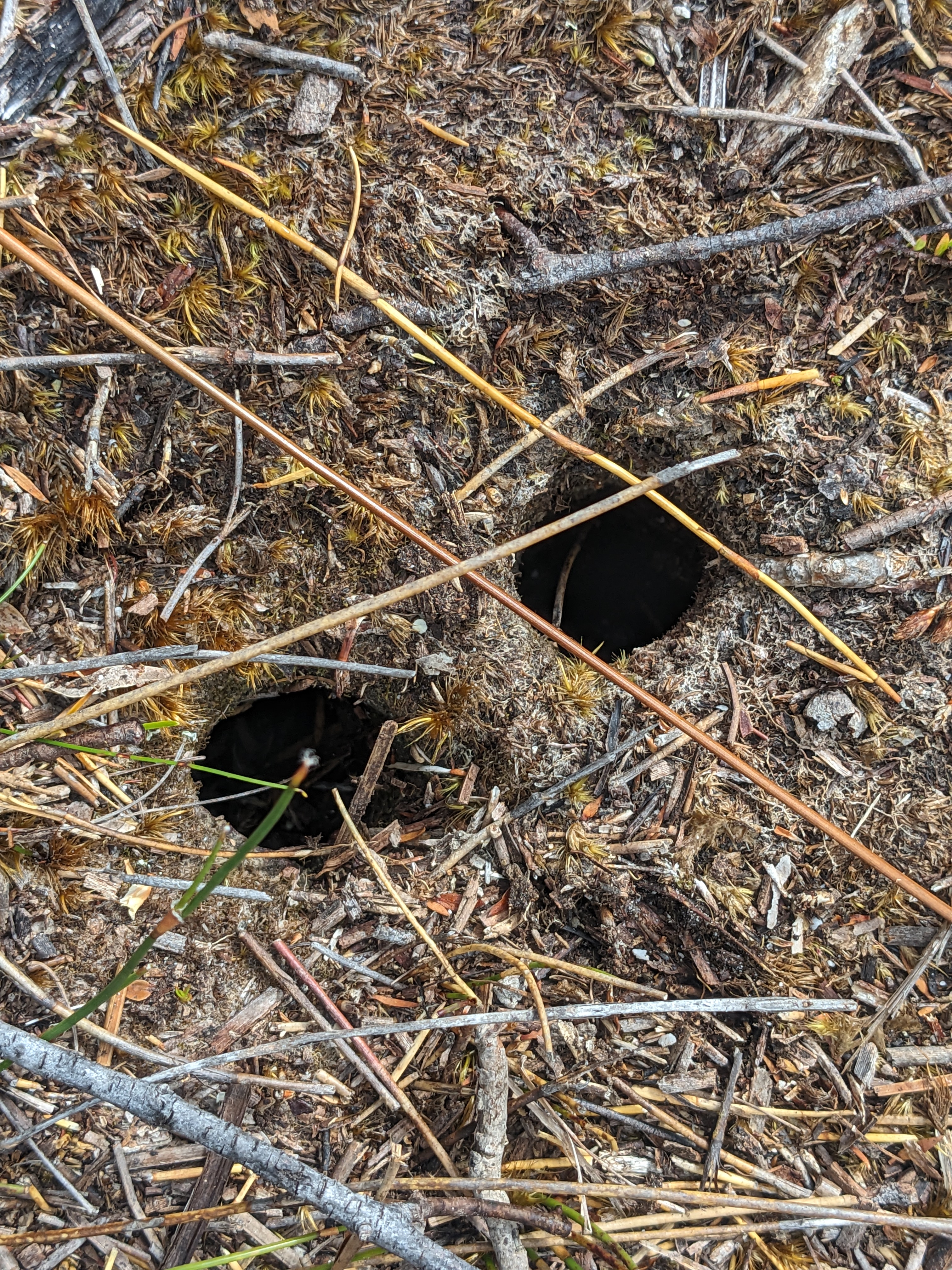
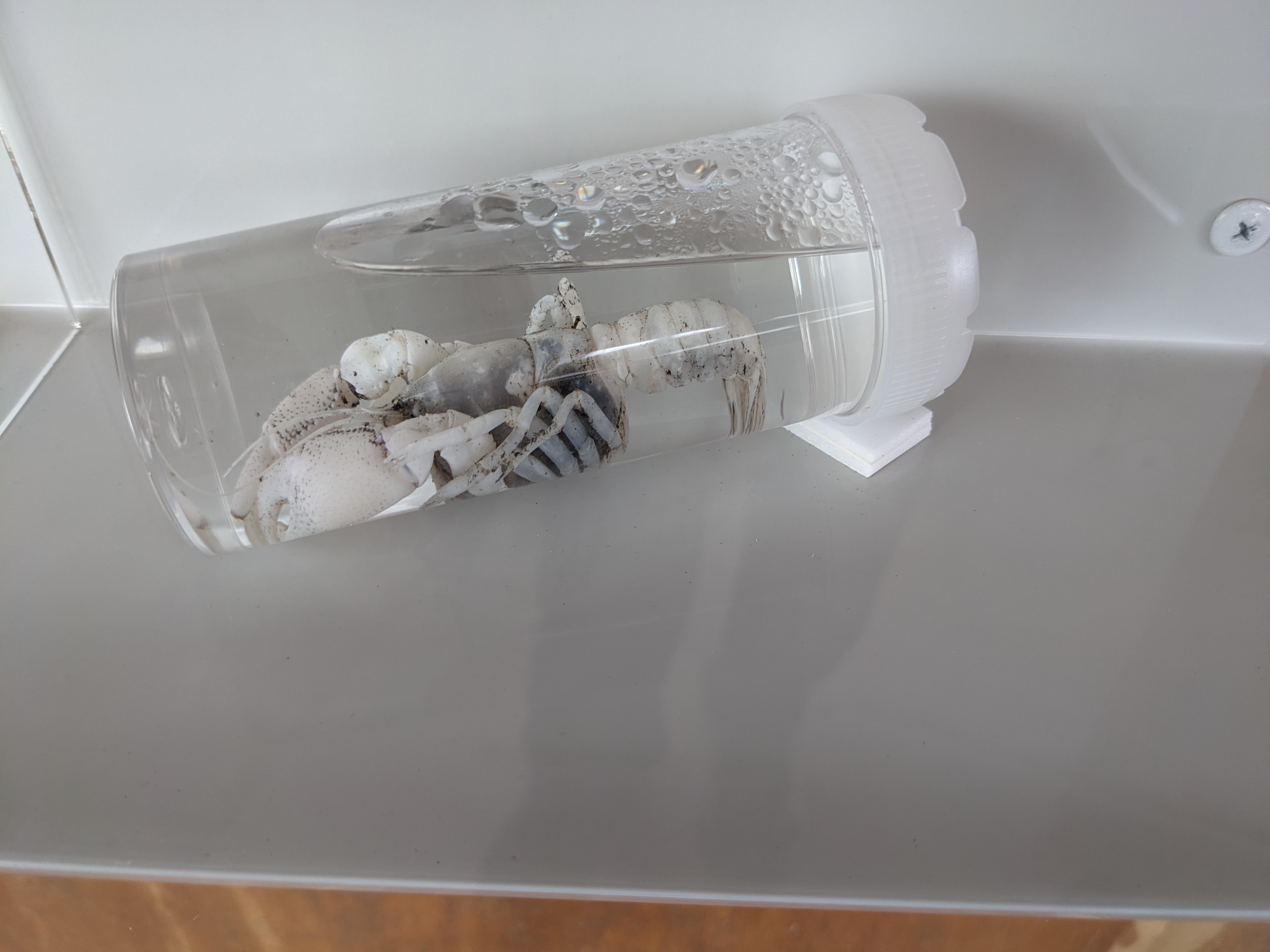
The burrowing freshwater crayfish is another local curiosity, living in water-filled tunnels in the peat layer and building chimneys to the surface that they plug to prevent evaporation when the weather is dry. They make their presence known through their surface entrances, and they live their lives munching on button grass roots in deep soggy tunnels. Unlike you might expect, their tunnel entrances are found high up the slopes and not just in the lower part of the landscape. They did not reveal themselves and the only one I saw was a long-deceased and bleached specimen in the museum at Melaleuca. Read on for those who are curious: Tasmania’s Freshwater Burrowing Crayfish | Department of Natural Resources and Environment Tasmania .
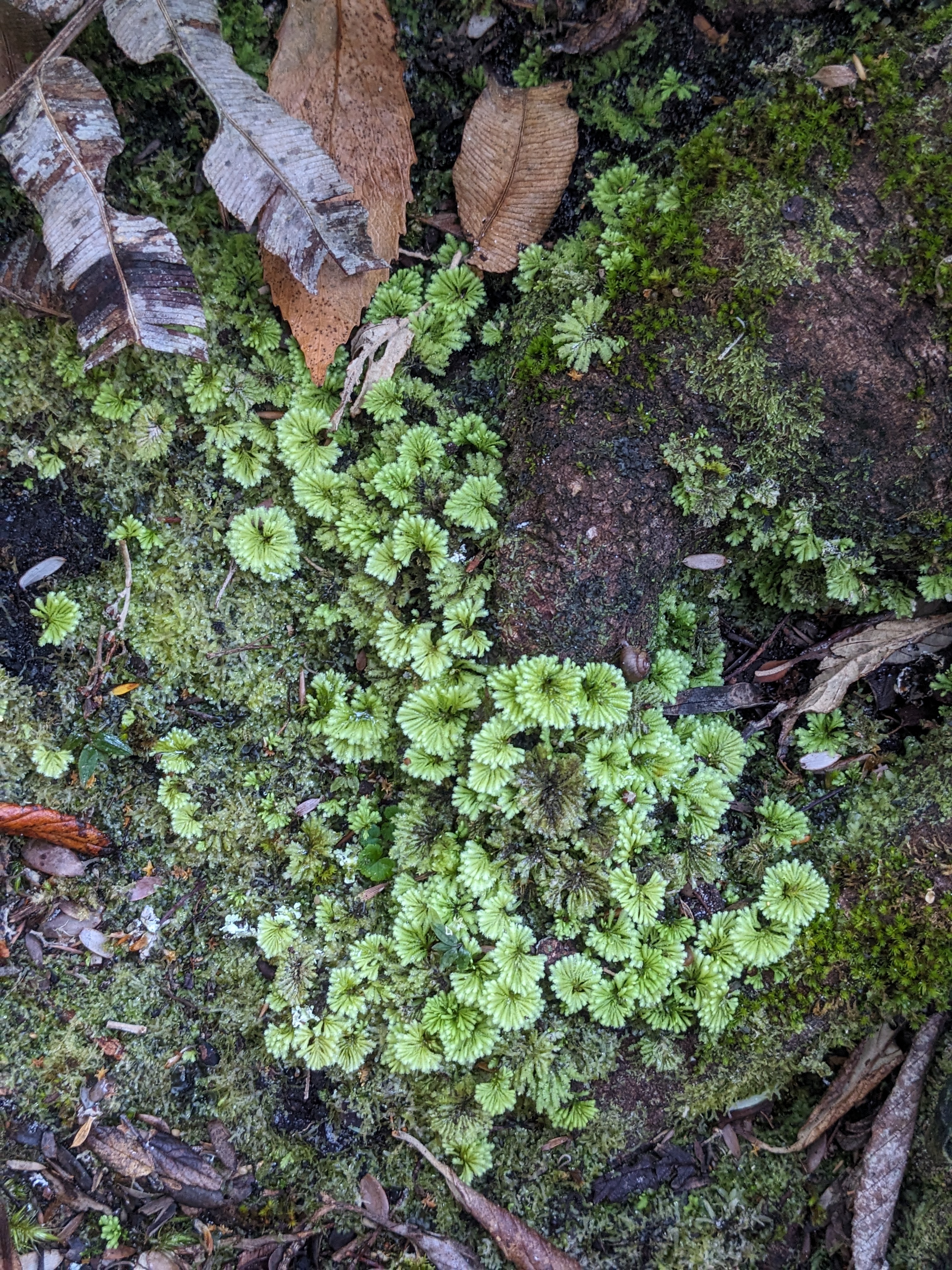
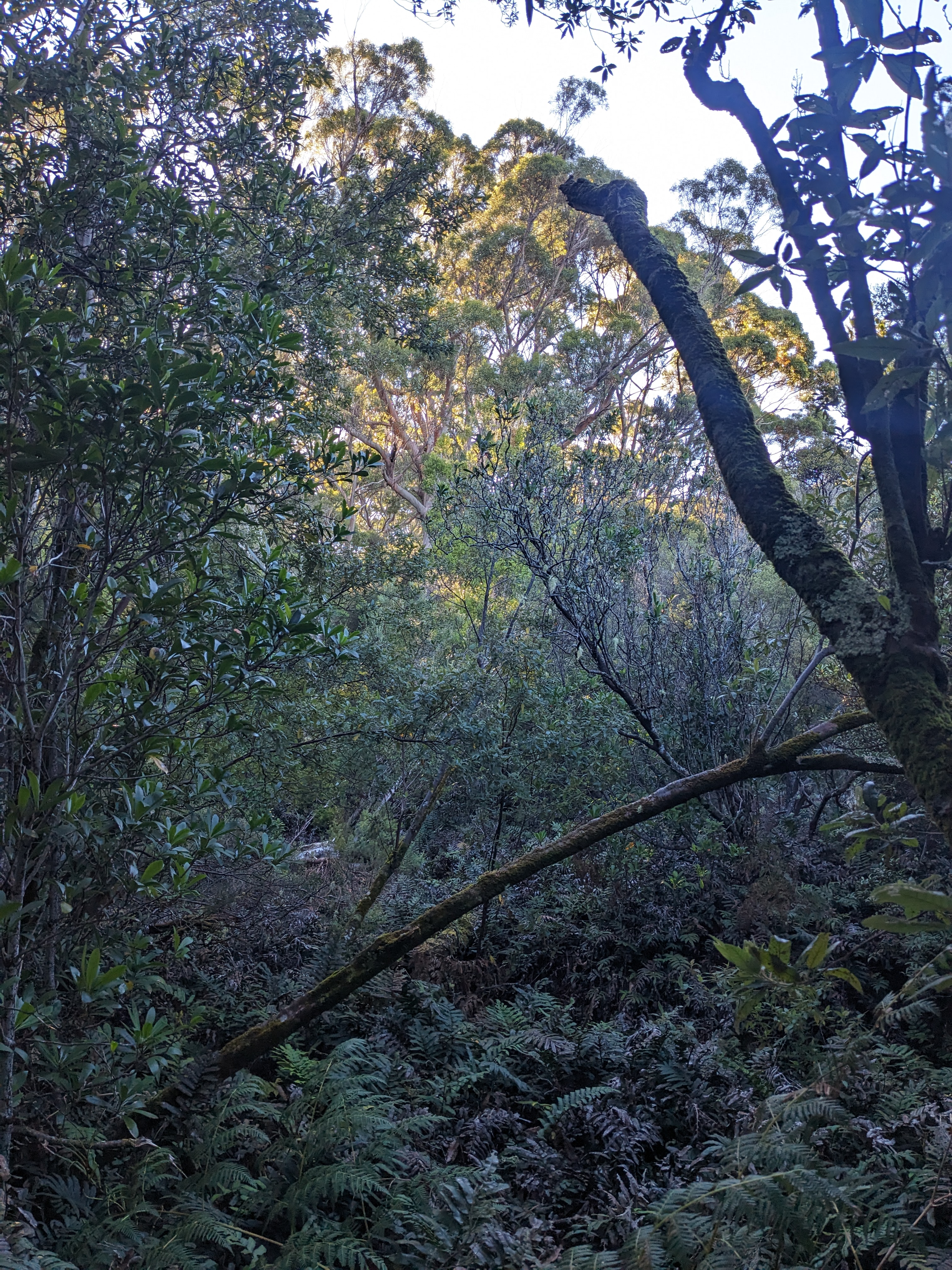
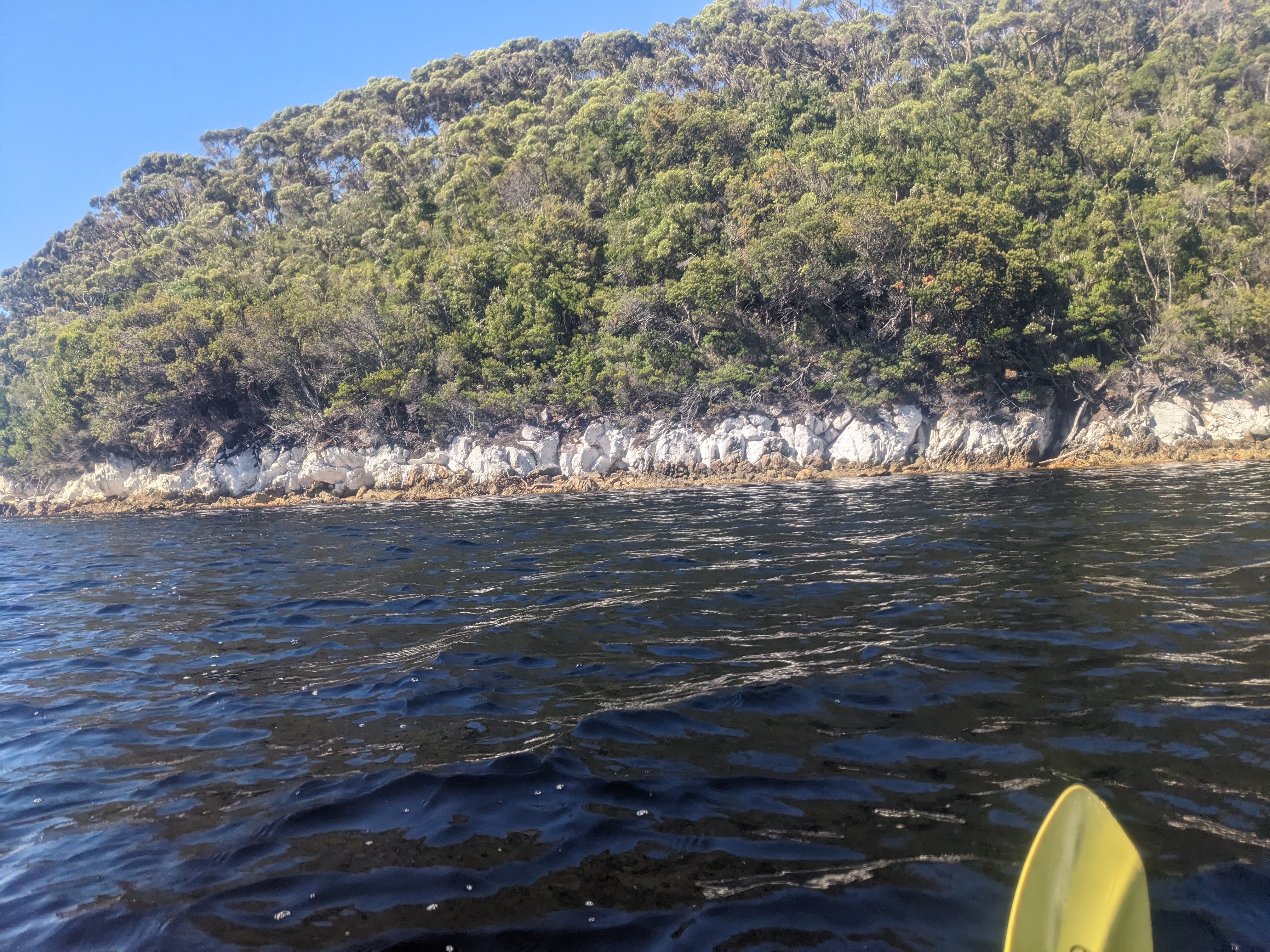
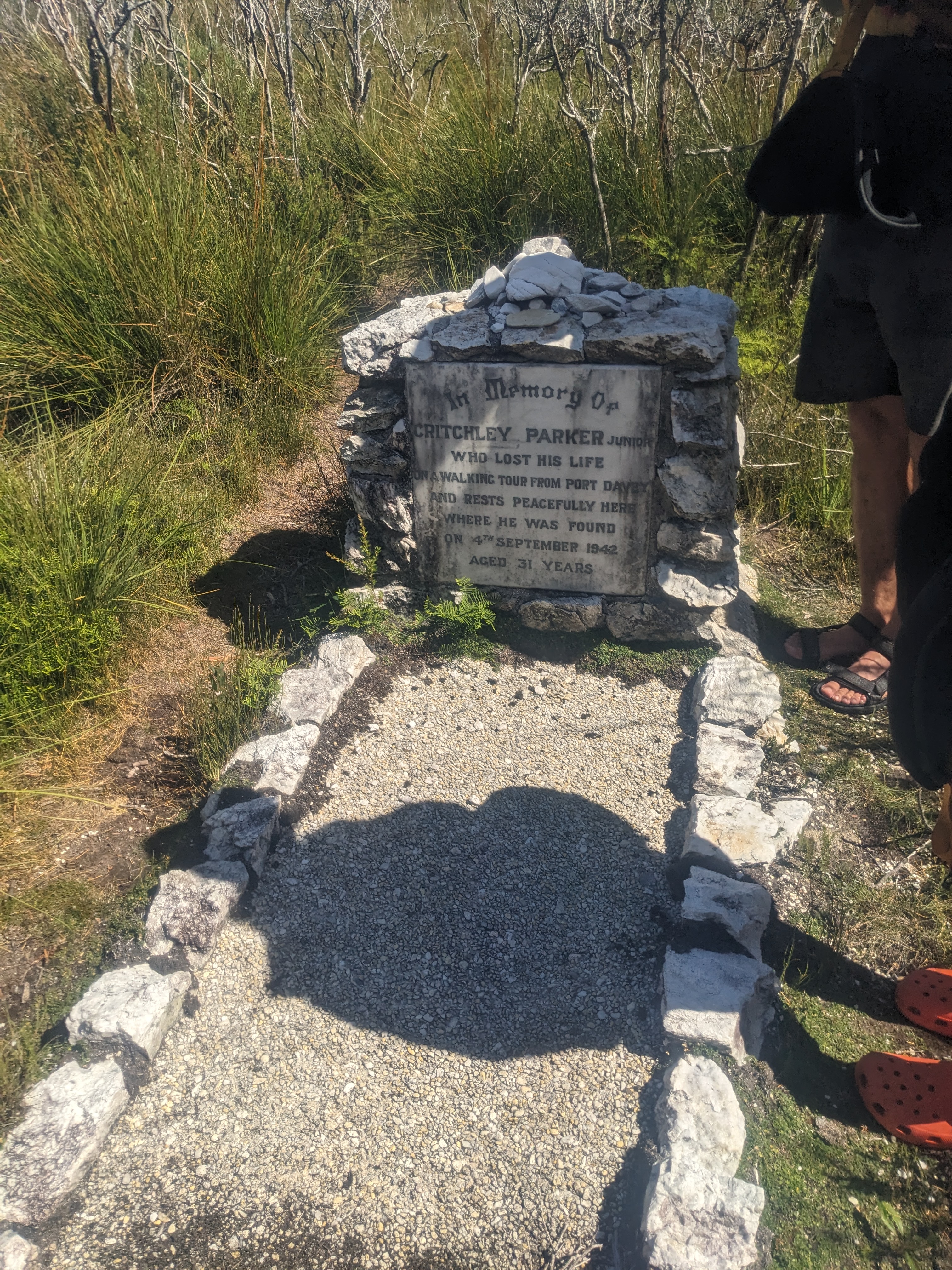
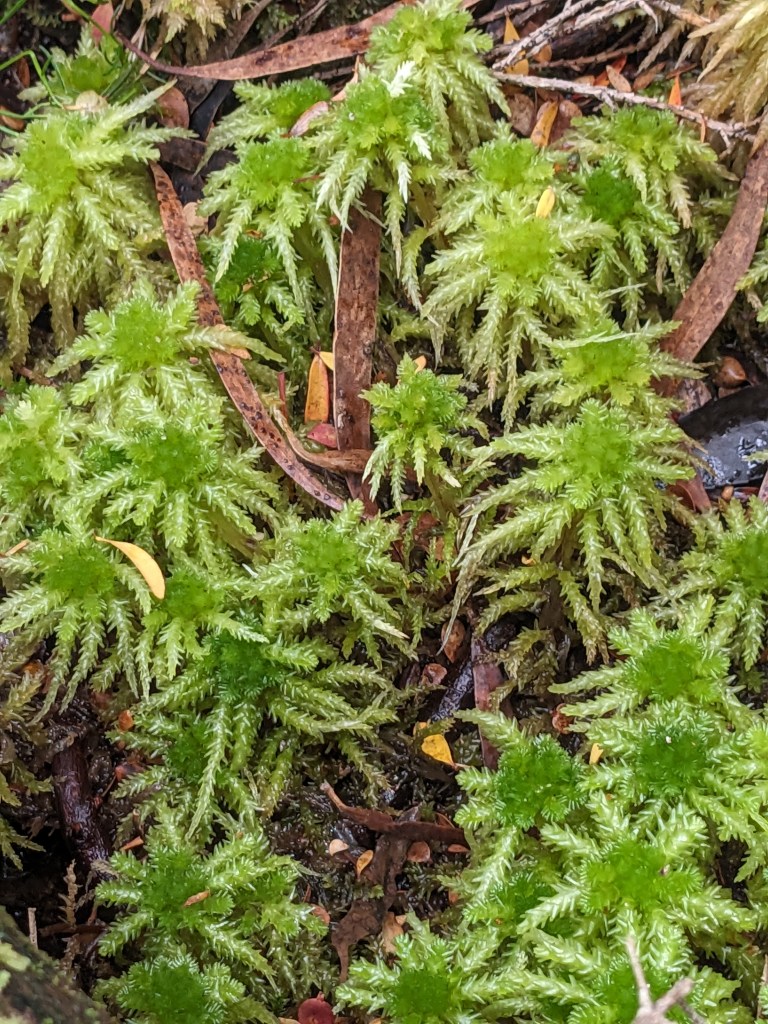
4/3/2026 Another adventure day beckoned after another hearty breakfast. Time to quickly admire some mosses and the density of undergrowth before packing the Packhorses and departing Bramble Cove. In places, the impenetrable vegetation comes close to the water and the rocky shore, layered white and tannin, and detering any approach. Guided to a suitable landing, we stopped to visit the grave of Critchley Parker: a young man dropped off in an isolated location in 1942 and in search of a safe and productive refuge to found a Jewish community. The location proved too challenging and he died just 12 days after being dropped off, but was not found until several months later. Unfit and possibly misguided it is a poignant story in our time of deep division, as the shock waves of violence and tragedy in the middle east spread across the globe. You can read more here: Before Israel was created, Critchley Parker set off to find a Jewish homeland in Tasmania’s wilderness – ABC News.
With freshening winds we barely needed to paddle to our queenly lunch destination at Balmoral Beach. Once more the lunch box (second from left) was opened to reveal thermoses and a variety of lunch doings.
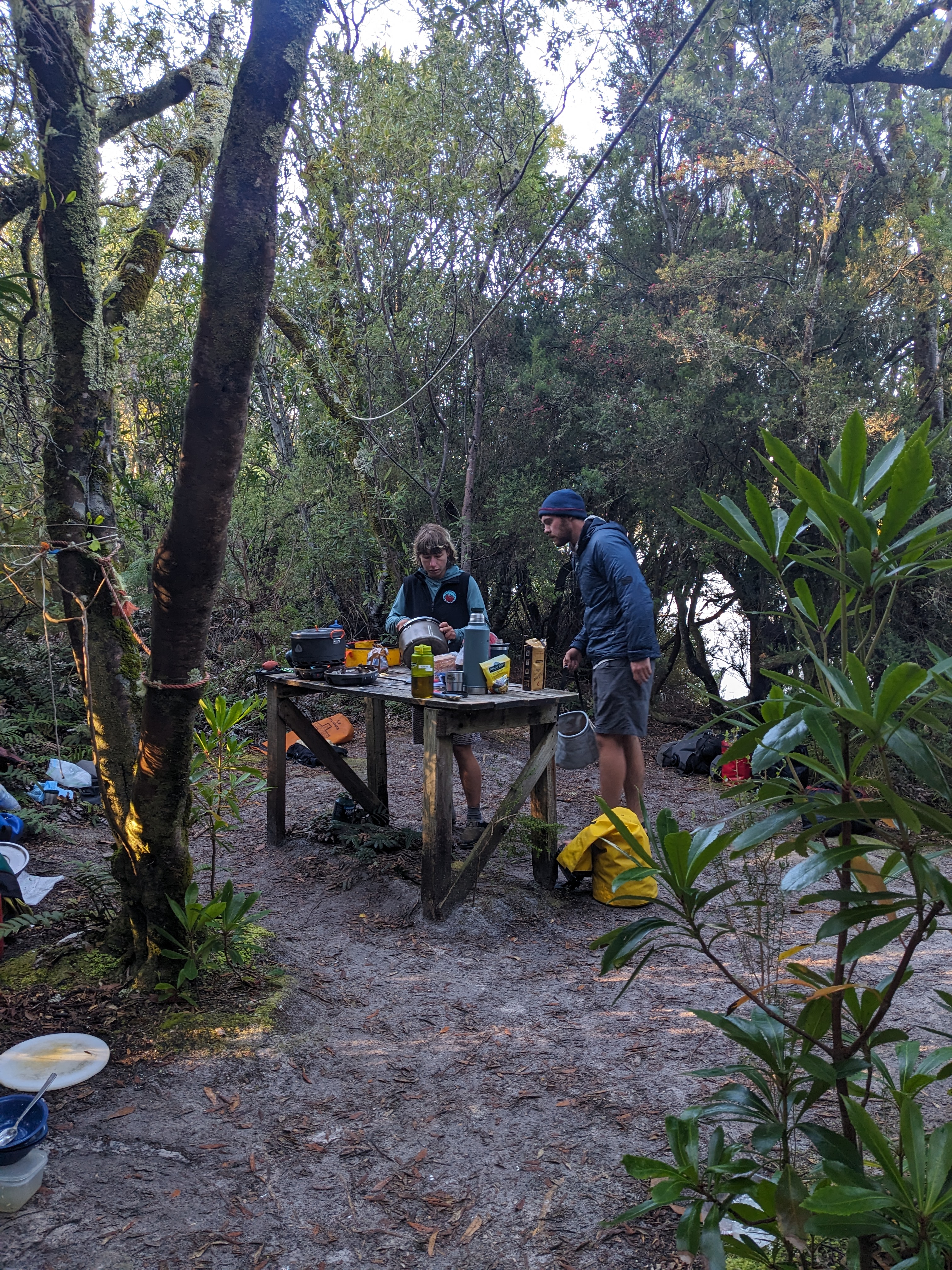
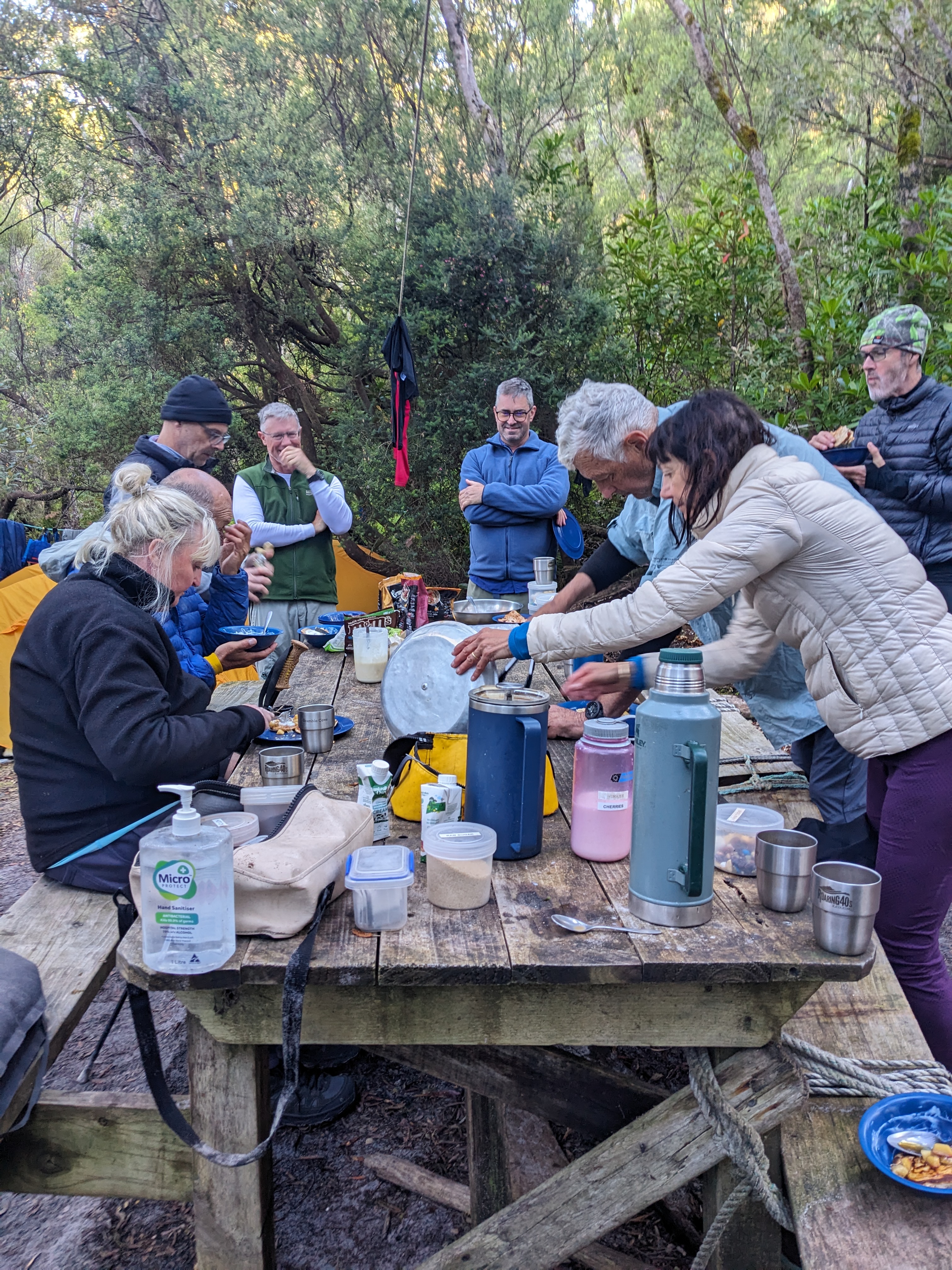
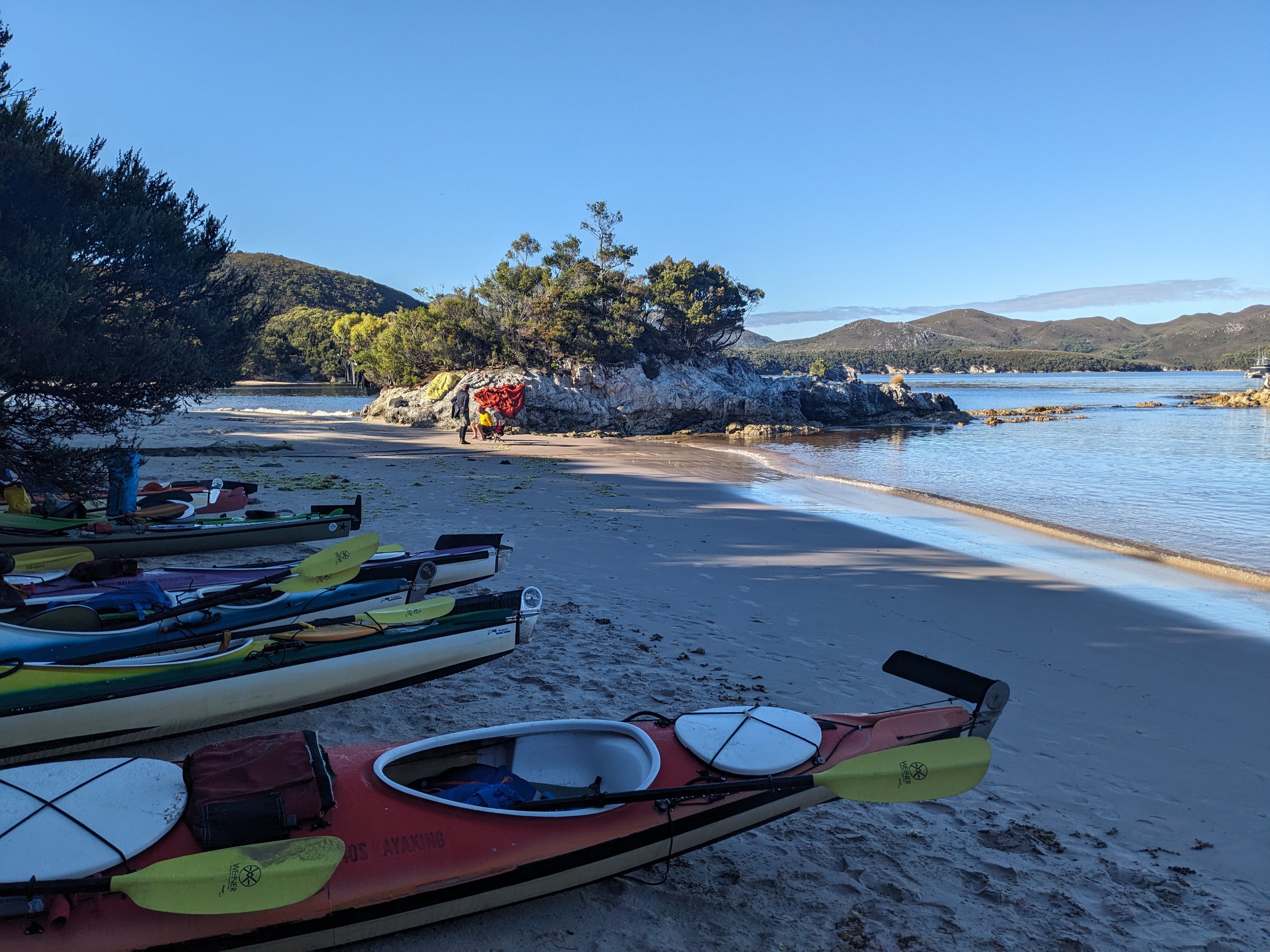
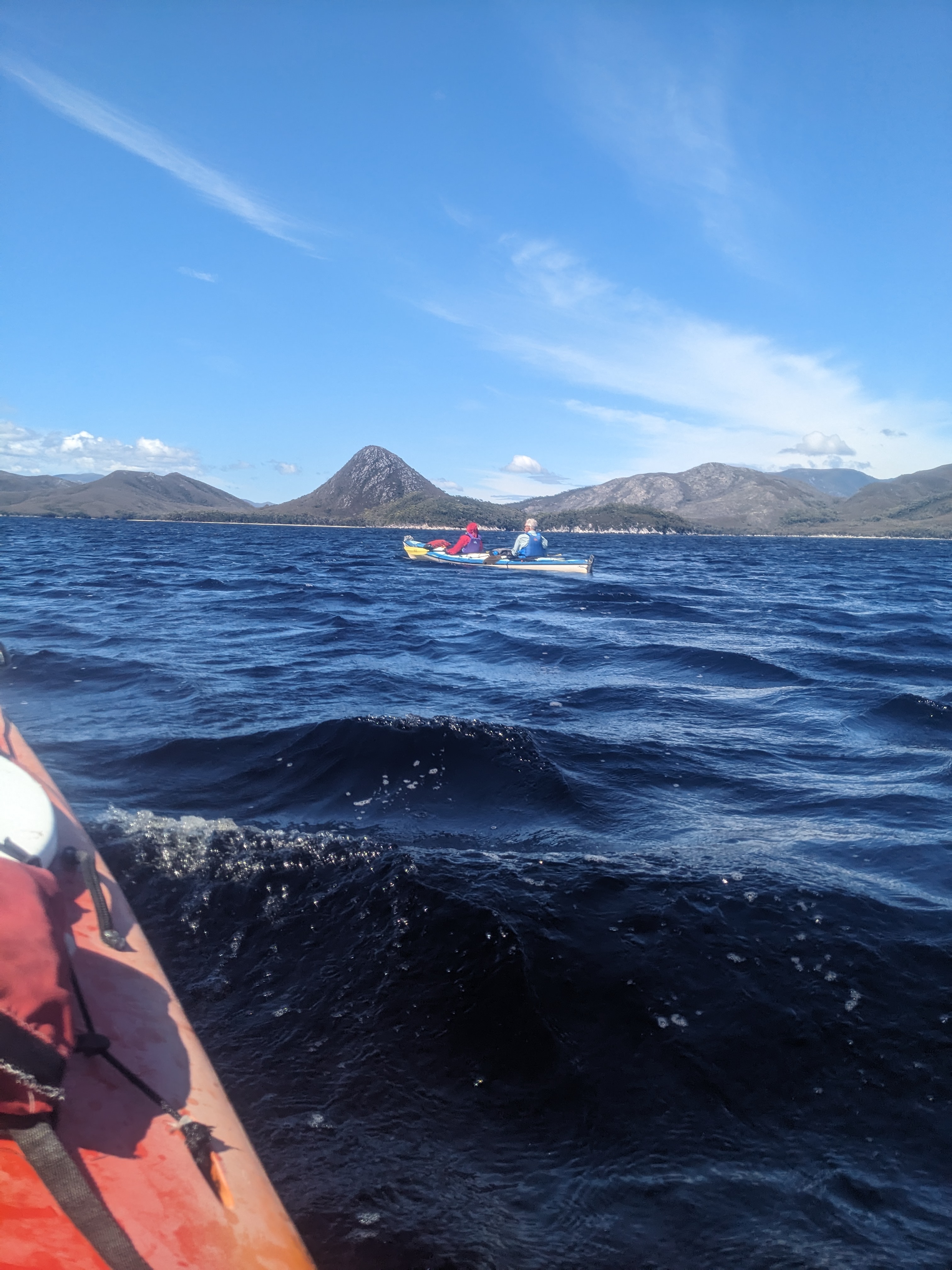
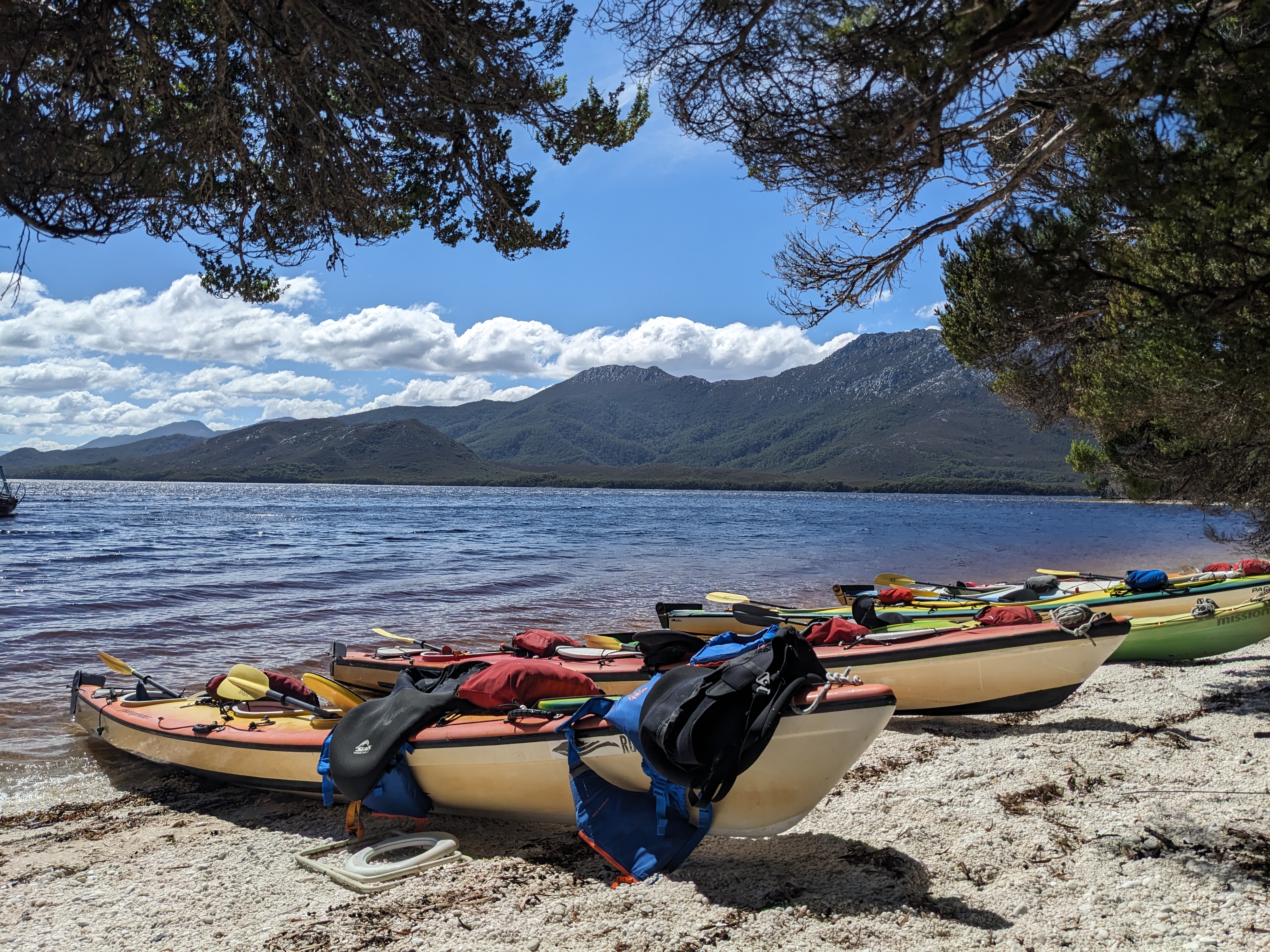
As expected, the wind increased during the lunch break. We paddled hard into the wind and towards Jo Page Bay to capitalise on the opportunity to have the wind take us back through Bathurst Narrows. Jason’s video below gives you some sense of the choppy waters and roller coaster ride.
And then there was a bit of time to take it easy and let our paddles pick up the wind and carry us along.
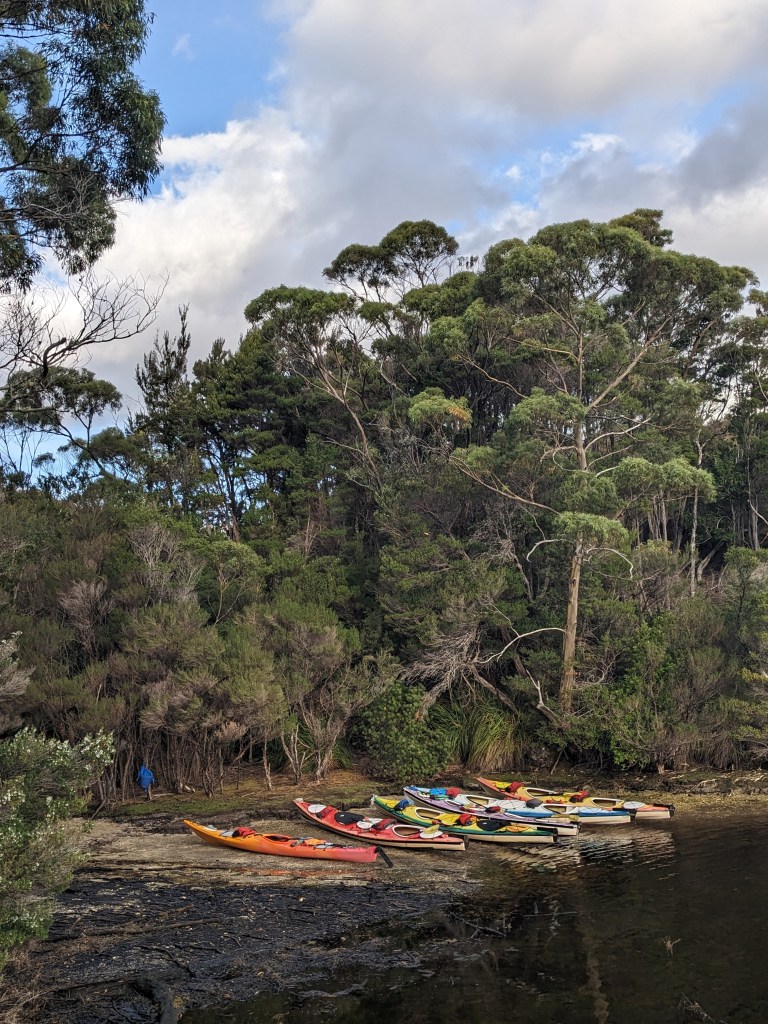
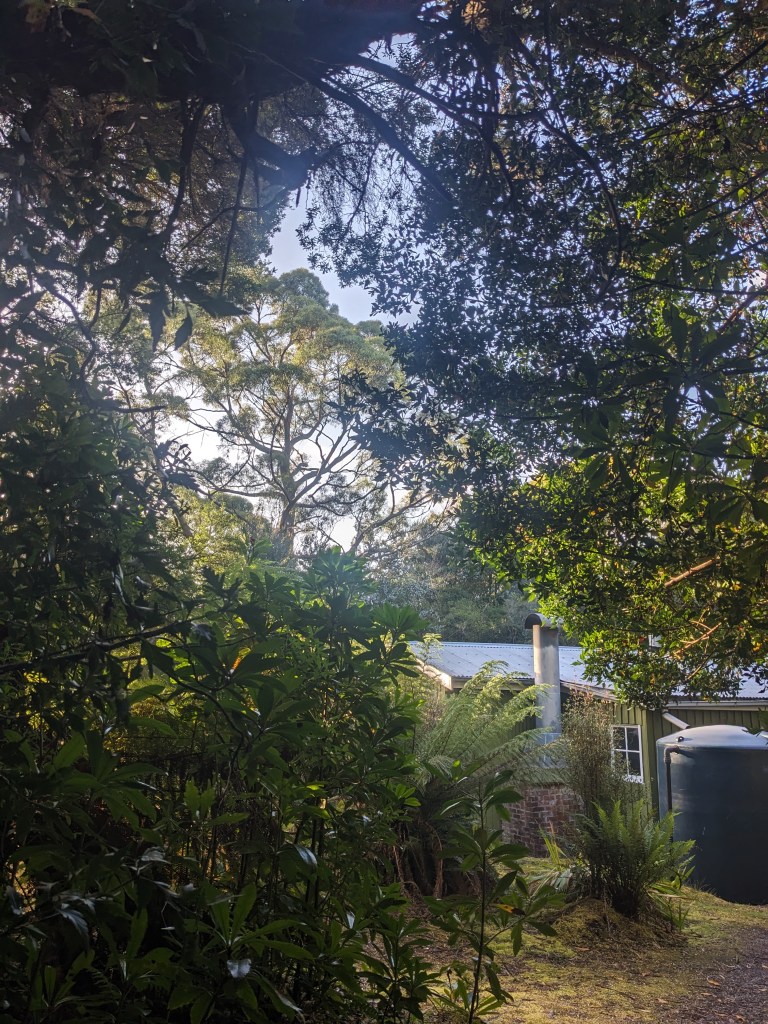
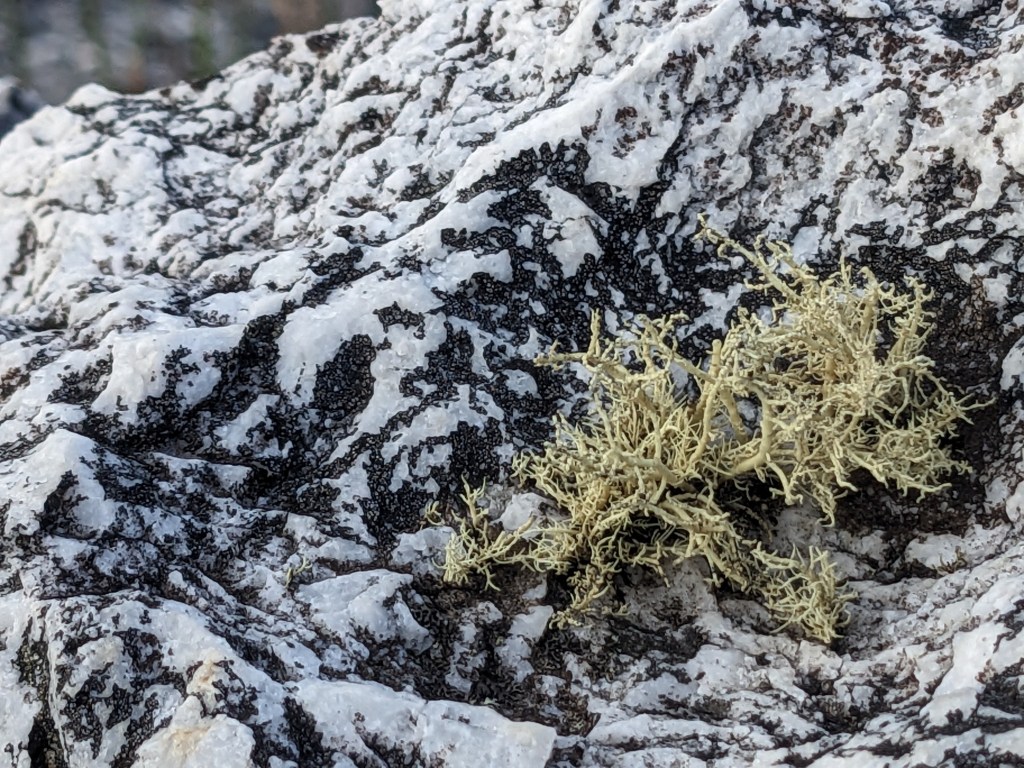
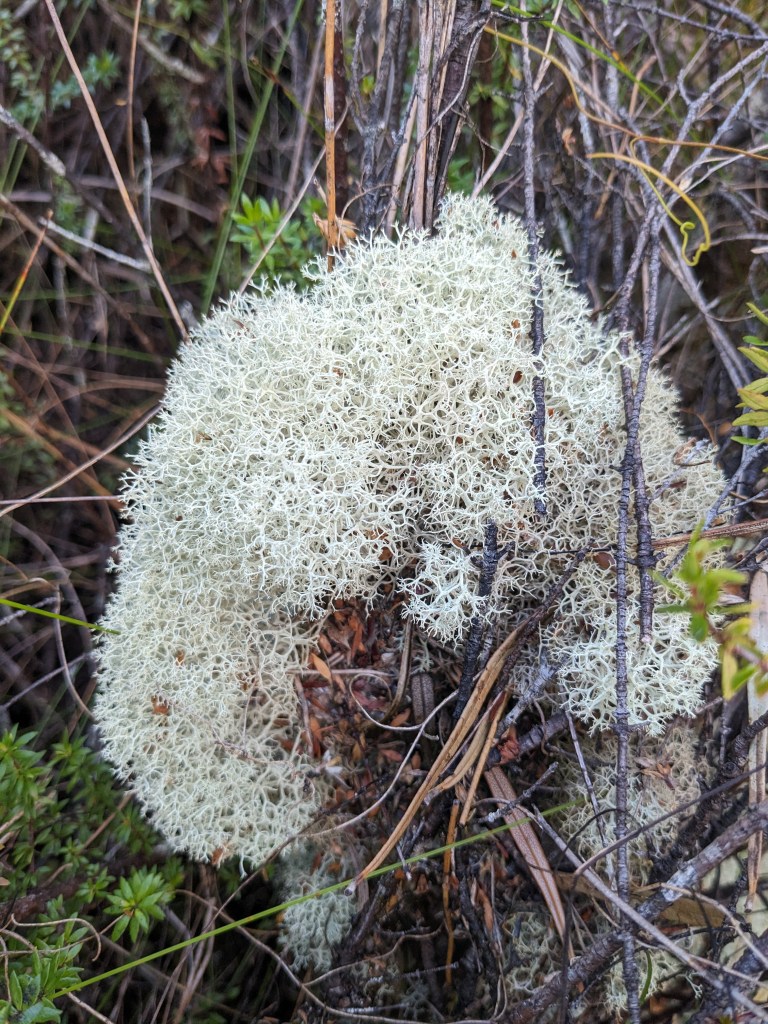
Claytons Corner (4-5/5) We camped for the next two nights at Claytons Corner, which had been home for an intrepid couple of SW pioneers who ran a boat business ferrying supplies and equipment into Port Davey and Melaleuca. The location offered protection for boats and kayakers alike, space to spread out in the campsite, and the Clayton’s old house for hanging out in. The homestead vegetation provided refuge for spotted quolls and potoroos, which appeared too fleetingly to be captured on camera. Walking the knoll behind the campsite revealed plenty of wonders: views to Mt Rugby and beyond; close ups of the ancient quartzites that comprise the south-west ranges, which emerge in places to create sheltered nooks for wispy pale-green lichens; and other plant life including prickly ground-dwelling lichens. It was the perfect vantage spot to watch the clouds and light play across the landscape, illuminating heavily vegetated gullies and eventually clearing to soft peachy-pink tones as the sun dipped below the horizon.
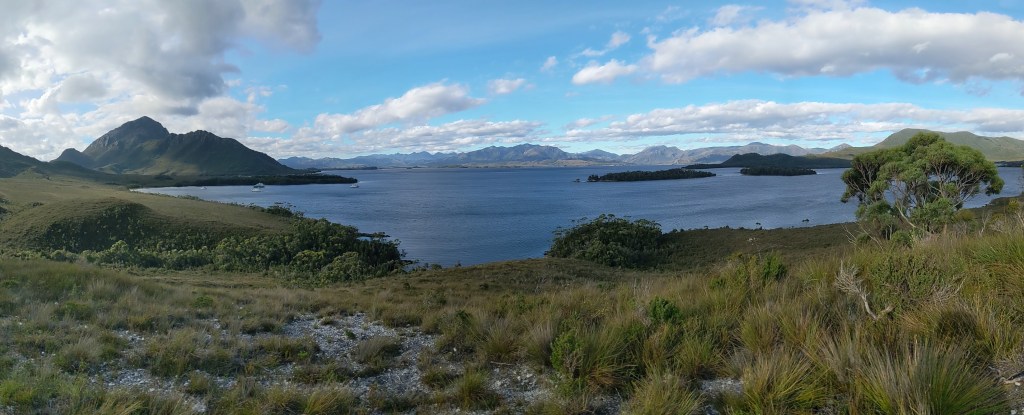
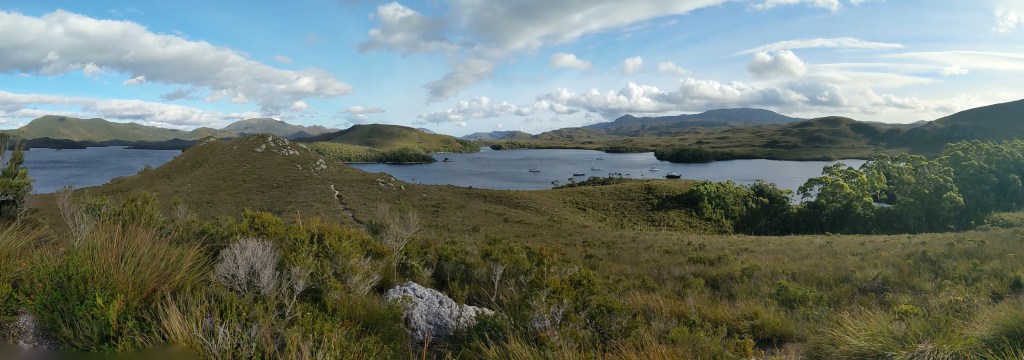
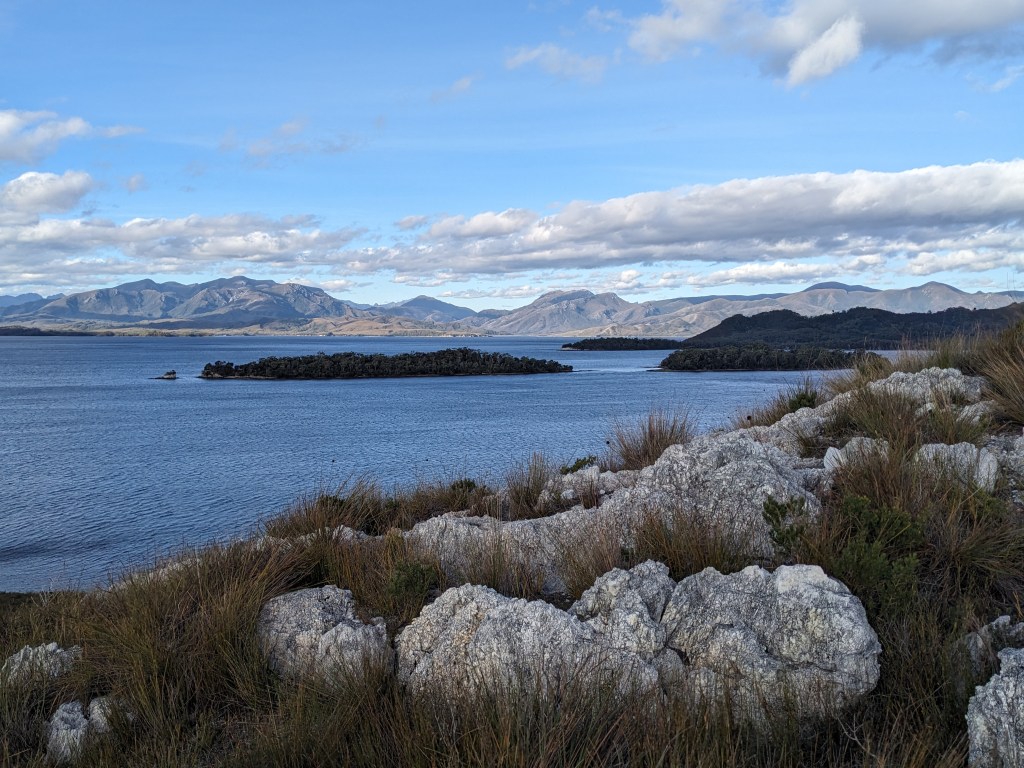
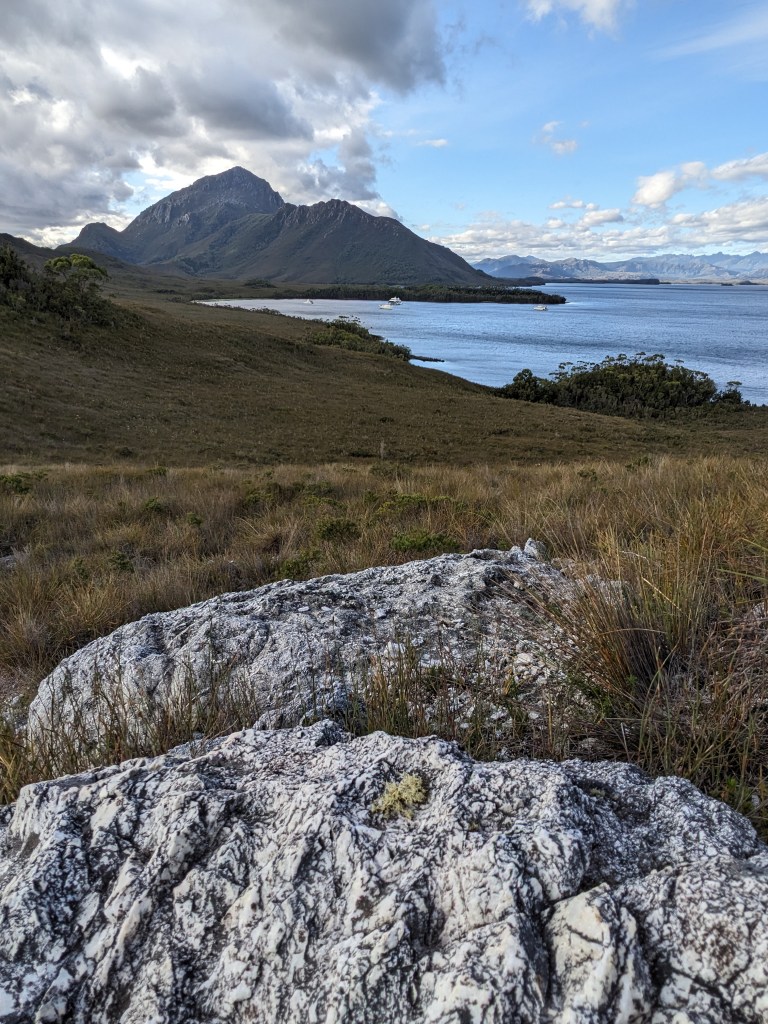
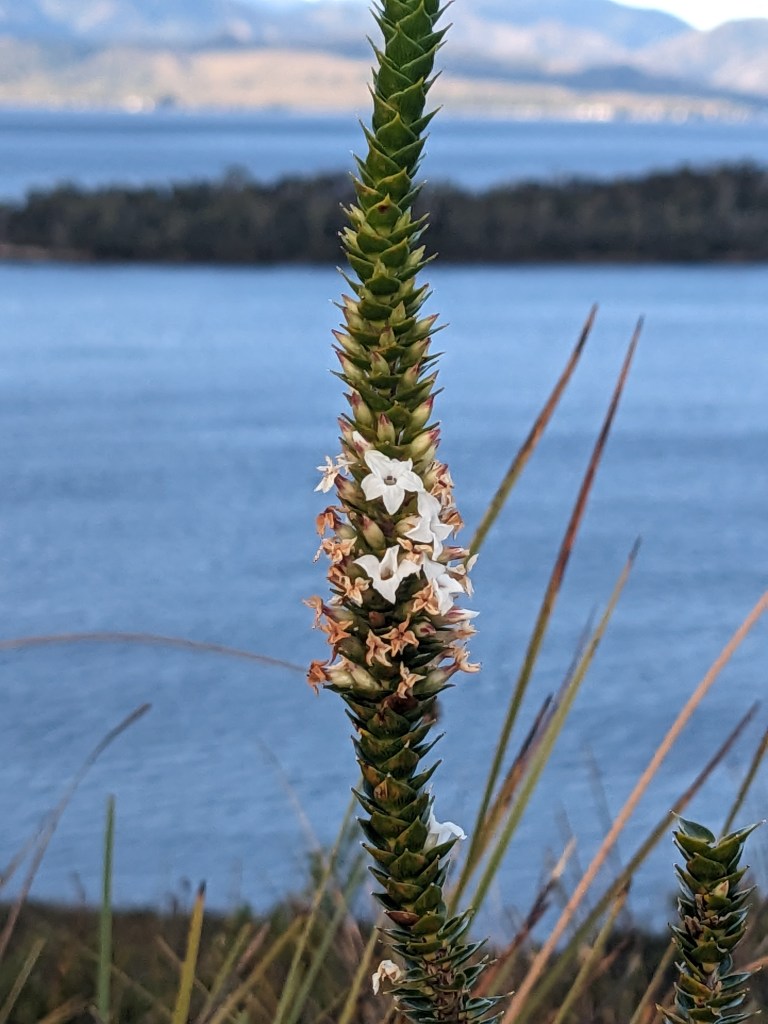
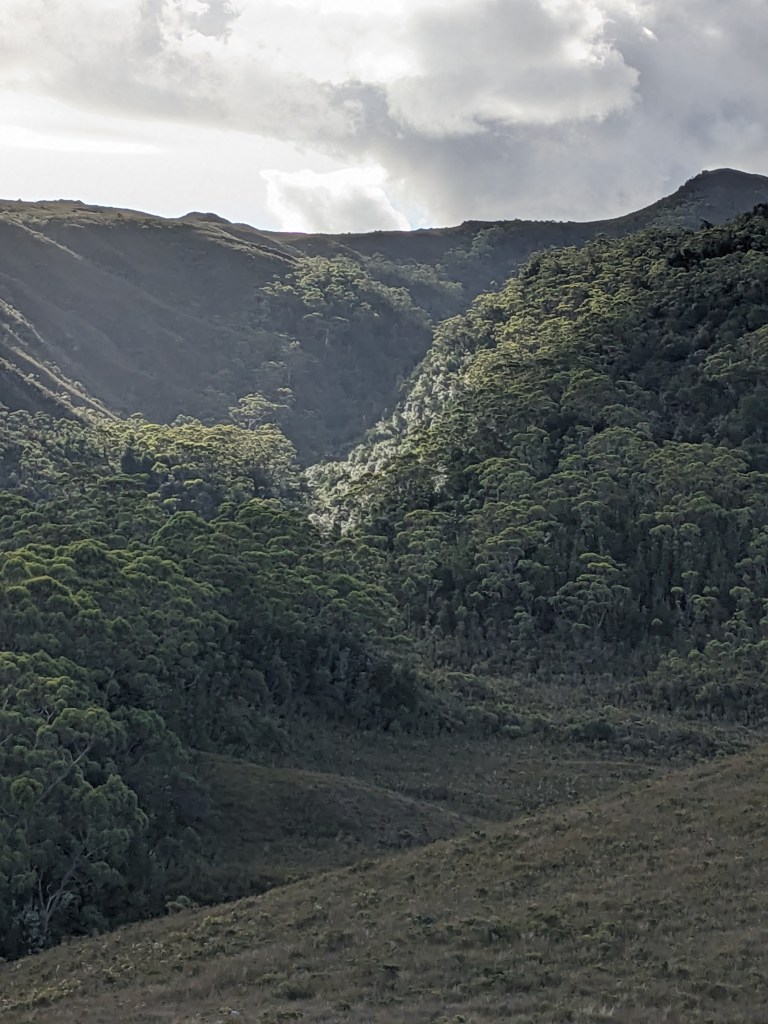
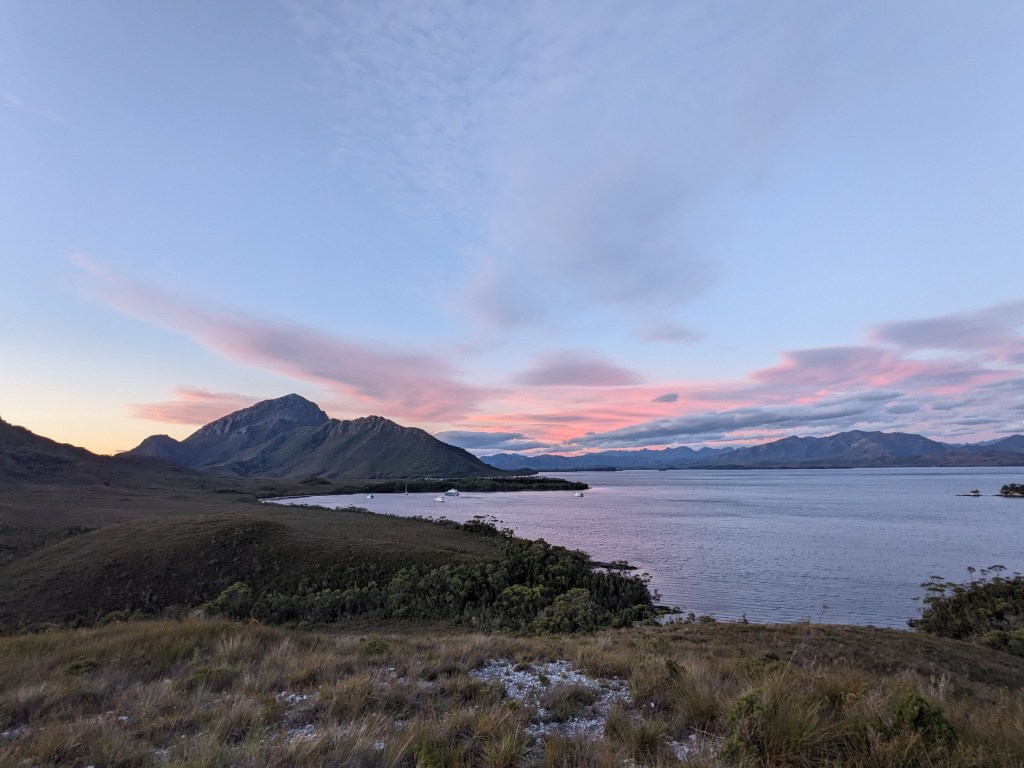
5/5 On a tour with the Roaring 40s, one should expect a windy day or two. We had just one land-locked blustery day, providing an opportunity to experience the wild nature of the SW. Thick, dark clouds scudded across the sky, barely skipping over Mount Rugby. They broke occasionally to allow beams of light to illuminate the restless waters of Bathurst Harbour, making it easy to conjure thoughts of a higher hand playing with the shafts of sunlight and their effects for their own amusement: https://youtu.be/R8w9WjY9qYQ. It was a time to reflect on the sturdy souls that made this area their home. The Needwonnee first, and more recently the sealers and tin miners. A reading of Deny King’s biography before the trip had highlighted how inspiring he found the environment and his passion for protecting it, but also revealed the toughness required to live in this wild, windy and isolated landscape (King of the Wilderness: The Life of Deny King by Christobel Mattingley). The day of my visit did not reach a roaring 40 wind, but I was quite sure my soul was not up to living permanently in this environment: privileged to visit and experience but happy to return to my riverside locale.
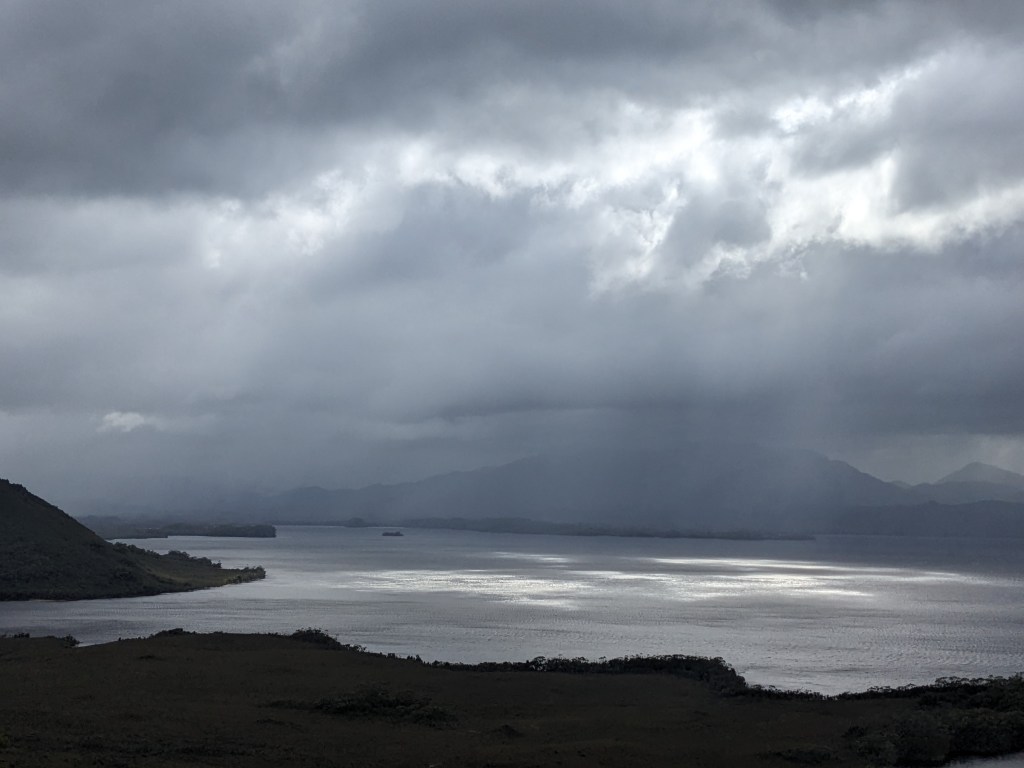
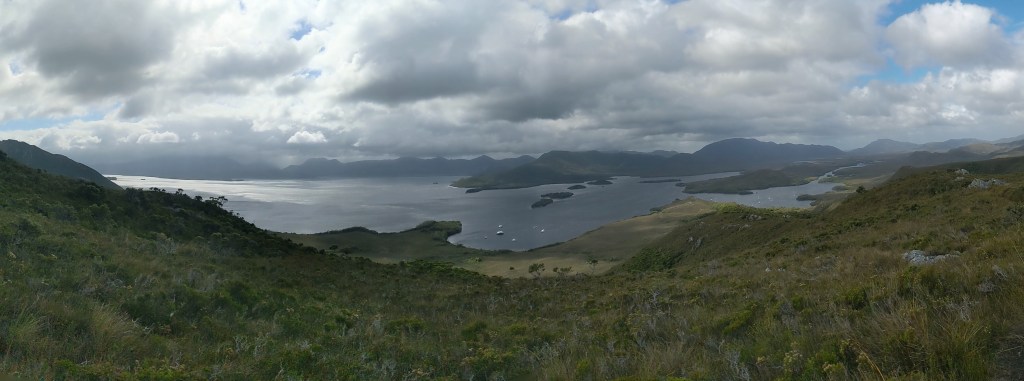
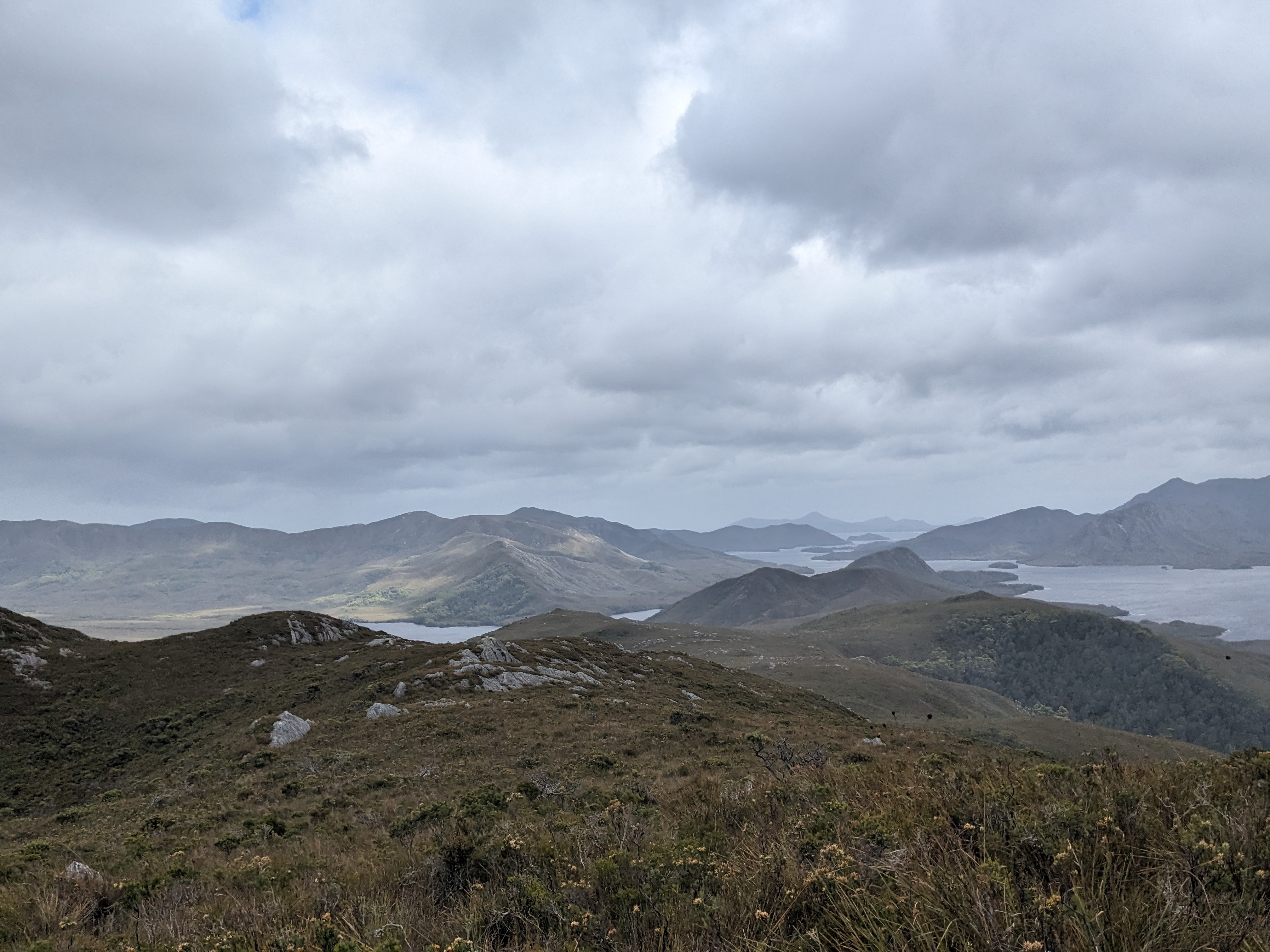
I followed others on the walk up to Mt Beattie. Cresting the ridge just below the summit where the views towards the west become visible, the wind almost pushed me backwards. I hunkered down to gain stability, appreciating the force of the wind as it buffeted all above and all below. I particularly enjoyed being among the flower stalks of button grass, fancying they were bouncing and bobbing like the baton of some demented conductor battling to interpret the wind’s unpredictable score – https://youtube.com/shorts/5YpHX0l4IRM?feature=share. Lulls in the wind marked a short reprieve for the vegetation until a crescendo of gusts raced across the landscape setting all in motion once more: the wind as a persistent percussive bass; sibilant sounds from the feverish rustling of the grass; and the eucalypts singing a gusty song as another line in the score. Sitting just below the ridge and peaking over the ridge towards the west, the views of where we had paddled were somewhat misted by the wind but still spectacular.
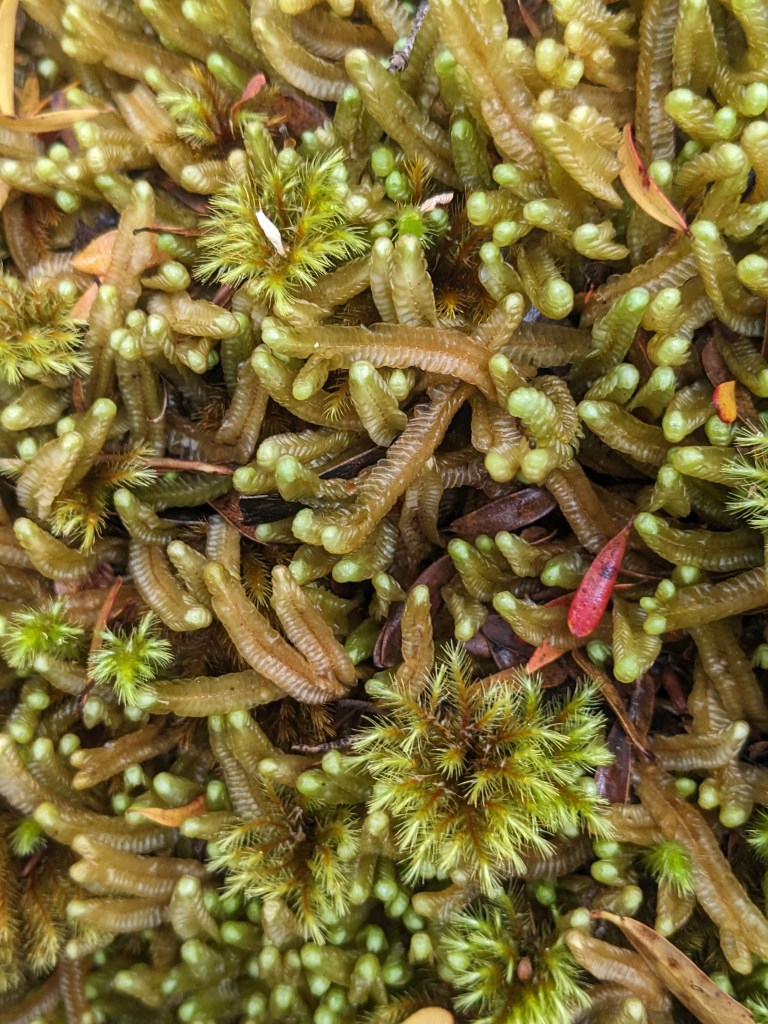
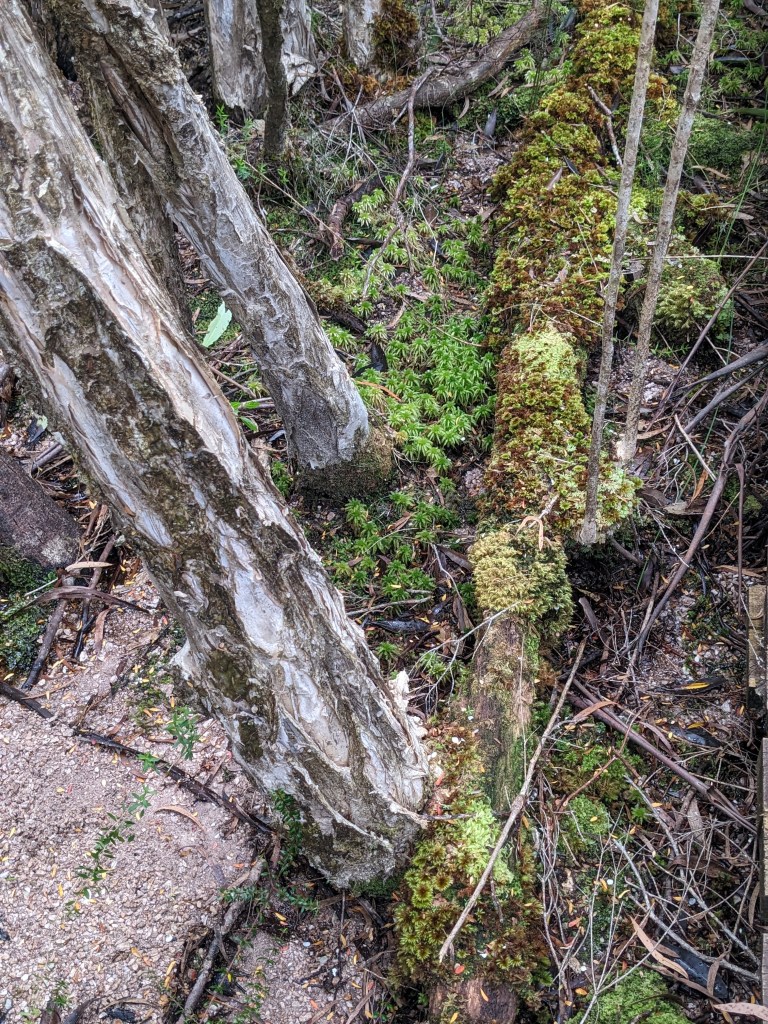
Lichens, liverworts and mosses are plentiful in the SW environment, functioning as a groundcover that helps retain moisture in the peaty soils. But many of the mosses live discretely in the forested areas such as those along the Mt Beattie trail. Mostly soft to touch, I found them hanging delicately from branches, hiding under logs, carpeting the edges of streams and paths, or cloaking and providing modesty for fallen and decaying forest elders. In shades of green, burnt orange and gold, they sparkled like glossy jewels under the canopy and demanded my attention. At Clayton’s Corner and with no roses in sight, ‘stroking the mosses’ seemed an alternative and apt metaphor for slowing down and appreciating the small amongst the SW’s more brazen and showy landscape.
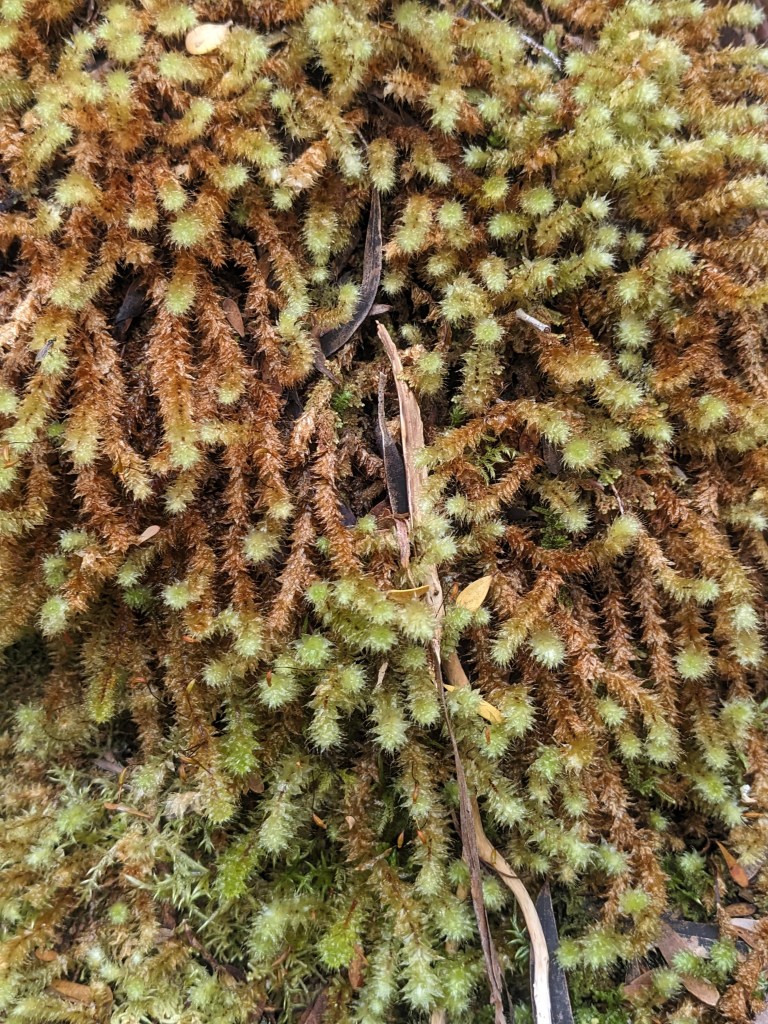
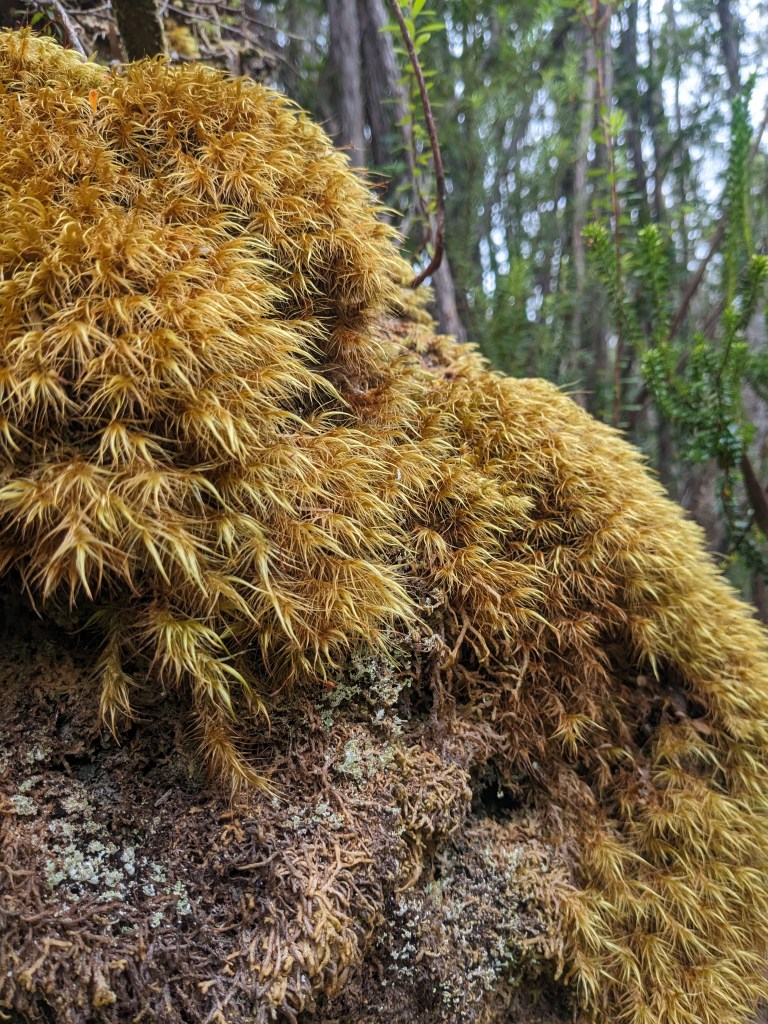
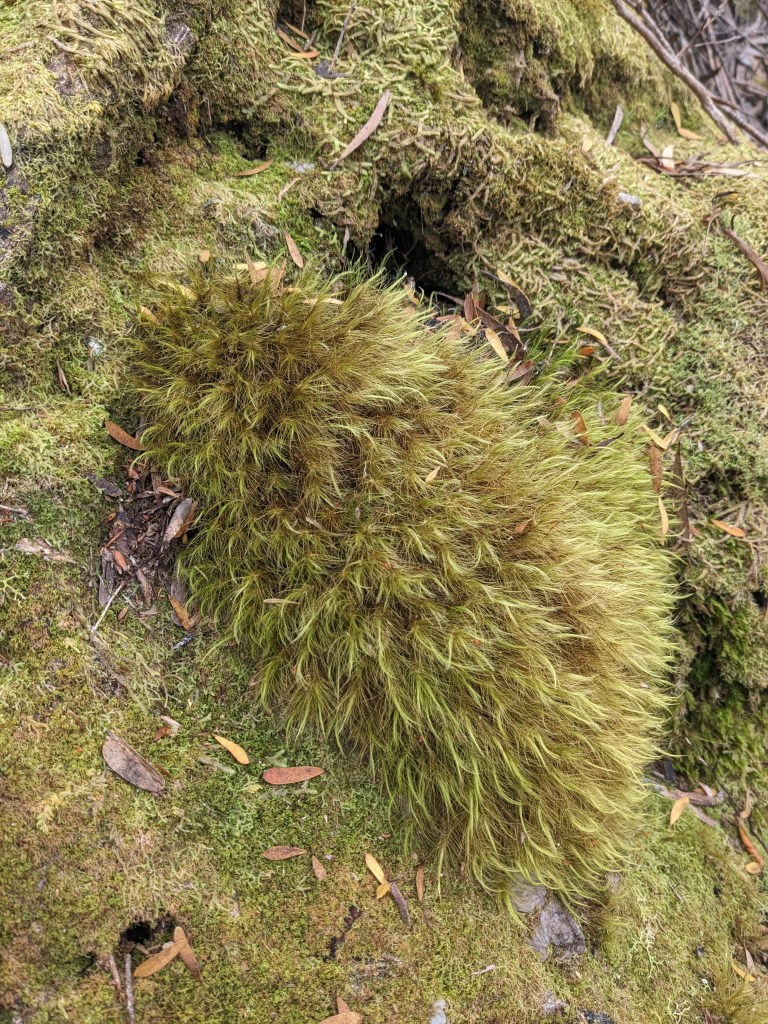
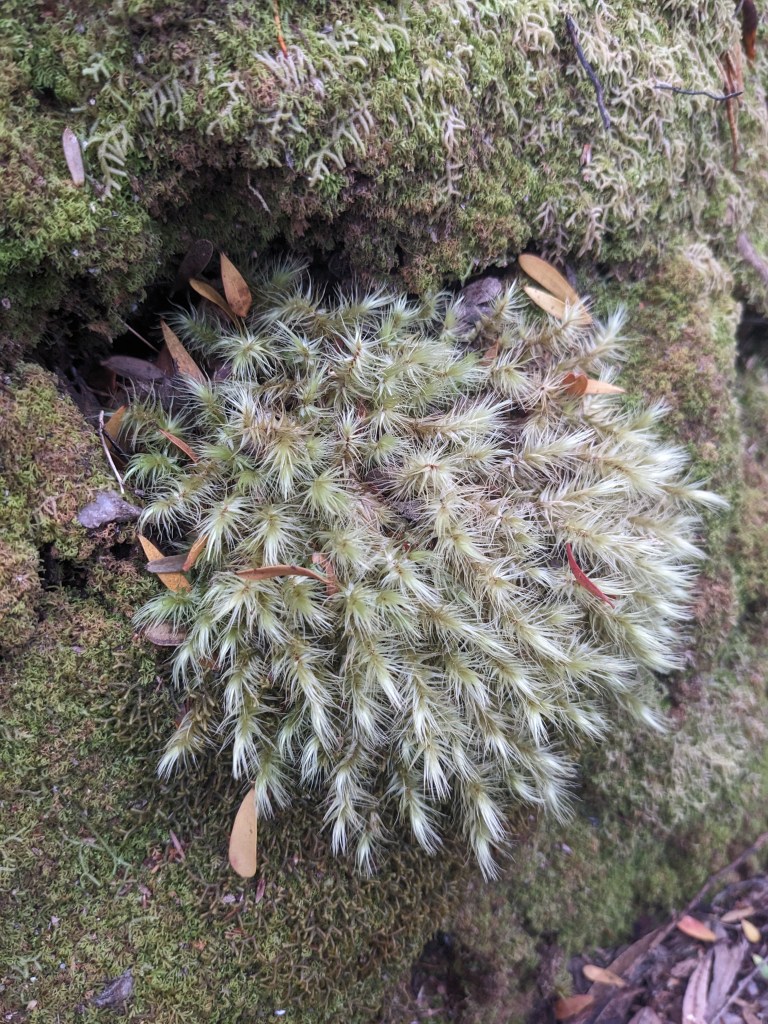
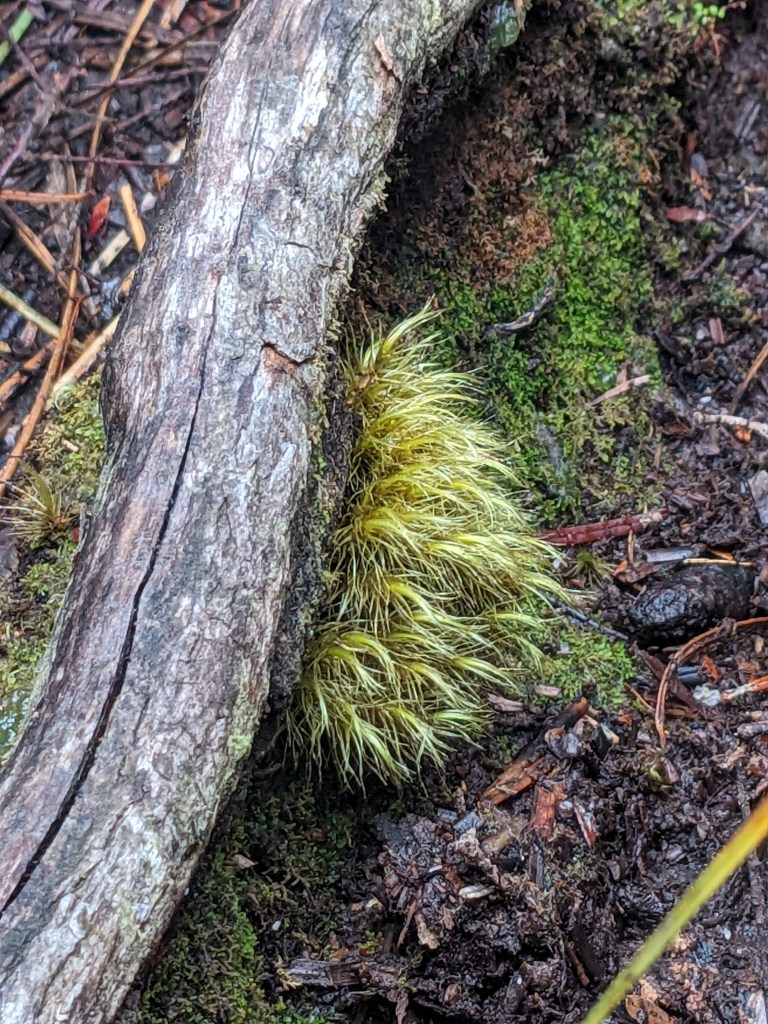
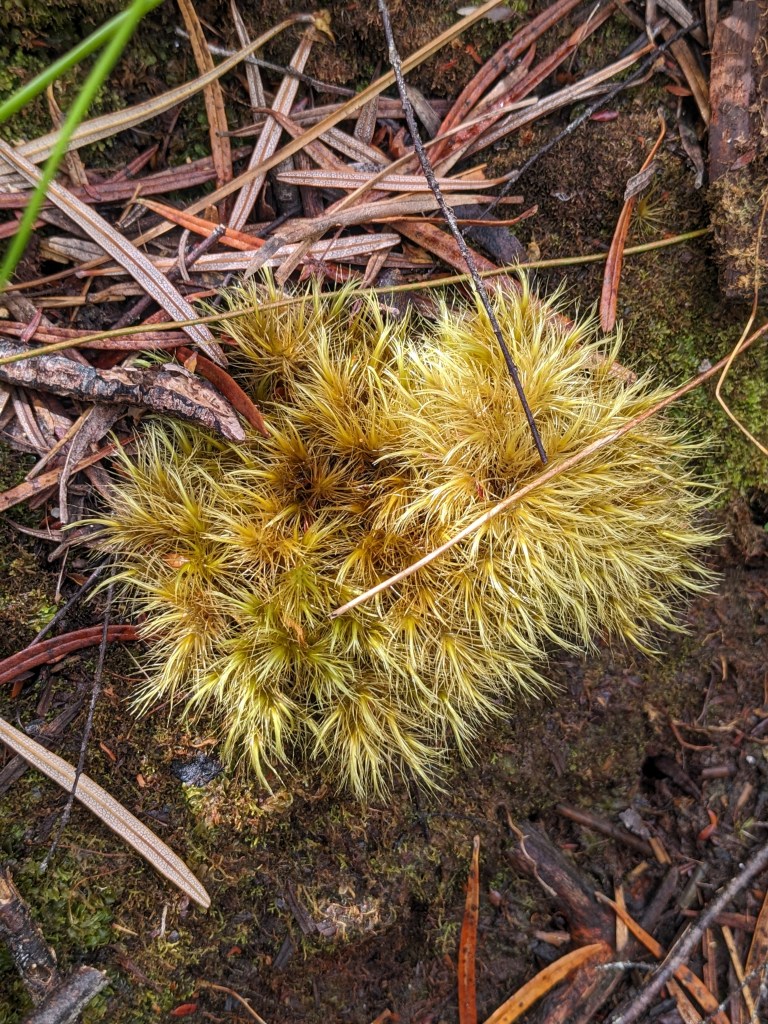
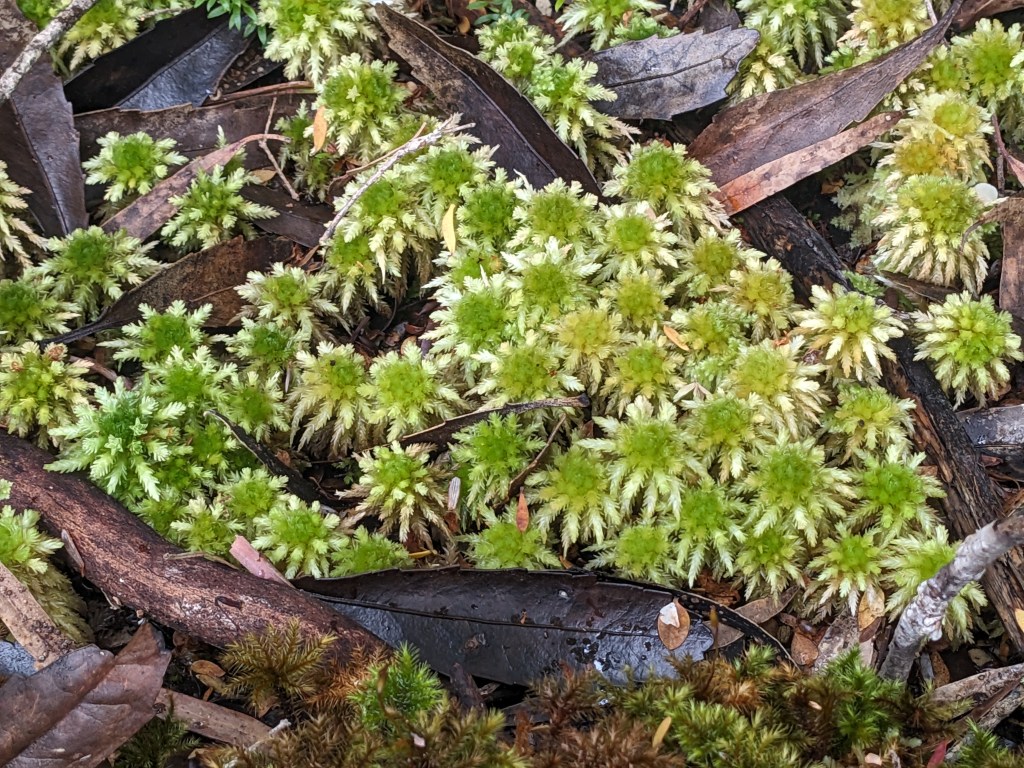
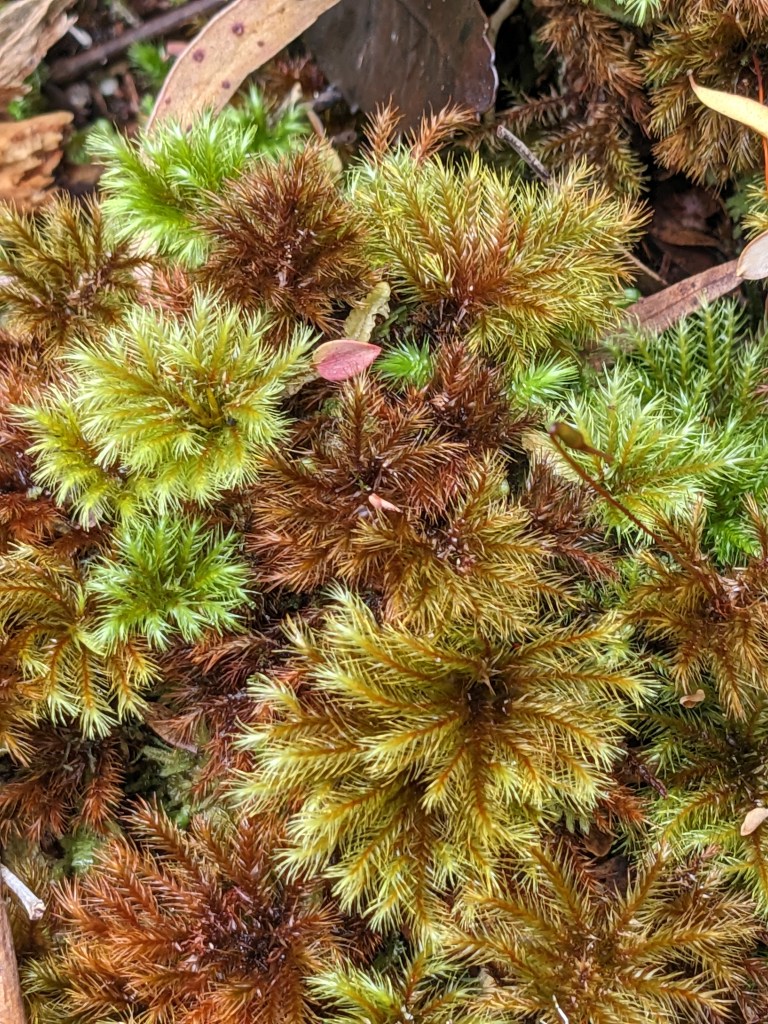
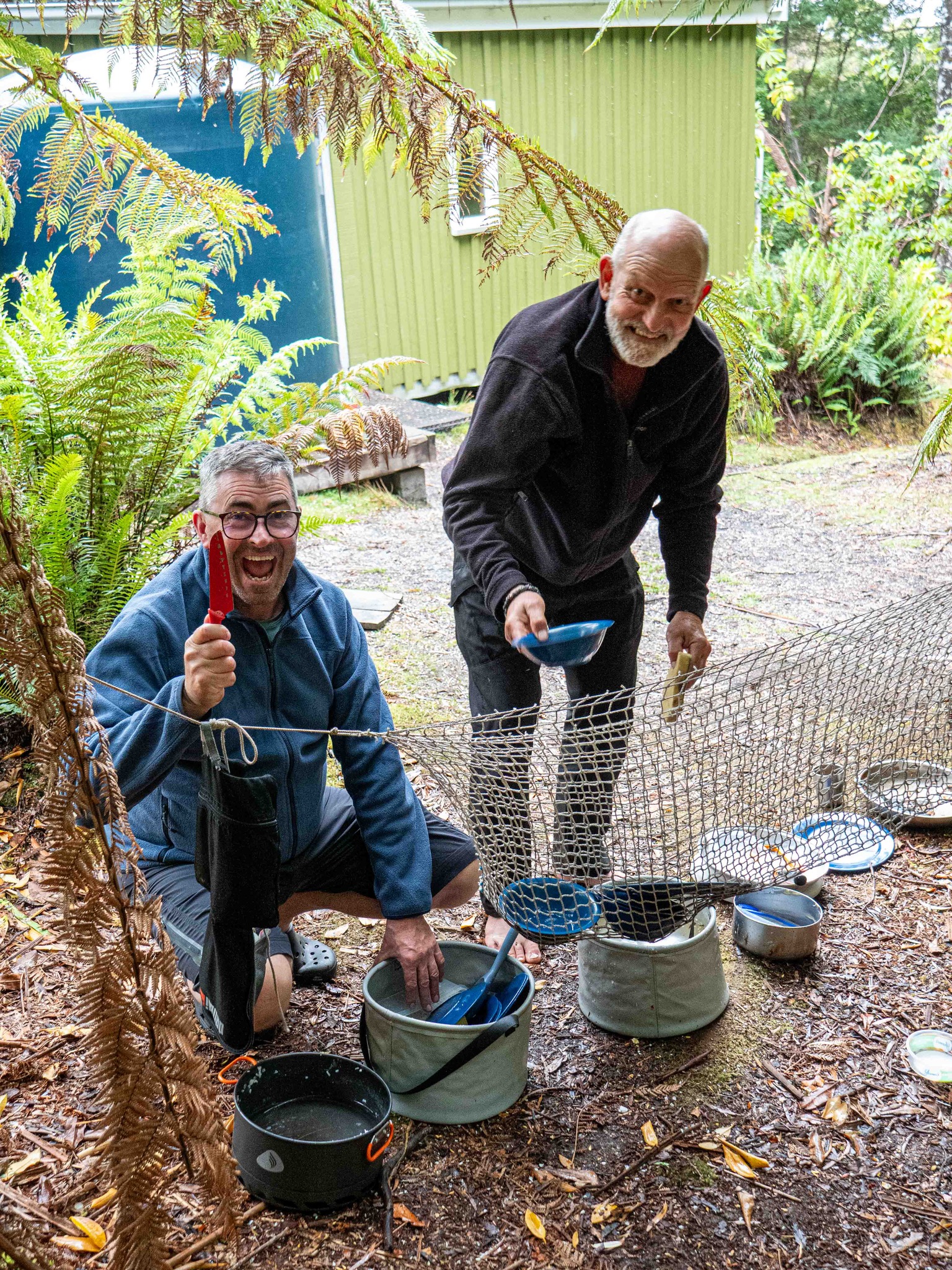
And once the chores are done ….
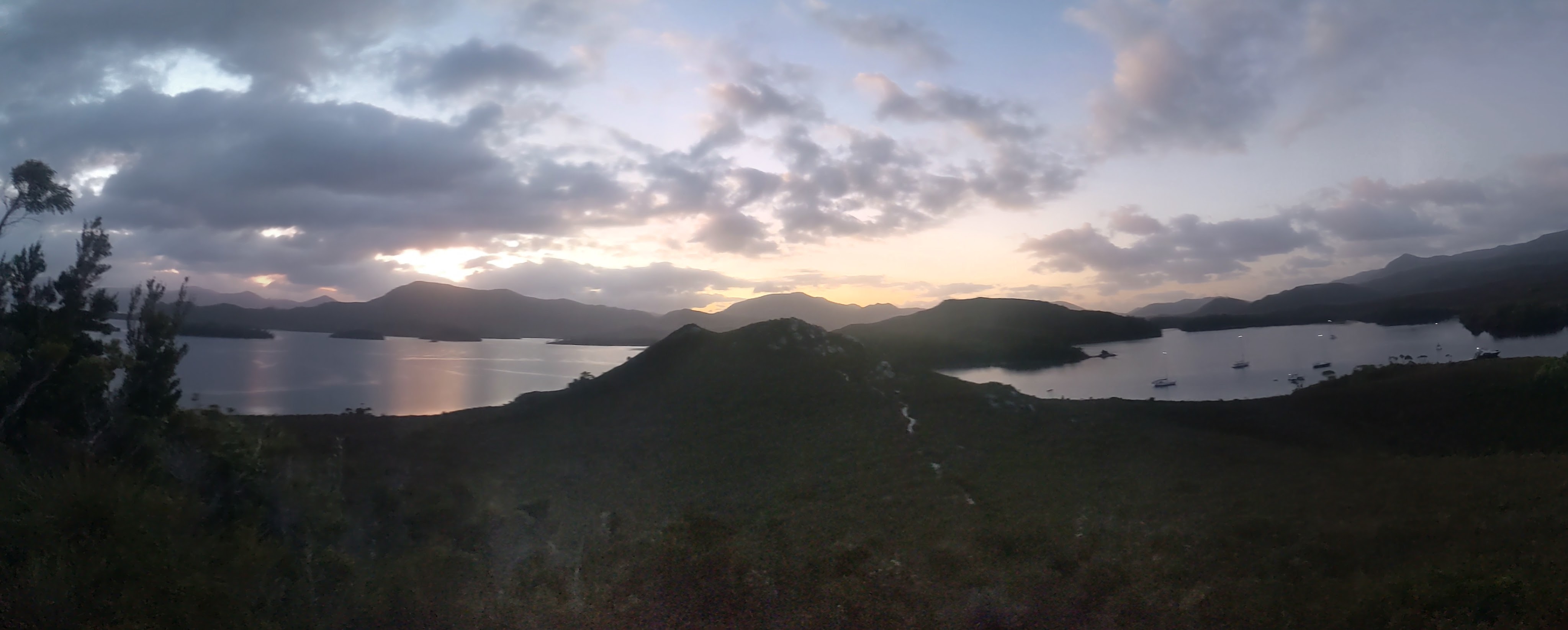
…. there’s another finale in the sky.
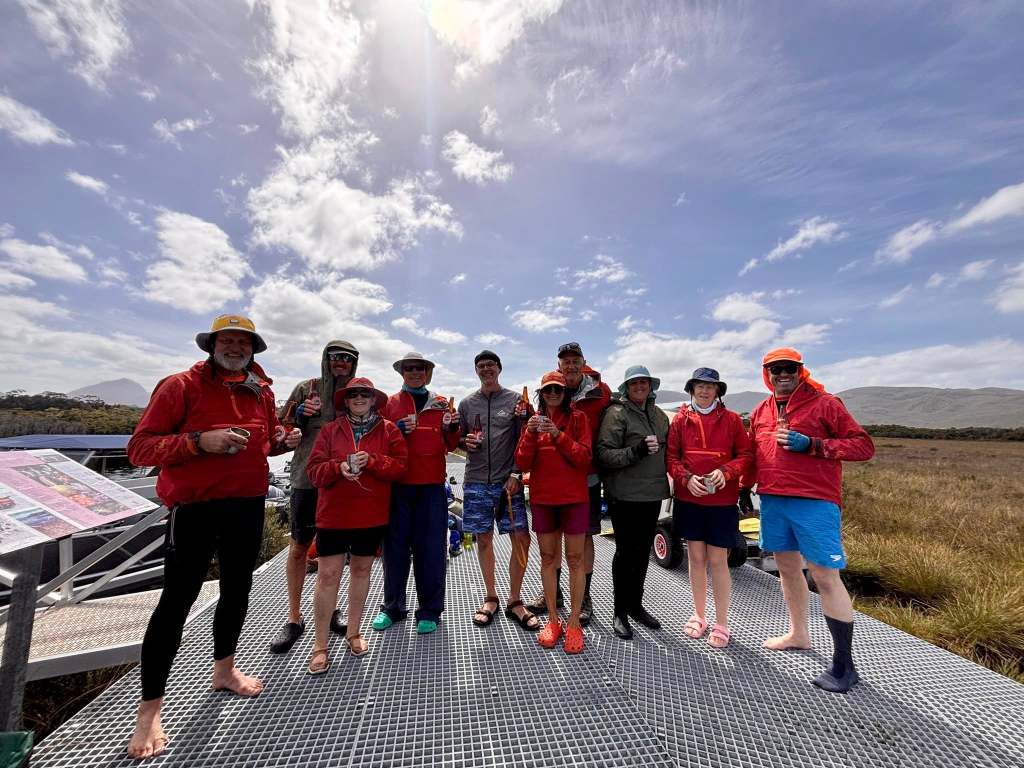
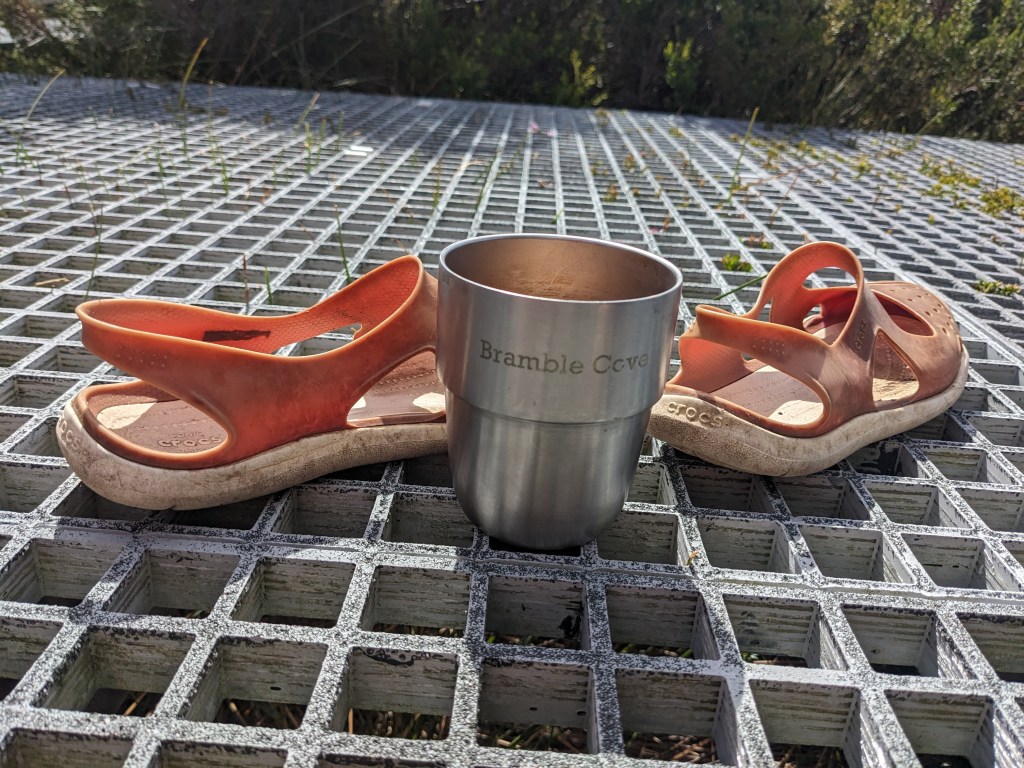
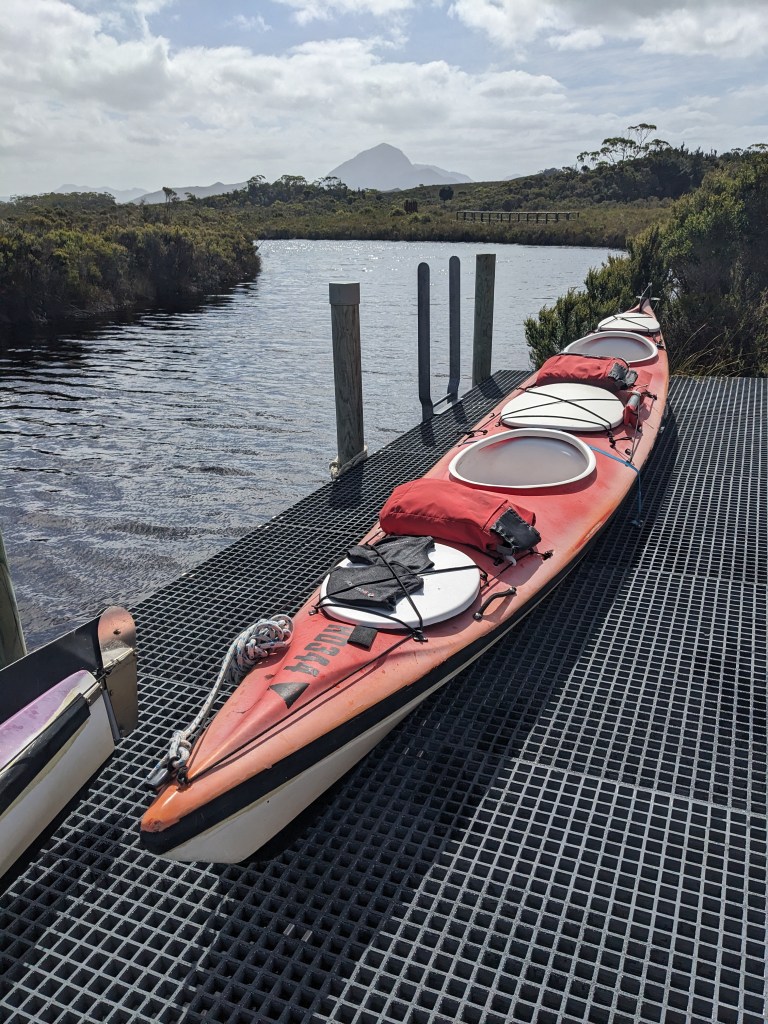
6/5 Clayton Corner to Melaleuca. Our last day on the water was spent threading through the Celery Top Islands, so named for the pine that grows on the islands. A yellow-gold softwood with the strength of hardwood that is used in boat building among other uses. A good enough timber to produce a dual Sydney to Hobart winner in the 1940s. From there we were pushed along Melaleuca Creek and back to our starting point for our final lunch and the welcome warmth of a cuppa in our hands. Farewell to my Bramble Cove mug, time to ready the red Packhorse for the next kayaking customers, and a final circle to share moments of the trip. For me it was the joy of going into a stiff head wind, safely bouncing around in a kayak and enjoying the wind at our backs after the turn. And rediscovering the joy of slowing down to observe the small jewels discretely embedded in a larger landscape. There was collective agreement and appreciation of the group dynamics: thoughtful and experienced guides who were extremely attentive to the group’s needs and willingly went the extra mile to make it work well; and a fun, supportive and interesting group of paddlers who were the icing on the cake in a fabulous adventure. Bring on more fun paddling times.
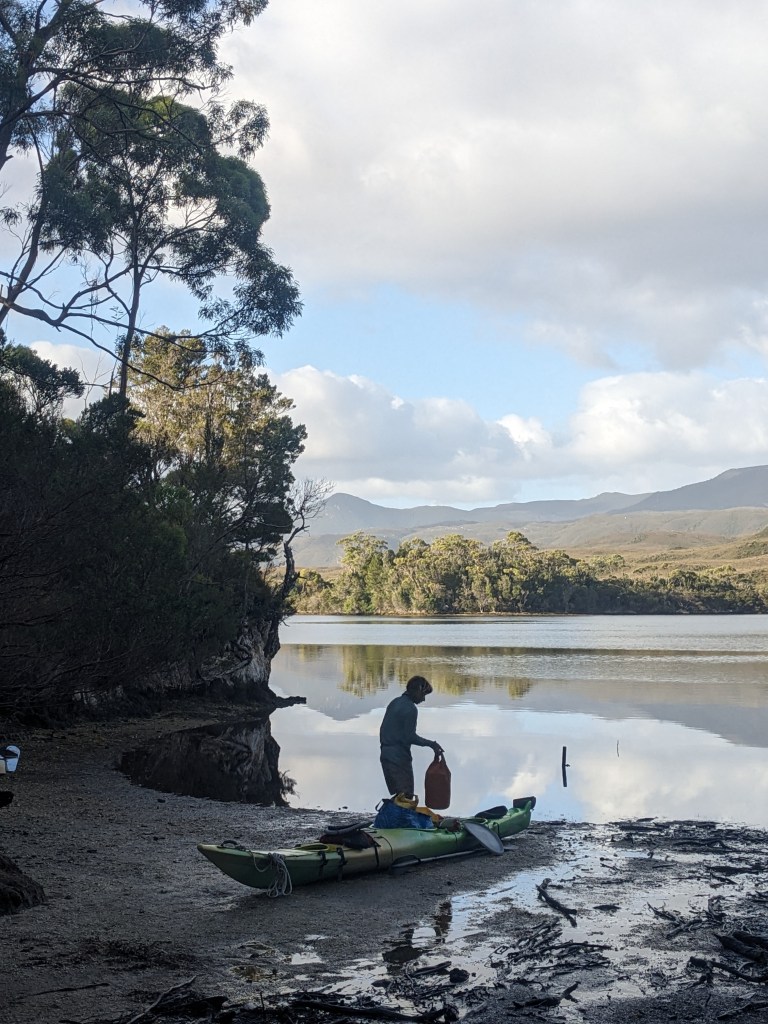
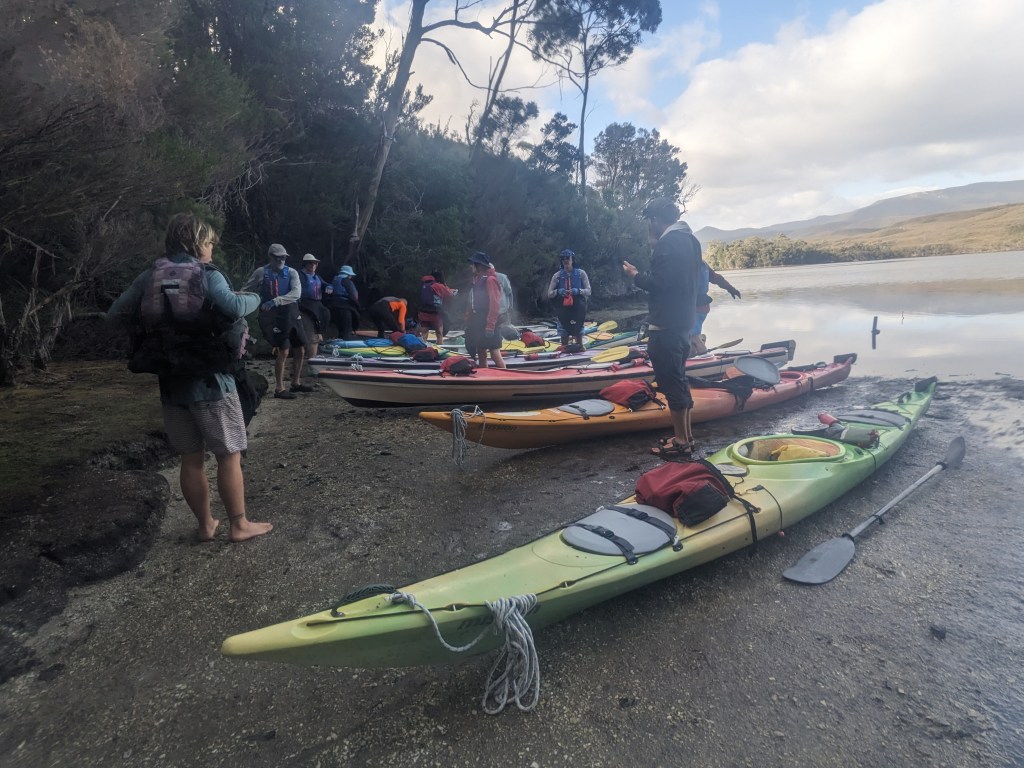
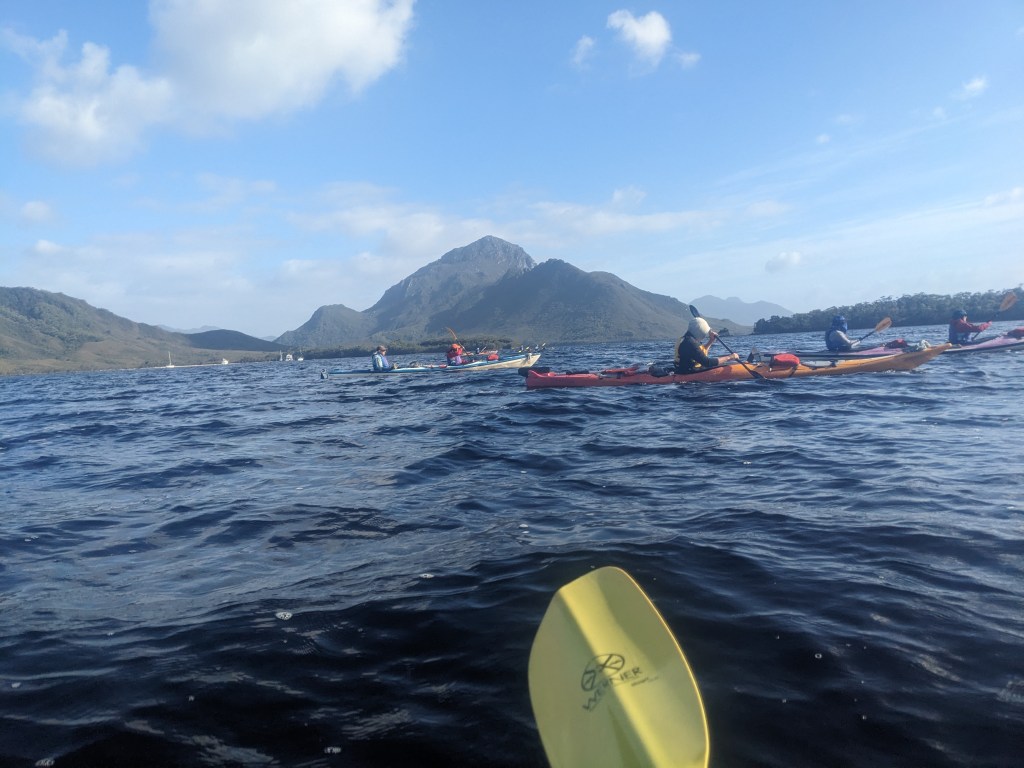
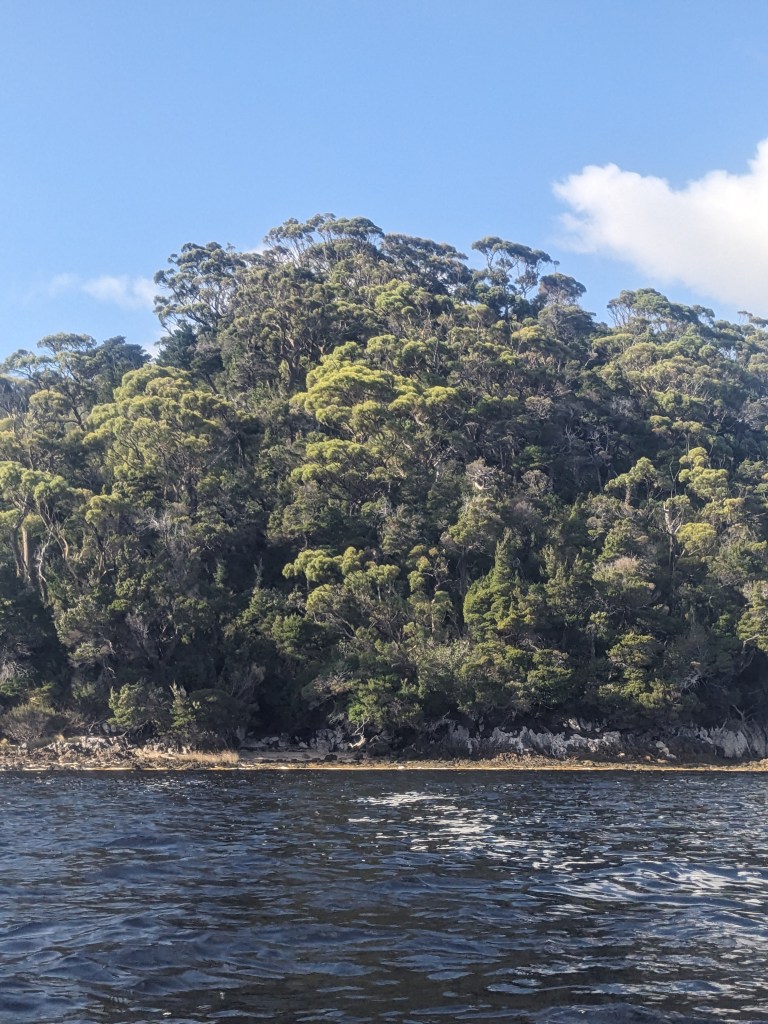
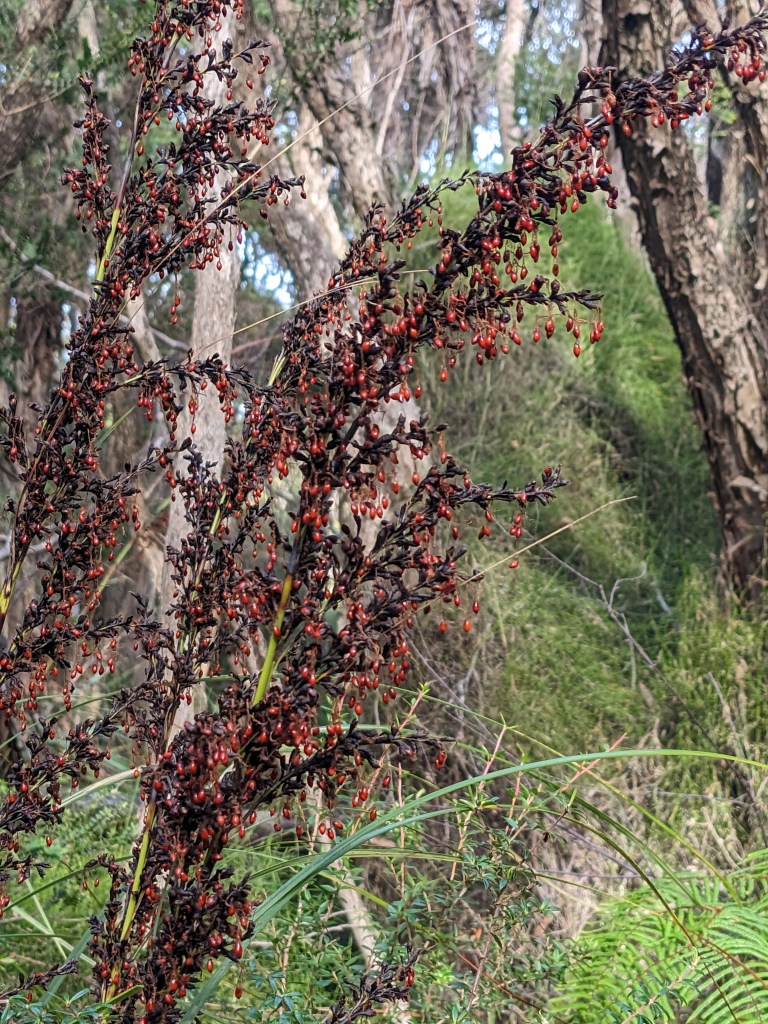
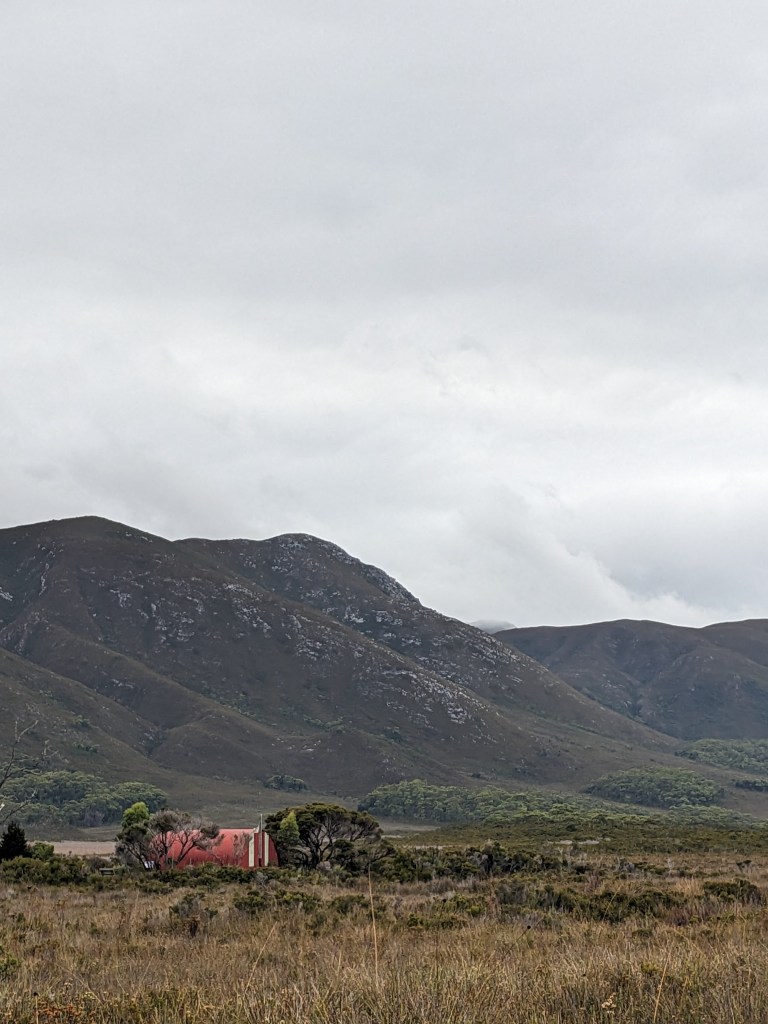
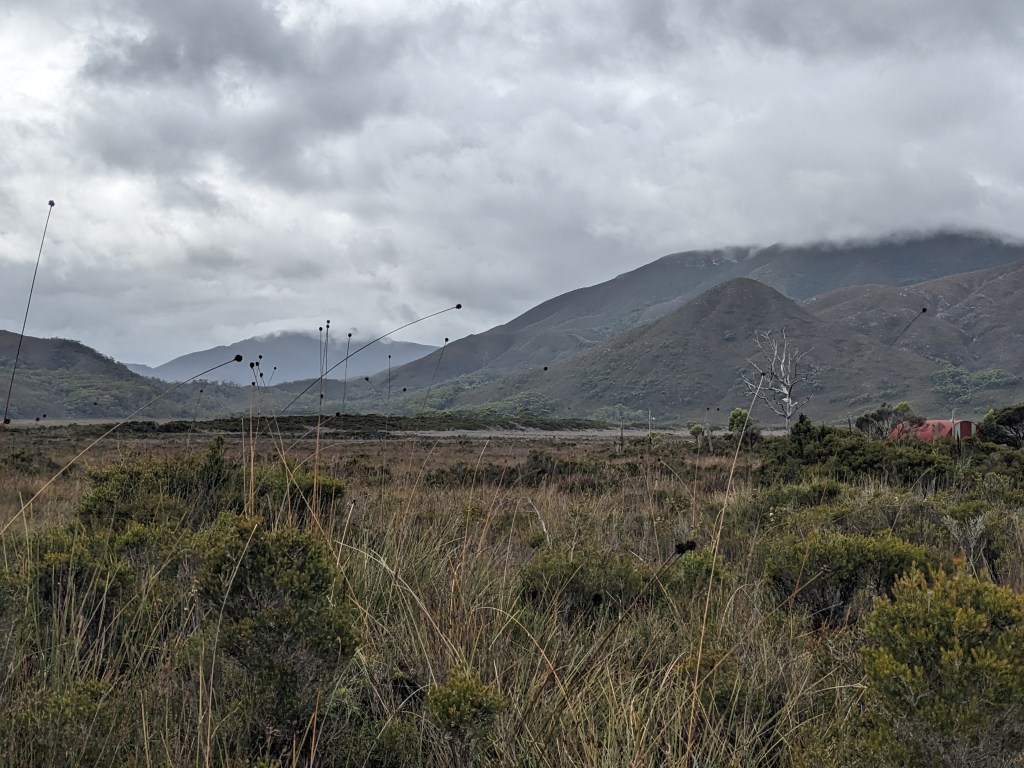
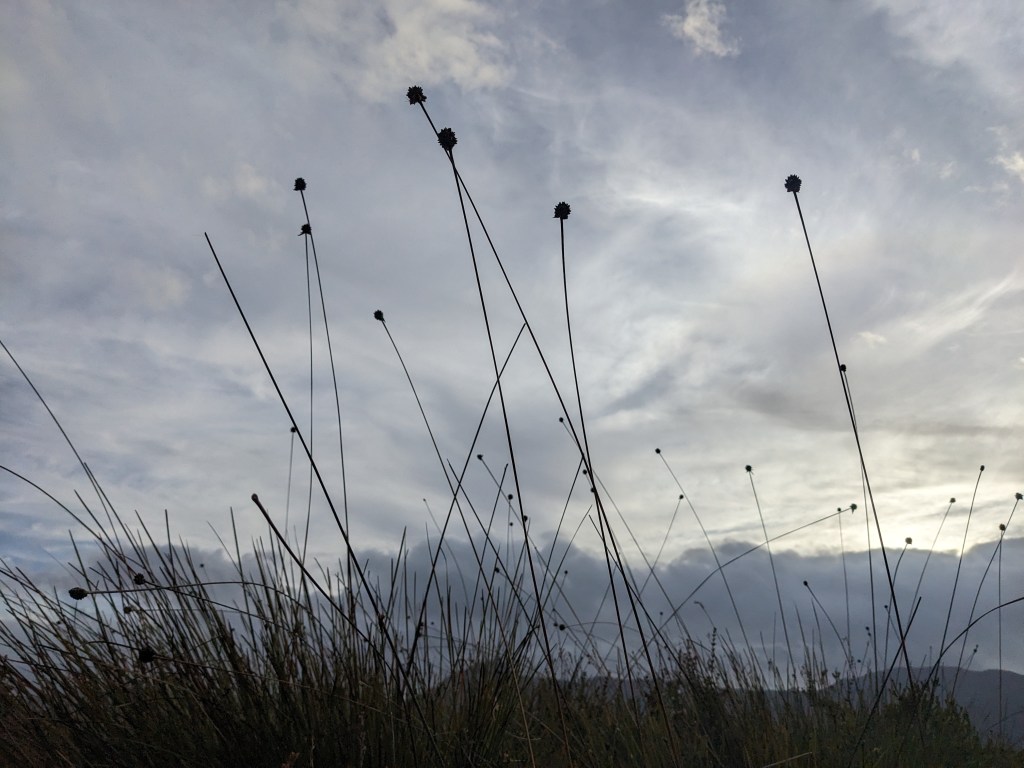
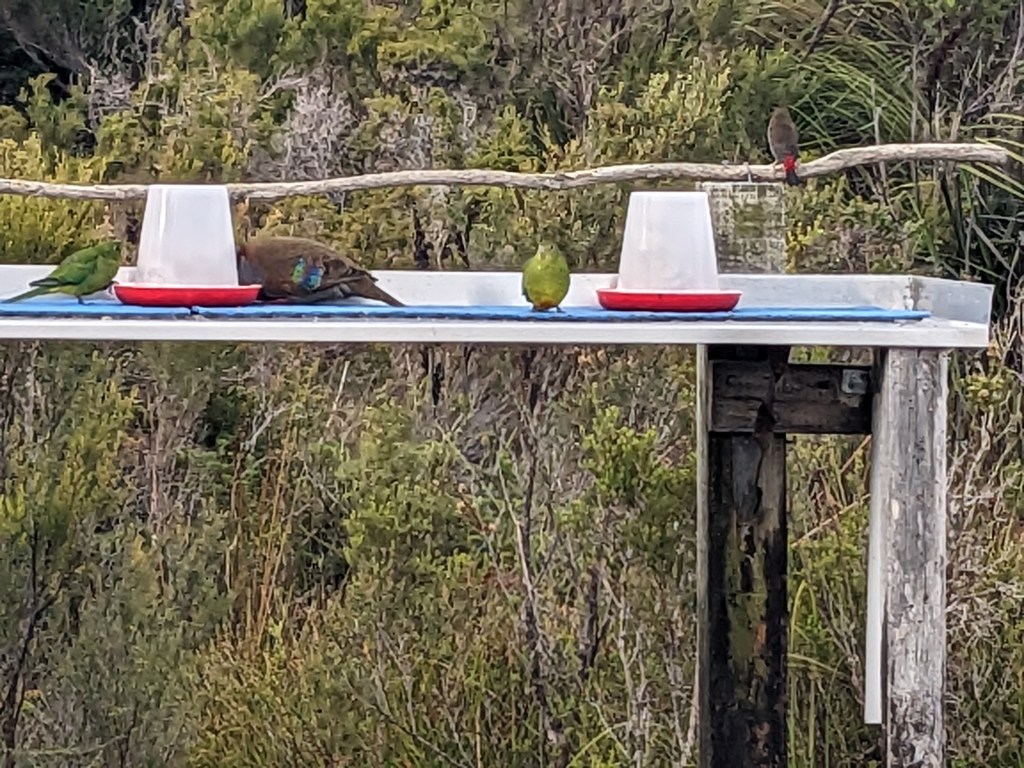
Melaleuca had a few further delights to share before we flew out: burnt orange seeds dangling profusely from the drying remnants of sedge stalks; iconic button grass destined to be forever bob-bobbing in the breeze; a Deny King nissan hut still withstanding all that the SW’s winds can throw at it; and a chance to learn a bit more about the King family’s tin mining before the area became a protected wilderness area. But most special was the chance to view orange bellied parrots. The last photo in the group below shows 2 orange bellied parrots, an unimaginatively but accurately named Beautiful Firetail and a plump Brush Bronzewing. A crap photo, but pretty special given I saw about 8 from a total population of 80. A group of ecologists had just released another 30 captive bred youngsters that day, and fingers crossed for their survival as they make their first migration to coastal parts in South Australia and Victoria.
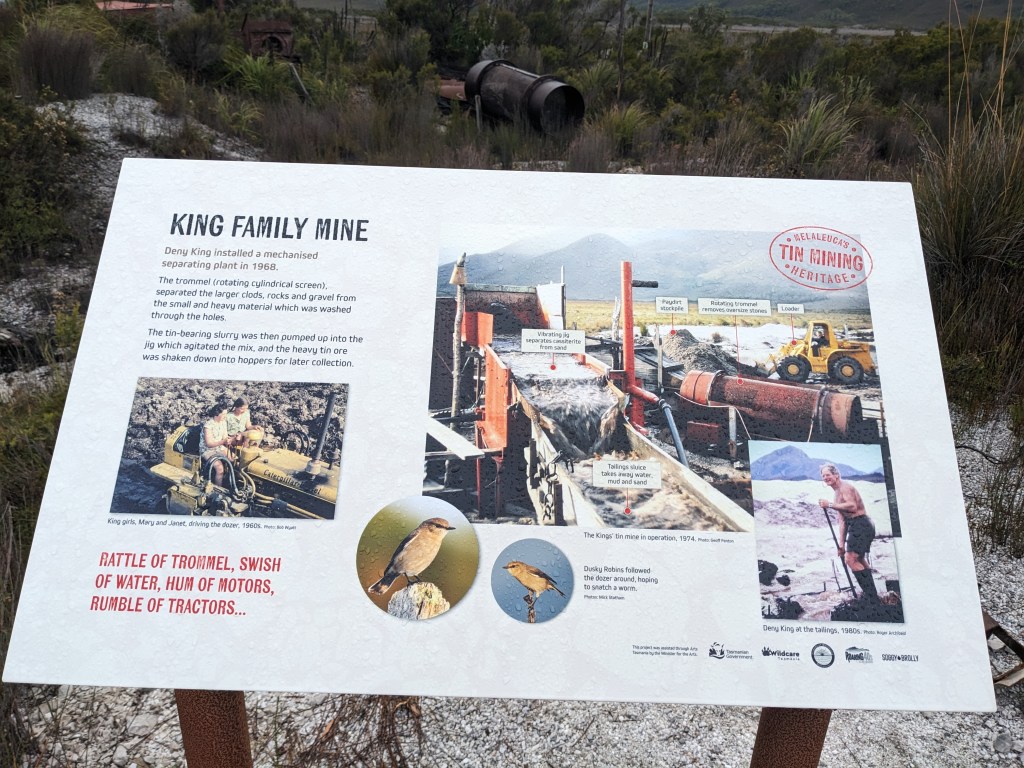
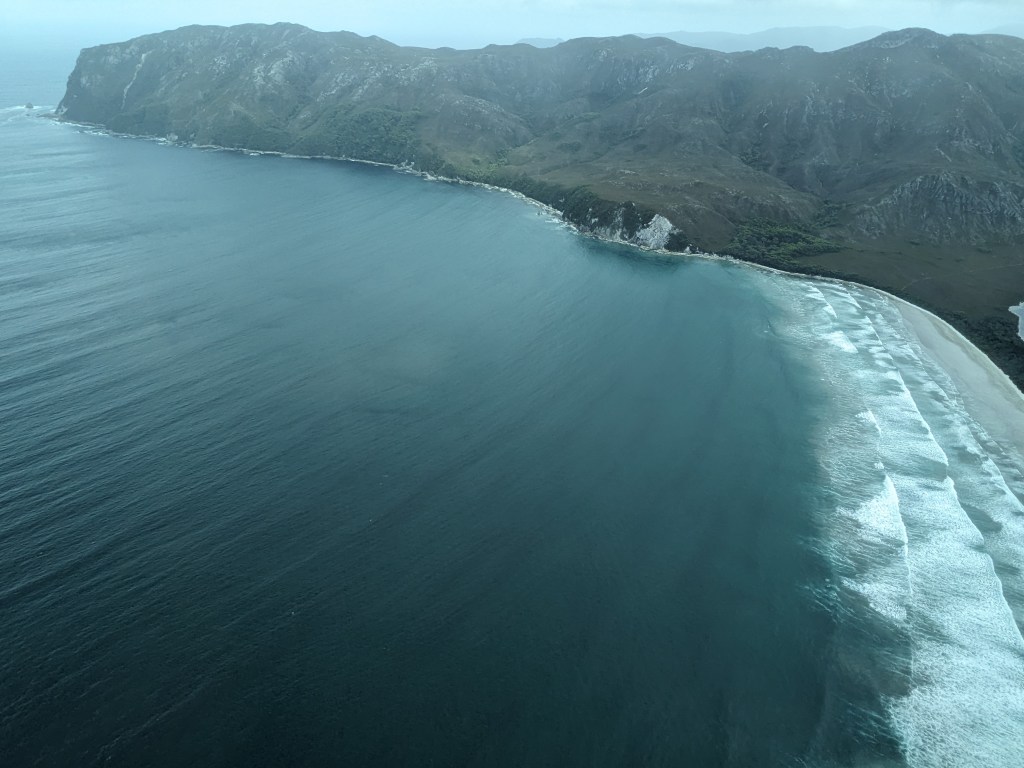
And then the final treat – a return plane ride to Hobart: https://youtu.be/mPiLxMMwZYk. This time we flew back along the coast as the clouds were too low for the planes to fly over the ranges. An extra bonus to conclude the trip.
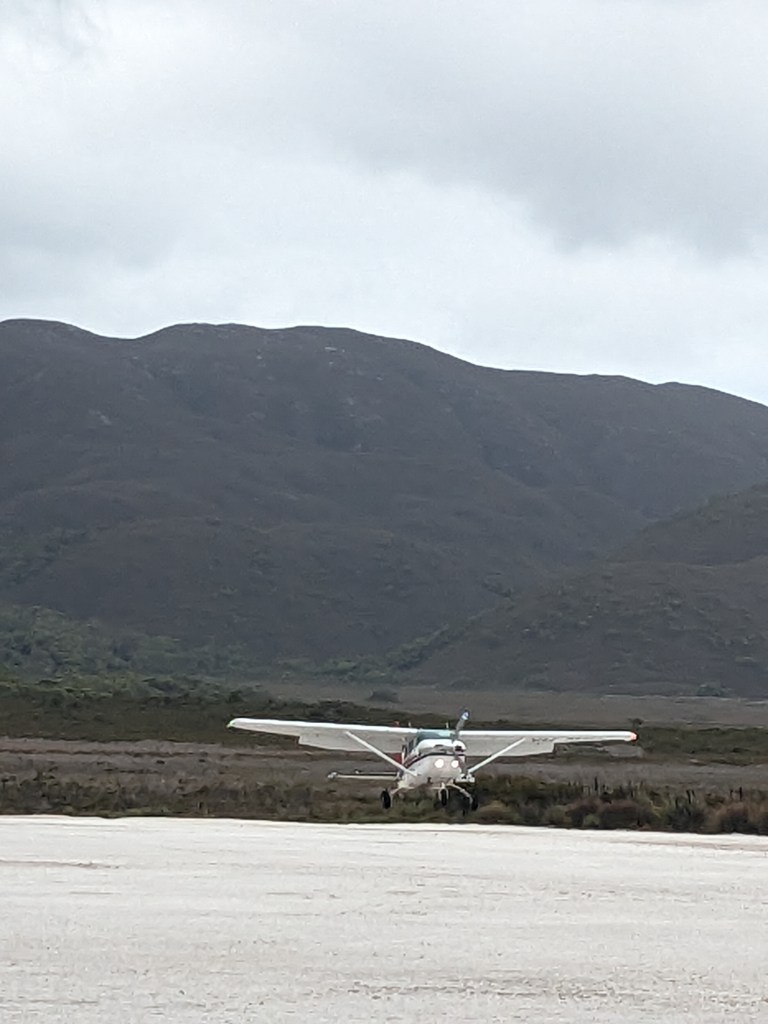
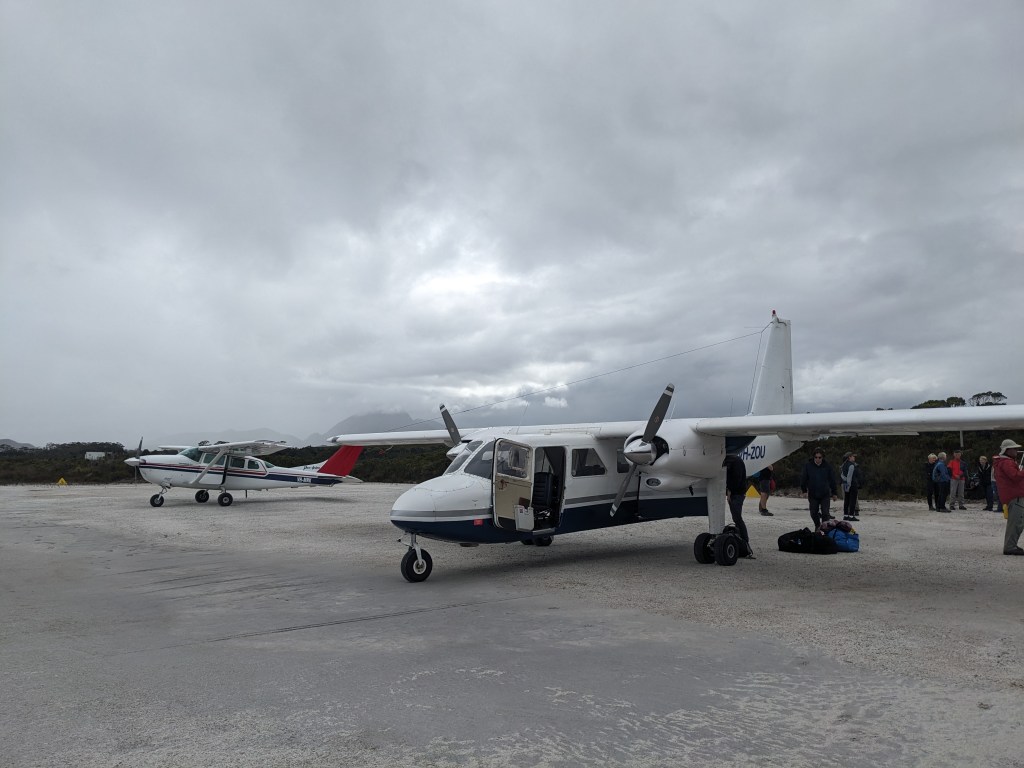
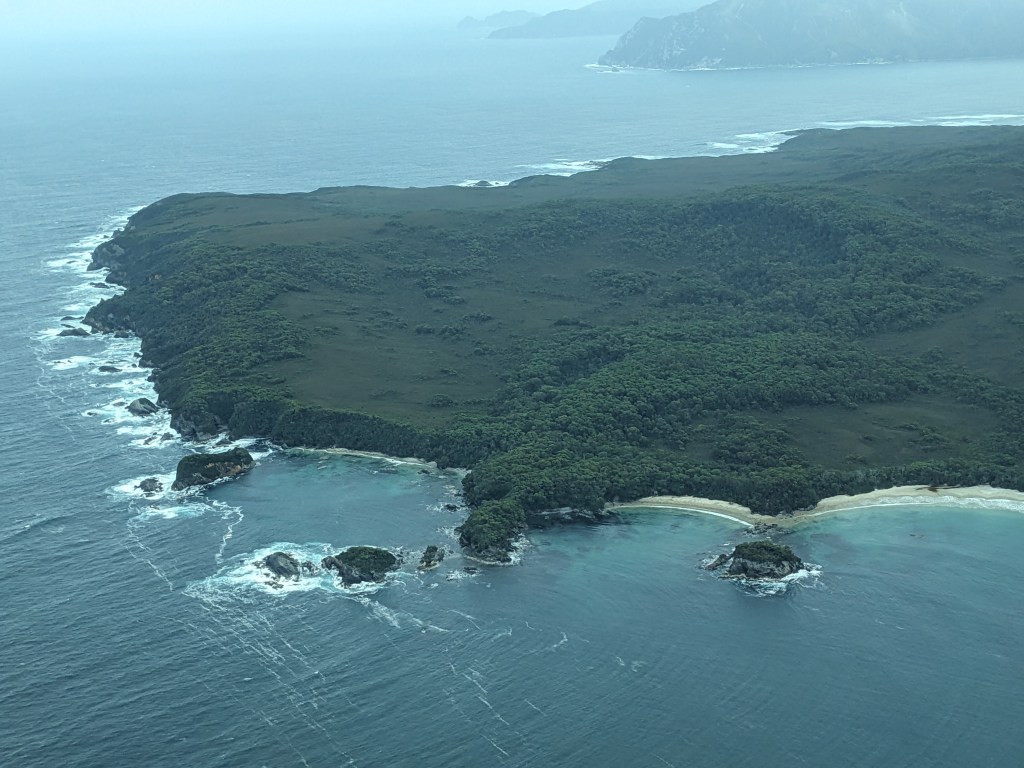
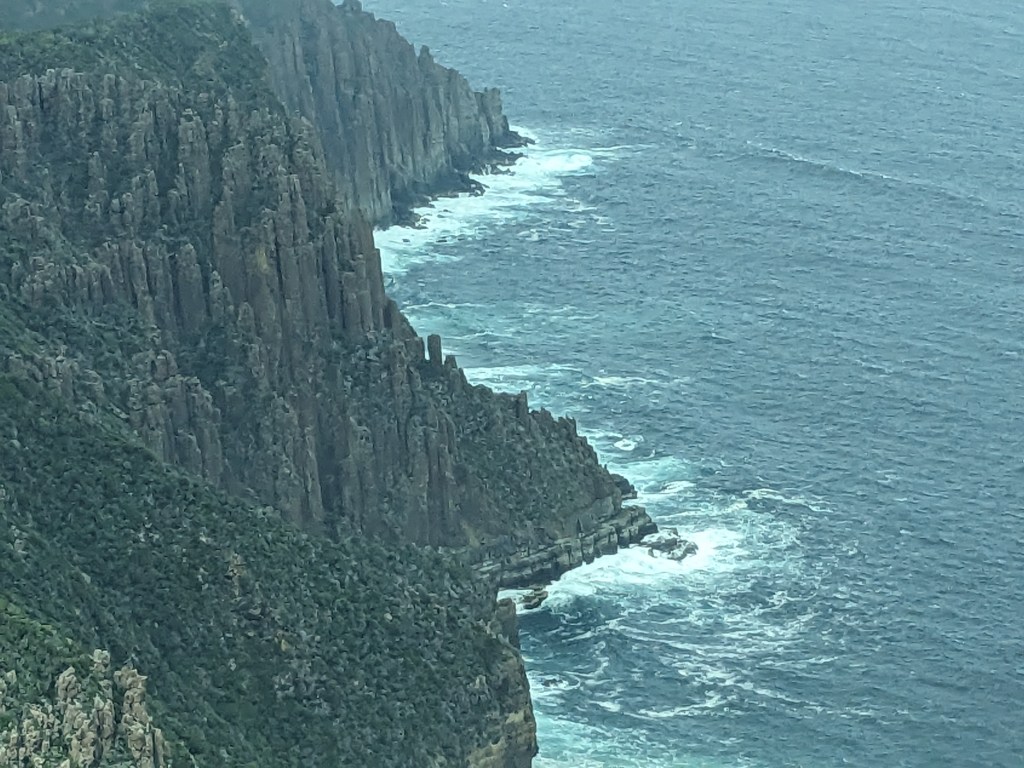
A real privilege to visit this area, and with a tour group that leaves virtually nothing behind. Except a little buried fertiliser here and there, and many words of admiration and thankfulness hanging in the wind.
 parrygraphs
fab, fab, fab……a very lucky girl xx