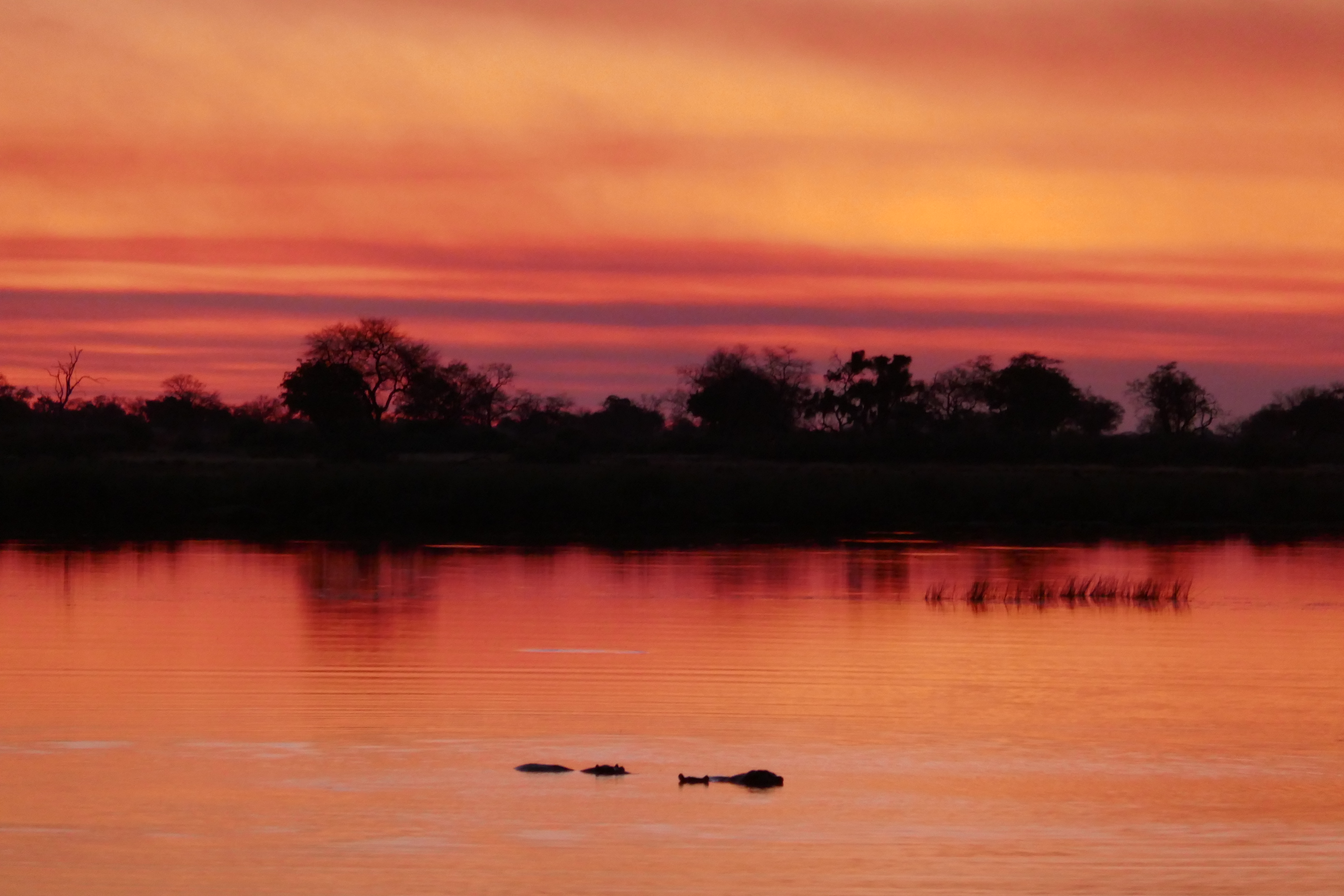
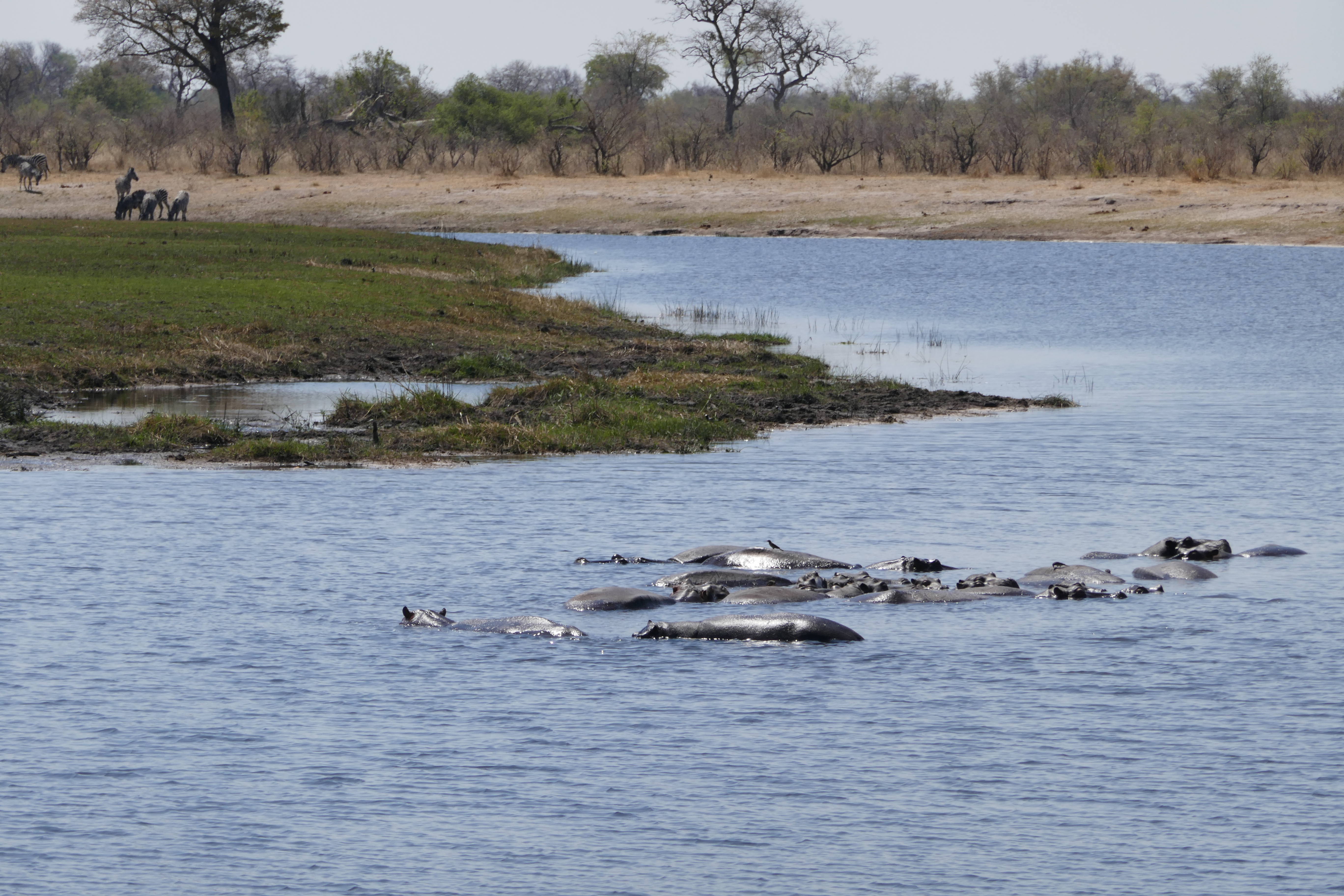

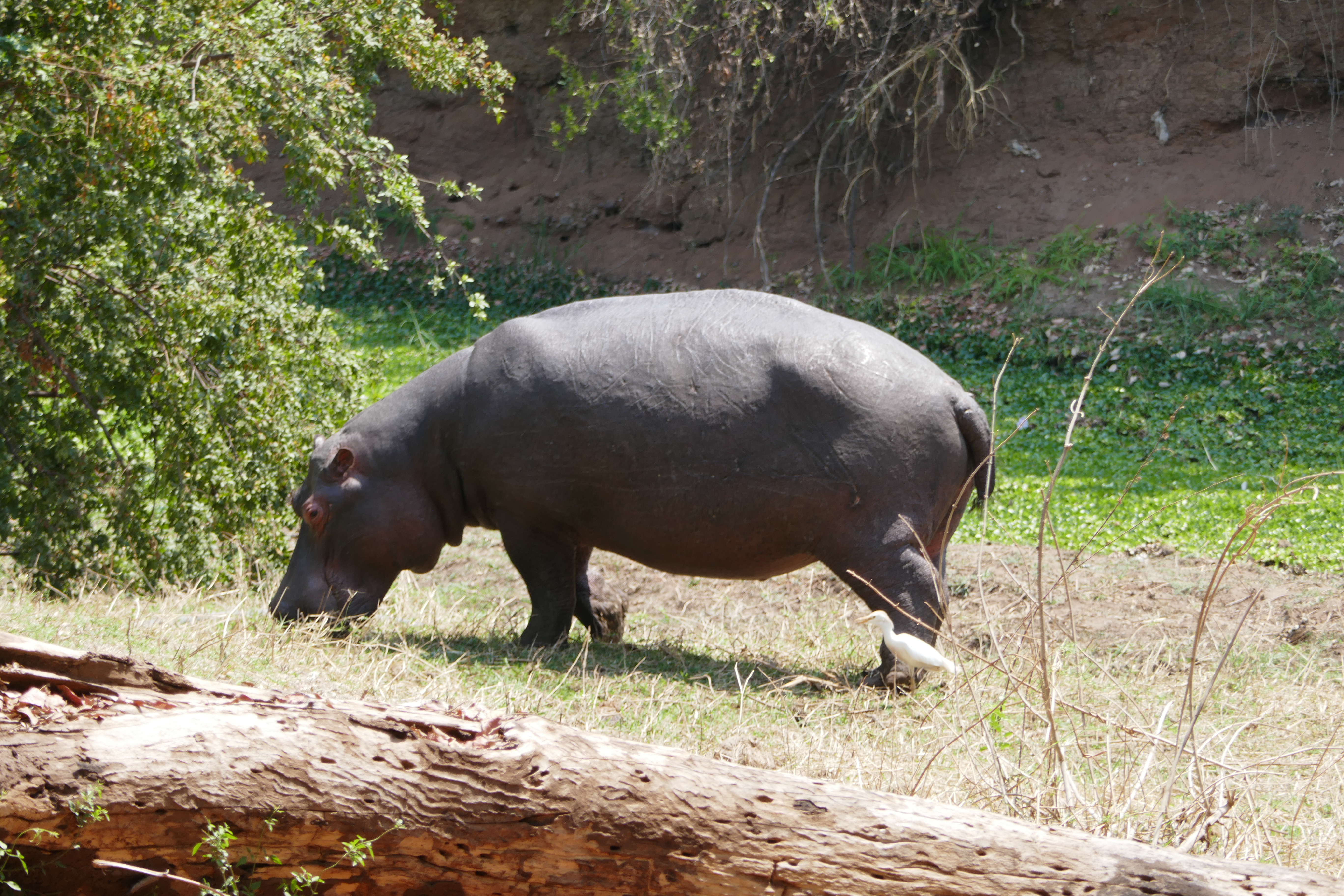
Hippos were our companions for several weeks: some close up and others much further away. The distance, however, was always on their terms. While they might look blubbery, bloated and benign, they have the accolade of being Africa’s second-highest killer of humans*. Reputed to have a speed of more than 25km/h on land and a significant set of tusks, you would be foolish to step into their personal space. When wild camping, we mostly saw them at a distance during the day, wallowing in small family groups or large hippo rafts and occasionally waking to have a snack before flopping back down in the water to cool off. Maybe at these times they are receiving the attention of cleaner fish that pick off parasites and feast on left overs in the cavernous mouth. The hippos at Mudumu displayed a highly audible and unsavoury habit of defecating in the water while simultaneously spinning their stumpy tail … an act that resembled slurry spreading but appeared not bother their neighbours. As the sun set, they dispersed to graze, hoovering up grass with their lips and grinding it noisily. Their grunts and bellows permeated the night, and when they moved elsewhere for their nocturnal feasting their absence was strangely missed. The hippos we encountered when we stayed in a camp ground were often solitary and prepared to come much closer. Close enough to see their protruding eyes, comically small ears, double chins and the determined way they mow the grass. But then they need to keep at it to consume their daily quota of 40kgs. The hippo in the last photo was a daily visitor to our camp at Livingstone, coming within 10m of the camp kitchen and with a small egret at foot to catch any insects that attempted to make an escape. The criss-crossing on its tough hide betrayed the aggressive and territorial nature of a hippo’s existence … a potential reason why some are more solitary. All round a fascinating creature that we happily spent many hours watching.
* The malaria-carrying mosquito takes first place.
 parrygraphs